By Olaf Wieghorst
Located in Fairfield, CT
Artist: Olaf Carl Wieghorst (1899–1988)
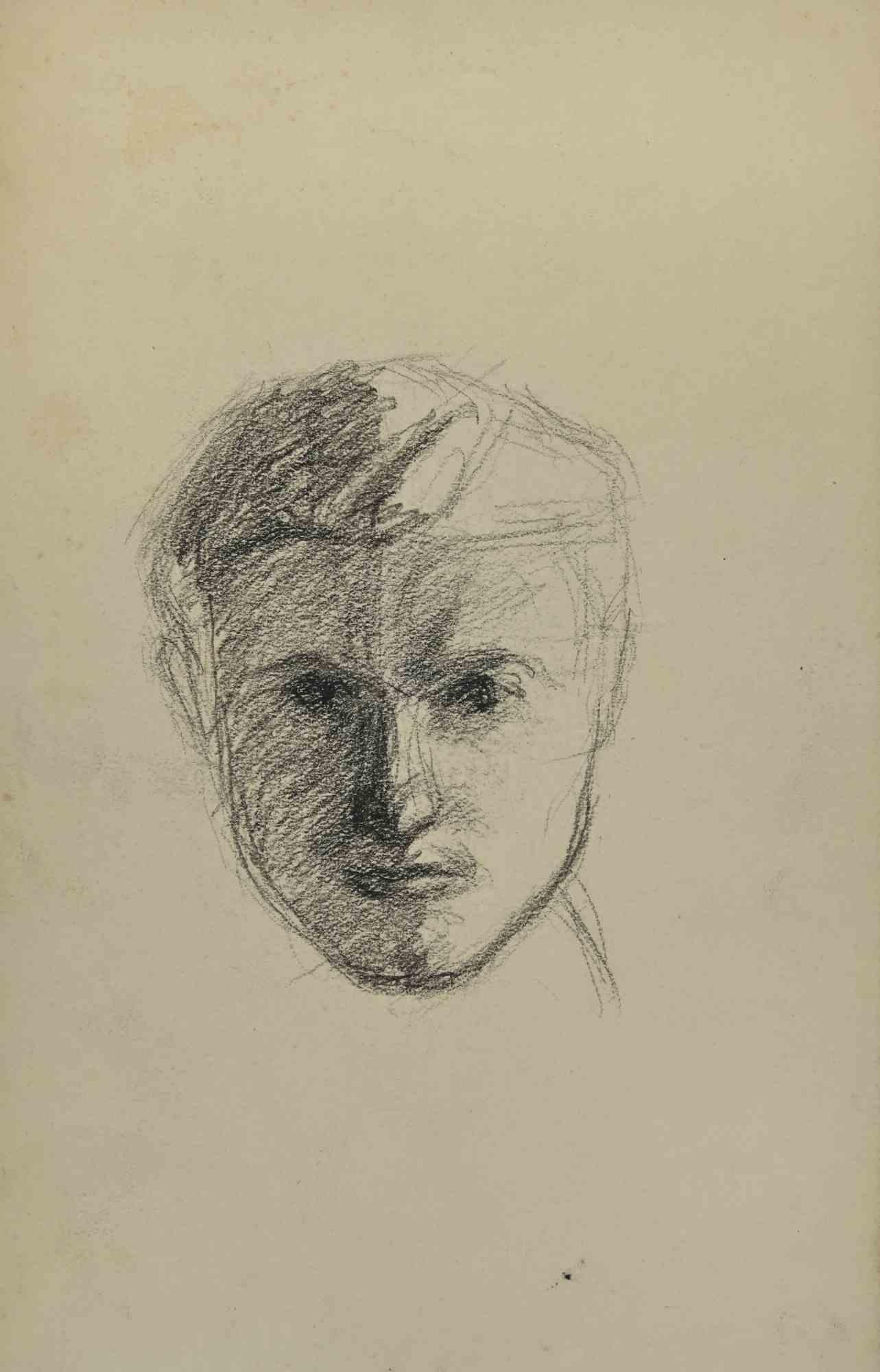
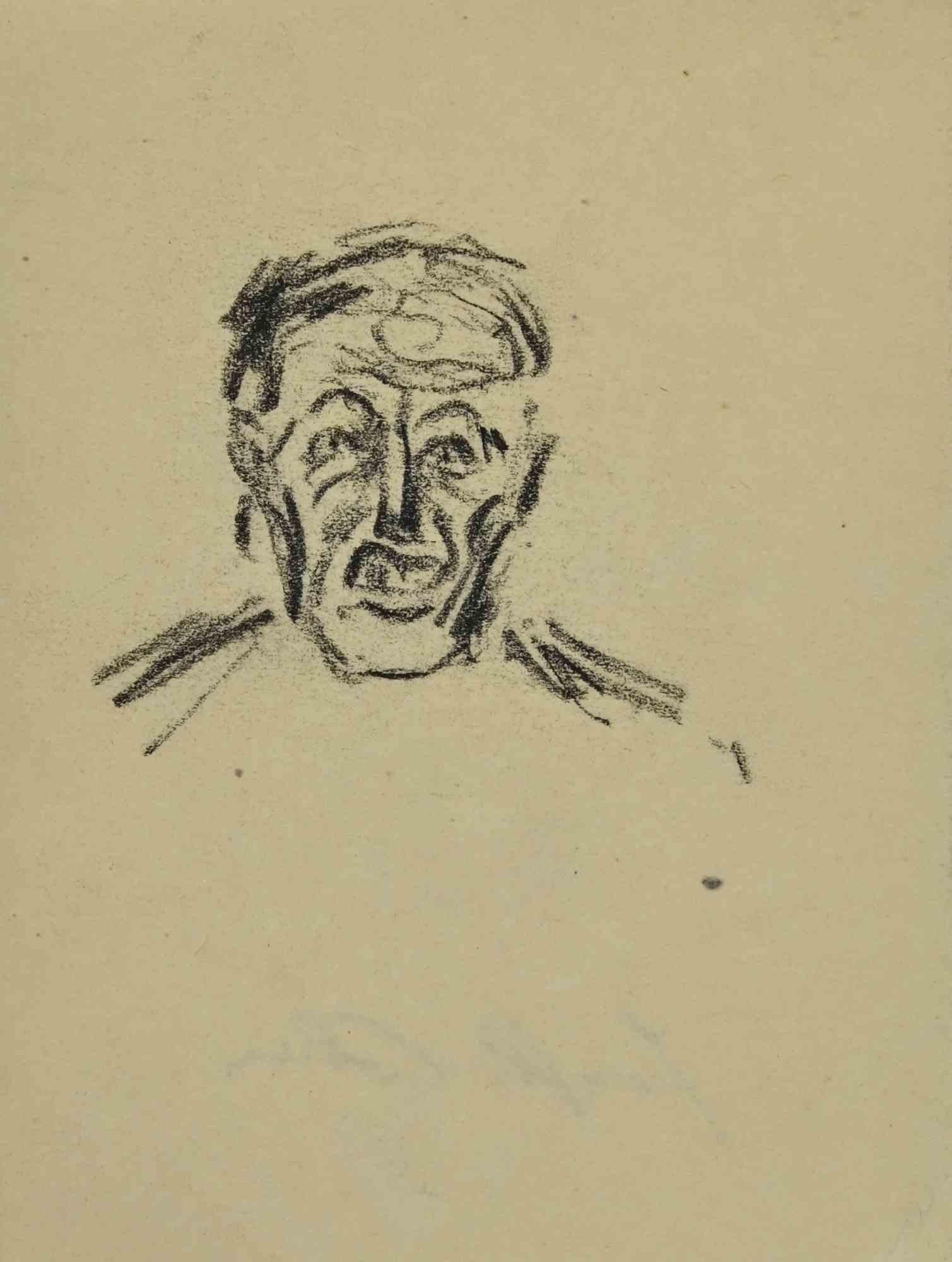
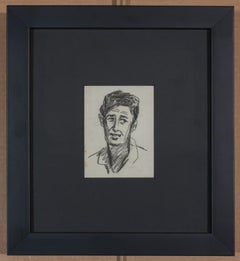
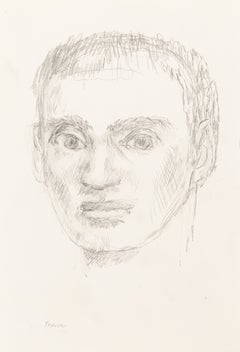
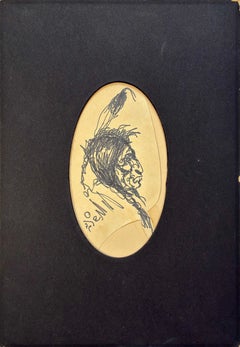
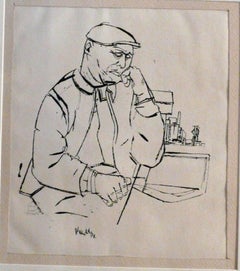
Title: Untitled Drawing
Year: Mid 20th century
Medium: Ink on velin paper
Size: 13.00 x 9.00 inches overall (33.02 x 22.86 cm overall)
Condition: Well preserved, consistent with age and medium
Inscription: Hand signed by the artist below the image
OLAF CARL WIEGHORST (1899–1988) was a Danish-born American painter, draughtsman, illustrator, printmaker, and sculptor whose extraordinary depictions of cowboys, horses, Native Americans, cattle drives, frontier settlements, and the sweeping landscapes of the American West established him as one of the most celebrated and collectible Western artists of the twentieth century. Renowned for his exceptional understanding of equine anatomy, authentic portrayals of ranch life, and remarkable ability to capture the atmosphere, movement, and emotional character of the frontier, Wieghorst developed a distinctive artistic language that combined the traditions of American Western realism with the technical discipline of European painting and the firsthand experience of a working cowboy, cavalryman, and mounted police officer. Born in Viborg, Denmark, on April 30, 1899, Wieghorst grew up fascinated by horses, circuses, adventure stories, and the romantic mythology of the American frontier, developing an ambition to experience the American West long before he immigrated to the United States. His father, an artist and photographic retoucher, encouraged his early drawing, while his youthful experiences as an acrobat, horseman, and performer helped establish the physical understanding of movement and animal behavior that would later distinguish his mature paintings. As a young boy, Wieghorst became captivated by the imagery of the American cowboy, particularly the Western illustrations of Frederic Remington, whose dramatic compositions and authentic representations of horses and frontier life provided an important artistic model. In 1918, at the age of nineteen, Wieghorst arrived in New York aboard a steamship and began the extraordinary personal journey that would transform his childhood fascination with the American West into the foundation of a distinguished artistic career. He subsequently enlisted in the United States Cavalry, serving with the Fifth Cavalry along the Mexican border, where his responsibilities included caring for horses and where he gained firsthand experience of military horsemanship, frontier landscapes, and the demanding physical conditions of the American Southwest. Following his military service, he worked as a ranch hand in Arizona, developing an intimate familiarity with cattle, horses, saddles, ranch equipment, and the daily routines of Western life. These experiences gave Wieghorst an unusual degree of authenticity among artists depicting the American frontier, allowing him to approach his subjects not simply as romantic historical imagery but as familiar elements of a world he had personally inhabited. Returning to New York during the 1920s, Wieghorst joined the New York City Police Department and served in its mounted division, continuing his lifelong association with horses while developing his artistic practice during his free time. His work as a mounted police officer reinforced his understanding of equine movement, anatomy, temperament, and the relationship between horse and rider, subjects that would become central to his artistic identity. Largely self-taught as a painter, Wieghorst developed his technique through sustained observation, drawing, experimentation, and the study of earlier Western artists, demonstrating that firsthand experience and disciplined artistic practice could provide an alternative foundation to conventional academic training. His artistic development unfolded during the broader modernist revolution shaped by Pablo Picasso, Alexander Calder, Alberto Giacometti, Salvador Dali, Joan Miro, Wassily Kandinsky, Marcel Duchamp, and Man Ray, whose innovations in Cubism, Surrealism, abstraction, sculpture, photography, and conceptual experimentation transformed the international artistic landscape of the twentieth century. Although Wieghorst pursued a fundamentally representational approach that differed substantially from the avant-garde practices of these artists, their achievements provide important historical context for understanding the diversity of artistic expression during his lifetime. Picasso’s restructuring of pictorial form, Calder’s investigations into movement and spatial balance, Giacometti’s engagement with the physical presence of living subjects, Dali’s technical illusionism, Miro’s imaginative compositions, Kandinsky’s expressive investigations into color, and the experimental approaches of Duchamp and Man Ray demonstrate the extraordinary range of modern artistic inquiry, while Wieghorst remained committed to the enduring traditions of narrative realism, landscape painting, and direct observation. His most significant artistic influences were the great painters and illustrators of the American West, particularly Frederic Remington and Charles Marion Russell, whose depictions of cowboys, cavalrymen, Native Americans, horses, and frontier landscapes established the visual foundations of Western American art. Wieghorst also belongs to the broader artistic tradition associated with artists such as Edward Borein, Maynard Dixon, Frank Tenney Johnson, and W. Herbert Dunton...
Category
Mid-20th Century American Realist Figurative Drawings and Watercolors