Antoni Pitxot
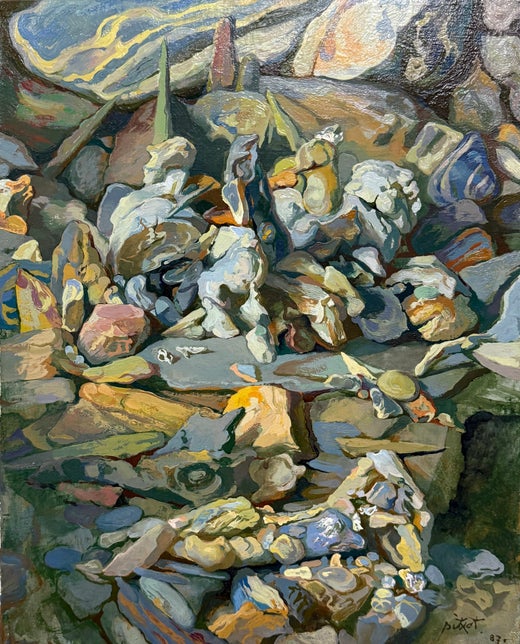
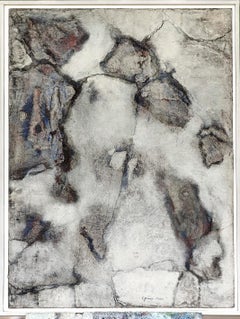
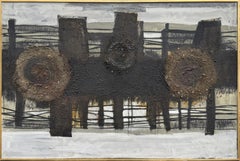
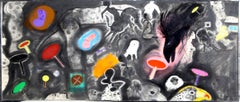
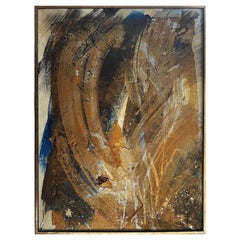
Dalí's friend and collaborator and member of a family of artists, the artistic production of Antoni Pitxot (Figueres, 1934) starts from a realistic brushstroke of expressionist roots that, When the 1960s arrived and having decided to settle permanently in Cadaqués, he left to immerse himself fully in surrealism. Through a complex creative process ―the artist elaborates sculptural models made with stones from L'Empordà and Cadaqués that, taking into account their anthropomorphic significance, become the starting point for his pictorial work―, the exhibition traces an itinerary through the different themes worked on by the painter, such as the allegory of music or the allegory of memory and time. Born into a family with an artistic tradition and closely related to the Dalí family (it is his uncle Ramon Pitxot, who makes Dalí discover impressionism and determines his vocation as a painter), he lives with his family in San Sebastián from 1946 to 1964. There he has as a drawing teacher Juan Núñez Fernández, who had also been one years before Dalí in Figueres. In the 1950s, while practicing expressionist realism, he made himself known with various exhibitions in San Sebastián, Barcelona, Madrid, Bilbao or Lisbon. In 1964 he settled permanently in the family home in Cadaqués. In this period, his work undergoes a decisive turn, since it directs attention to the study of the objects in his environment: the stones of Cadaqués, from which he gives rise to anamorphic, anthropomorphic and allegorical visions, with which he connects with a current underground of Western painting that ranges from certain masters of Italian Mannerism to Surrealism. Also during these years, rebuilding old family ties, she began her relationship with Dalí, which culminated in a lasting friendship.