Video Loading
Want more images or videos?
Request additional images or videos from the seller.

Christo and Jeanne-Claude
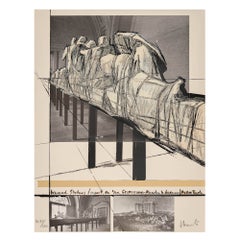
Wrapped Statues/West Germany

1988

$7,500
£5,670.13
€6,791.81
CA$10,673.39
A$10,908.05
CHF 6,228.92
MX$141,938.67
NOK 71,172.14
SEK 74,181.68
DKK 50,767.68

About the Item

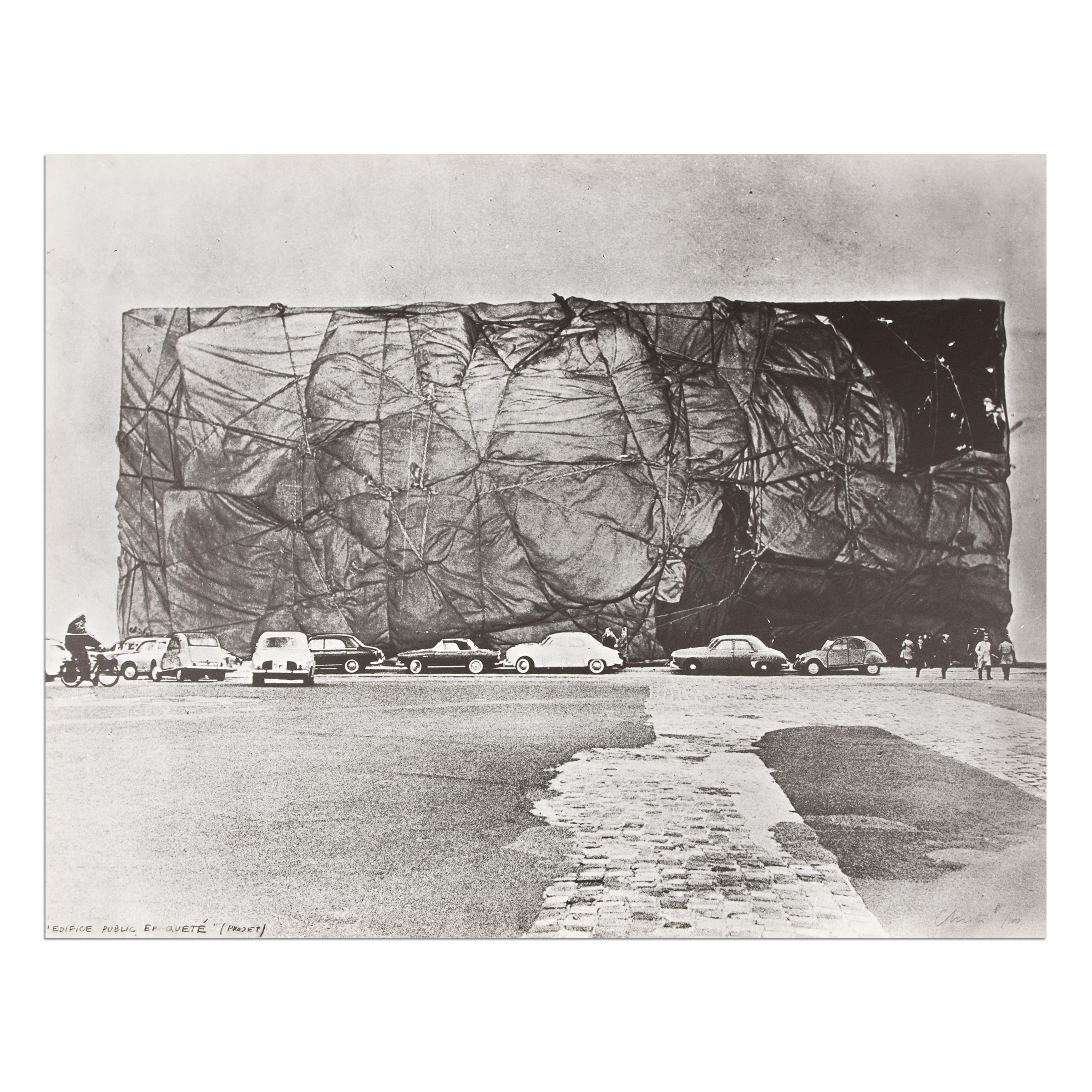
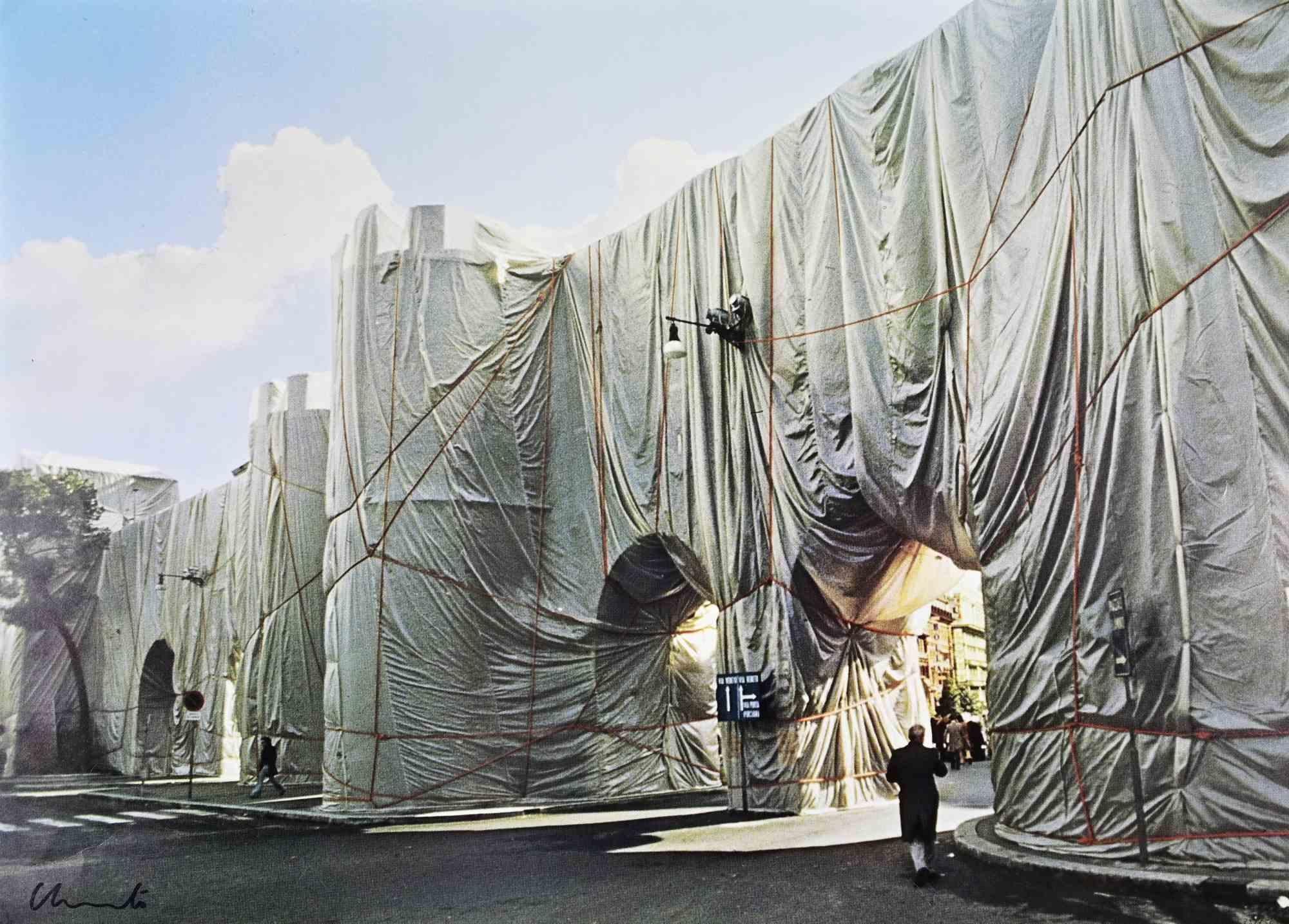
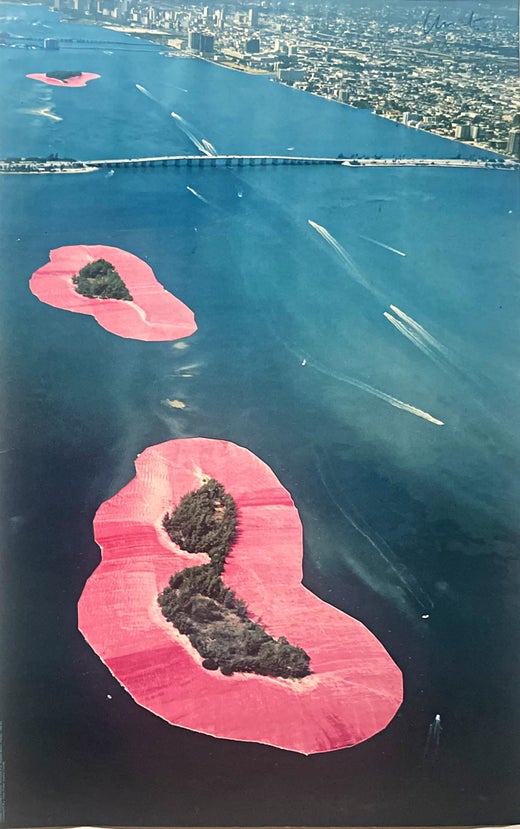
Wrapped Statues/West Germany Christo (Bulgarian, 1935-2020) Mixed Media Hand-signed lower right Numbered PP 1/10 lower left 35 x 27 inches 39.25 x 31.25 inches with frame An environmental installation artist and painter of architectural landscape drawings, Christo has become known for "wrapping" famous buildings and geographical landmarks with plastic and woven-fabric sheets. His projects, usually with the assistance of his wife and dealer Jeanne-Claude, include wrappings of the "Berne Kunsthalee" in 1968, a coastline area in Australia; the Reichstag, in Berlin; and the Pont Neuf in Paris. In California, he built a running fence 18 feet high and 24.5 miles long and in Japan and California, created a running series of 3,100 umbrellas. In February 2005, the Christos oversaw the installation of one of their most attention-getting endeavors, The Gates, Central Park, New York, 1979-2005. Opening February 11 and lasting sixteen days, it was the biggest art project in the history of New York City. Seventy-five hundred frames, sixteen feet high, were placed at intervals along 23 miles of footpaths in the park. Suspended from the frames were orange tinted fabric banners, intended to convey a "splash of sunrise" and what Javacheff Christo described as "a visual golden river". But declining to say much about the project, the artist said: "This project is not involving talk. It's a real, physical space. It's not necessary to talk. You spend time, you experience the project". (Tribune) Javacheff Christo was born in Gabrovo, Bulgaria, on June 13, 1935, the same day as his wife, Jeanne-Claude. He studied at the Fine Arts Academy in Sofia from 1952 to 1956, and then worked at the Burian Theatre in Prague in 1956. He did further study in Vienna in 1957, and the following year went to Paris where he began creating wrapped, packaged objects. He and his wife have lived primarily in New York City, although they travel frequently. They do not use their last name, Javacheff, although their son Cyril took the last name of Christo. According to Bedford McIntosh, "In the past few years they have come to refer to themselves as the 'artists Christo and Jeanne-Claude,' recognizing her critical role in the projects. The titles on their more recent projects reflect this." Funding for the site-specific works come from the sale of preparatory drawings, documents, and sculptures.

More From This Seller

View All
Yellow Store Front, Project, 1980

Yellow Store Front, Project, 1980

By Christo

Located in Missouri, MO

Yellow Store Front, Project, 1980 By. Christo (Bulgarian, 1935-2020) Signed Lower Right Titled Lower Left Unframed: 32 x 23.5 inches Framed: 32.5 x 24 inches An environmental instal...

Category

1980s American Modern Mixed Media

Materials

Mixed Media

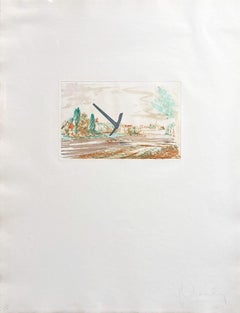
Pickaxe (Spitzhacke) Superimposed on a Drawing of the Site by E.L. Grimm

Pickaxe (Spitzhacke) Superimposed on a Drawing of the Site by E.L. Grimm

By Claes Oldenburg

Located in Missouri, MO

Pickaxe (Spitzhacke) Superimposed on a Drawing of the Site by E.L. Grimm, 1982 By Claes Oldenburg (Swedish, American, 1929-2022) Unframed: 26" x 20" Framed: 28.75" x 22.75" Signed and Dated Lower Right Whimsical sculpture of pop culture objects, many of them large and out-of-doors, is the signature work of Swedish-born Claes Oldenburg who became one of America's leading Pop Artists. He was born in Stockholm, Sweden. His father was a diplomat, and during Claes' childhood moved his family from Stockholm to a variety of locations including Chicago where the father was general consul of Sweden and where Oldenburg spent most of his childhood. He attended the Latin School of Chicago, and then Yale University where he studied literature and art history, graduating in 1950, the same year Claes became an American citizen. Returning to Chicago, he enrolled at the Art Institute of Chicago from 1952 to 1954 and also worked as a reporter at the City News Bureau. He opened his own studio, and in 1953, some of his satirical drawings were included in his first group show at the Club St. Elmo, Chicago. He also painted at the Oxbow School of Painting in Michigan. In 1956, he moved to New York where he drew and painted while working as a clerk in the art libraries of Cooper-Union Museum for the Arts of Decoration. Selling his first artworks during this time, he earned 25 dollars for five pieces. Oldenburg became friends with numerous artists including Jim Dine, Red Grooms and Allan Kaprow, who with his "Happenings" was especially influential on Oldenburg's interest in environmental art. Another growing interest was soft sculpture, and in 1957, he created a piece later titled Sausage, a free-hanging woman's stocking stuffed with newspaper. In 1959, he had his first one-man show, held at the Judson Gallery at Washington Square. He exhibited wood and newspaper sculpture and painted papier-mache objects. Some viewers of the exhibit commented how refreshing Oldenburg's pieces were in contrast to the Abstract Expressionism, a style which much dominated the art world. During this time, he was influenced by the whimsical work of French artist, Bernard Buffet, and he experimented with materials and images of the junk-filled streets of New York. In 1960, Oldenburg created his first Pop-Art Environments and Happenings in a mock store full of plaster objects. He also did Performances with a cast of colleagues including artists Lucas Samaras, Tom Wesselman, Carolee Schneemann, Oyvind Fahlstrom and Richard Artschwager, dealer Annina Nosei, critic Barbara Rose, and screenwriter Rudy Wurlitzer. His first wife (1960-1970) Pat Muschinski, who sewed many of his early soft sculptures, was a constant performer in his Happenings. This brash, often humorous, approach to art was at great odds with the prevailing sensibility that, by its nature, art dealt with "profound" expressions or ideas. In December 1961, he rented a store on Manhattan's Lower East Side to house "The Store," a month-long installation he had first presented at the Martha Jackson Gallery in New York. This installation was stocked with sculptures roughly in the form of consumer goods. Oldenburg moved to Los Angeles in 1963 "because it was the most opposite thing to New York I could think of". That same year, he conceived AUT OBO DYS, performed in the parking lot of the American Institute of Aeronautics and Astronautics in December 1963. In 1965 he turned his attention to drawings and projects for imaginary outdoor monuments. Initially these monuments took the form of small collages such as a crayon image of a fat, fuzzy teddy bear looming over the grassy fields of New York's Central Park (1965) and Lipsticks in Piccadilly Circus, London (1966). Oldenburg realized his first outdoor public monument in 1967; Placid Civic Monument took the form of a Conceptual performance/action behind the Metropolitan Museum of Art, New York, with a crew of gravediggers digging a 6-by-3-foot rectangular hole in the ground. Many of Oldenburg's large-scale sculptures of mundane objects elicited public ridicule before being embraced as whimsical, insightful, and fun additions to public outdoor art. From the early 1970s Oldenburg concentrated almost exclusively on public commissions. Between 1969 and 1977 Oldenburg had been in a relationship with Hannah Wilke, feminist artist, but in 1977 he married Coosje van Bruggen, a Dutch-American writer and art historian who became collaborator with him on his artwork. He had met her in 1970, when she curated an exhibition for him at the Stedelijk Museum in Amsterdam. Their first collaboration came when Oldenburg was commissioned to rework Trowel I, a 1971 sculpture of an oversize garden tool, for the grounds of the Kröller-Müller Museum in Otterlo, the Netherlands. Oldenburg has officially signed all the work he has done since 1981 with both his own name and van Bruggen's. In 1988, the two created the iconic Spoonbridge and Cherry sculpture for the Walker Art Center in Minneapolis, Minnesota that remains a staple of the Minneapolis Sculpture Garden as well as a classic image of the city. Typewriter Eraser...

Category

20th Century American Modern Mixed Media

Materials

Etching, Aquatint, Photogravure
The Maroon Robe

The Maroon Robe

By Jim Dine

Located in Missouri, MO

Maroon Carborundum Robe (C. 47), 1991 Published by Pace Editions, New York Jim Dine (American, b. 1935) Woodcut Print Hand Signed, Dated, and Numbered Lower Left Edition 1/12 Lower L...

Category

1990s Pop Art Mixed Media

Materials

Color, Woodcut

The Wailing Wall (Le Mur des Lamentations) 1981

The Wailing Wall (Le Mur des Lamentations) 1981

By (after) Salvador Dali

Located in Missouri, MO

Salvador Dalí (Spanish, 1904–1989) "The Wailing Wall" (Le Mur des Lamentations) 1981 Bronze with Silver Patina on Jerusalem Stone Base 14 x 11½ x 3 in. (35.6 x 29.2 x 7.6 cm) Signed ...

Category

1980s Modern Abstract Sculptures

Materials

Silver, Bronze

Untitled

Untitled

By Robert Rauschenberg

Located in Missouri, MO

Robert Rauschenberg "Untitled" 1973 Medium: Screenprint and collage in colors Printed and Published by Styria Studios, New York and with their blindstamp Signed and Numbered 71/100 Images Size: approx. 28 x 20 inches Framed Size: approx. 34 x 26 inches Born with the name Milton Rauschenberg in Port Arthur, Texas, Robert Rauschenberg became one of the major artists of his generation and is credited along with Jasper Johns of breaking the stronghold of Abstract Expressionism*. Rauschenberg was known for assemblage*, conceptualist methods, printmaking, and willingness to experiment with non-artistic materials--all innovations that anticipated later movements such as Pop Art*, Conceptualism*, and Minimalism*. In May, 1999, ARTNews magazine featured him as one of the top twenty-five influential western artists, stating: "His irreverent notions of what an artwork could be gained him the status of an enfant terrible. . .Rauschenberg pushed the viewer to accept the unexpected." He has said that he believes painting should relate to both life and art and that he wants is artwork to be the intermediary between the two. He received much formal art education beginning with the Kansas City Art Institute in 1947 and 1948. He studied briefly in Paris at the Academie Julian*, and from 1948 to 1949 was at Black Mountain College* in North Carolina with Josef and Anni Albers. This period was followed by several years attendance at the Art Students League* in New York City with Morris Kantor and Vaclav Vytlacil. In 1951, he exhibited all white and black paintings incorporating viewer participation through the shadows they cast on the works. At Black Mountain College, he had met composer, John Cage, and dancer- choreographer, Merce Cunningham, for whom he worked in his company as a designer, manager, and performer. Frequently he scoured the area in which they were performing for 'unusual' objects such as tires, old radios...

Category

1970s Abstract Expressionist Figurative Prints

Materials

Lithograph

"Men at the Seattle Public Market" (Two Figures)

"Men at the Seattle Public Market" (Two Figures)

By Mark Tobey

Located in Missouri, MO

Mark Tobey "Men at the Seattle Public Market" (Two Figures) 1958 Ink and Tempera on Silk Signed and Dated Lower Left *This is a rare and important work. See attached images with book...

Category

Mid-20th Century Modern Figurative Paintings

Materials

Silk, Ink, Tempera

You May Also Like

Christo "Wrapped Statues (Project for Der Glyptotek in Munich Aegean Temple)"

Christo "Wrapped Statues (Project for Der Glyptotek in Munich Aegean Temple)"

By Christo

Located in Toronto, Ontario

Christo (1935–2020) was one of the most influential figures in 20th-century environmental and installation art. Working with Jeanne-Claude, he transformed familiar buildings, monumen...

Category

1970s Modern Abstract Prints

Materials

Offset, Screen

The Museum of Modern Art, Wrapped (Front), Project for New York

The Museum of Modern Art, Wrapped (Front), Project for New York

By Christo and Jeanne-Claude

Located in Washington, DC

Artist: Christo Title: The Museum of Modern Art, Wrapped (Front), Project for New York Portfolio: 1971 (Some) Not Realized Projects Medium: Offset lithograph on Rives BFK and Special...

Category

1970s American Modern More Prints

Materials

Lithograph, Offset

The Museum of Modern Art, Wrapped (Rear), Project for New York

The Museum of Modern Art, Wrapped (Rear), Project for New York

By Christo and Jeanne-Claude

Located in Washington, DC

Artist: Christo Title: The Museum of Modern Art, Wrapped (Rear), Project for New York Portfolio: 1971 (Some) Not Realized Projects Medium: Offset lithograph on Rives BFK and Special ...

Category

1970s American Modern More Prints

Materials

Lithograph, Offset

Christo and Jeanne-Claude Wrapped Reichstag, 1971

Christo and Jeanne-Claude Wrapped Reichstag, 1971

By Christo and Jeanne-Claude

Located in North Miami, FL

Christo and Jeanne-Claude, American, Bulgarian and Moroccan, b. 1935-2020 and 1935-2009. Newly framed and hand-signed. Title: Wrapped Reichstag Serie...

Category

Vintage 1970s French Post-Modern Prints

Materials

Glass, Paper

Javacheff Christo 'Wrapped Reichstag, Project for Berlin' 1992

Javacheff Christo 'Wrapped Reichstag, Project for Berlin' 1992

By Javacheff Christo

Located in Brooklyn, NY

Vintage blank note card featuring Christo and Jeanne-Claude’s Wrapped Reichstag, Project for Berlin, published by Nouvelles Images S.A. Editeurs and offset printed in France. Profess...

Category

1990s Prints and Multiples

Materials

Offset