Want more images or videos?
Request additional images or videos from the seller.

Oliver Samsinger
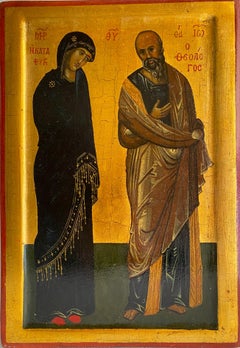
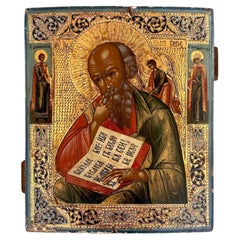
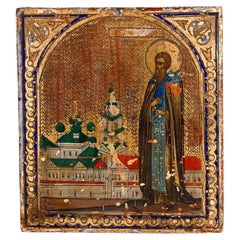
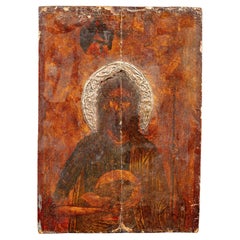
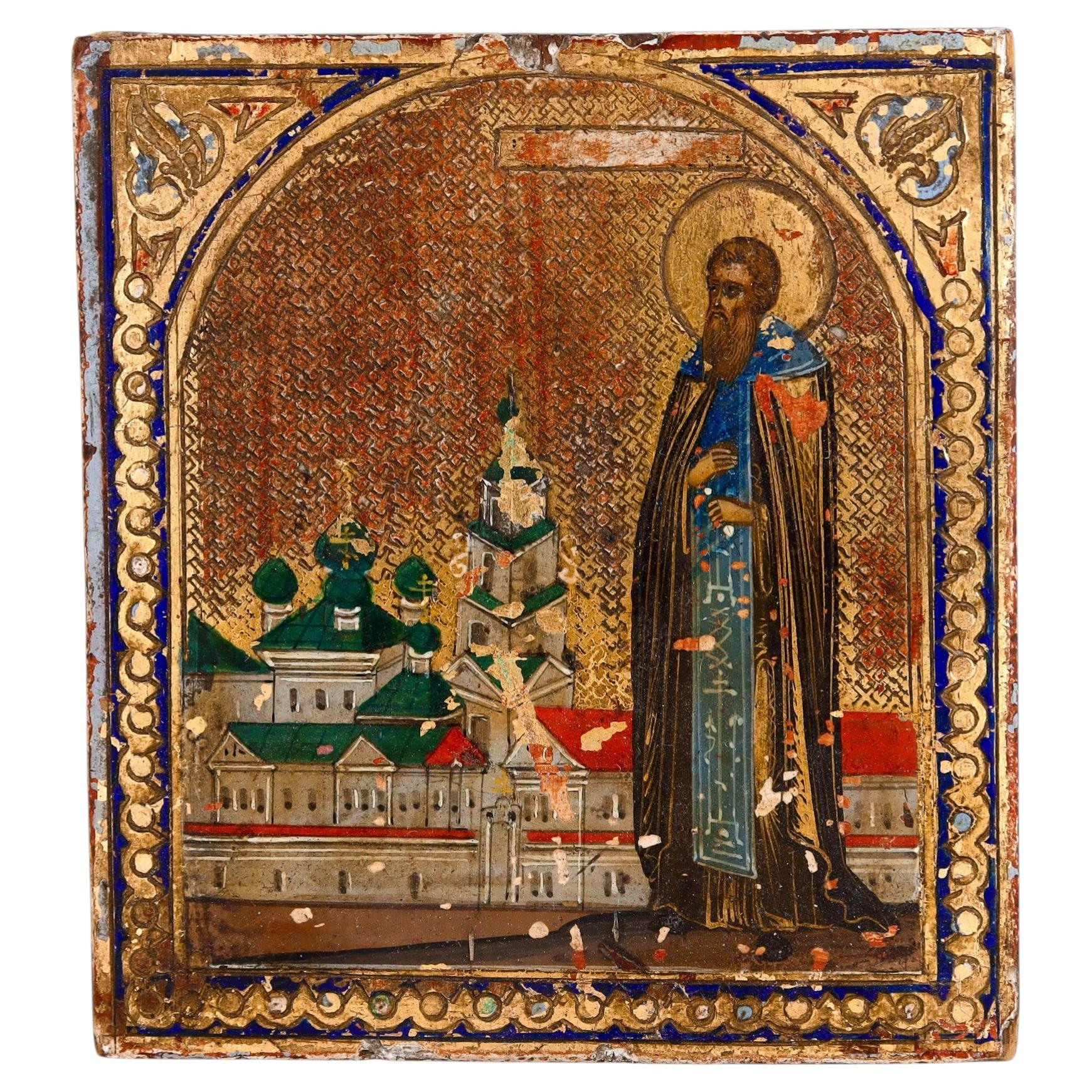
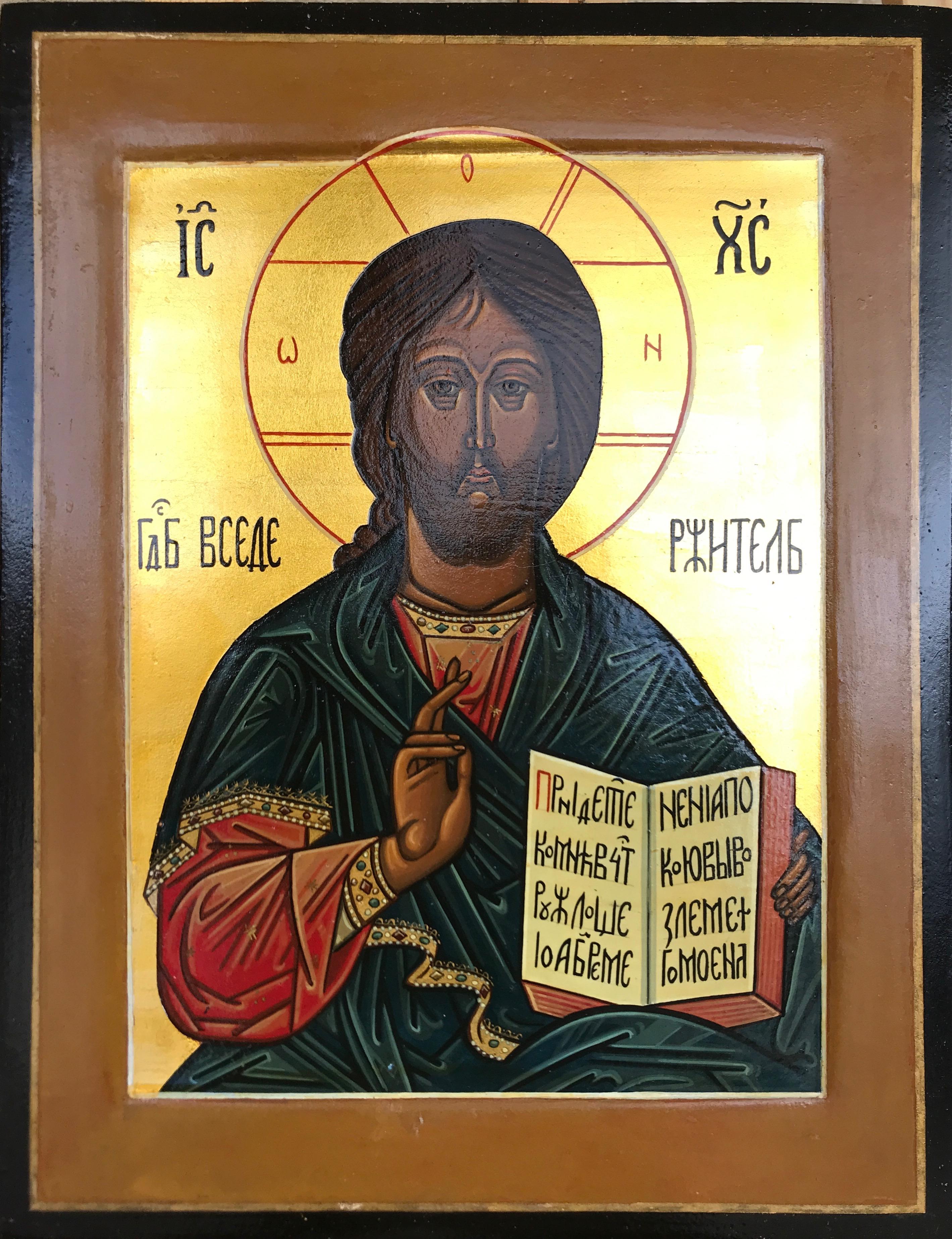
Saint John The Forerunner after a Russian Icon from the 16th Century

$986.99
$1,225.3620% Off
£736.72
£921.2720% Off
€864VAT Included
€1,08020% Off
CA$1,379.47
CA$1,723.3020% Off
A$1,404.37
A$1,741.9320% Off
CHF 813.09
CHF 1,016.6620% Off
MX$18,541.73
MX$22,893.1520% Off
NOK 9,088.69
NOK 11,435.3920% Off
SEK 9,698.36
SEK 12,196.9420% Off
DKK 6,610.26
DKK 8,234.0820% Off

About the Item

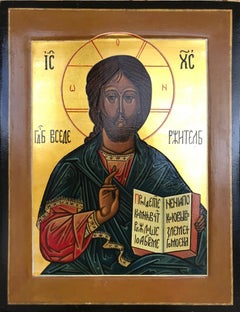
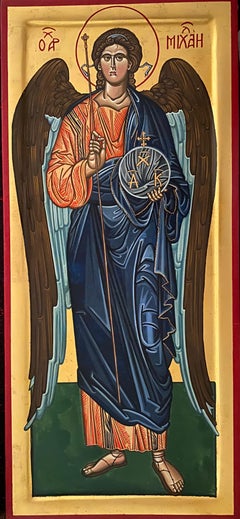
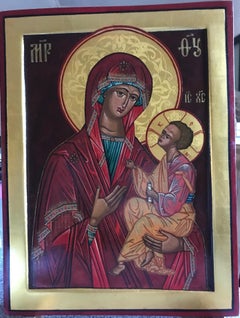
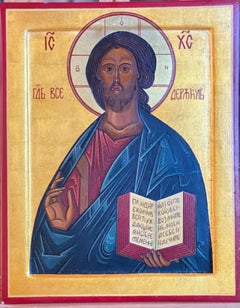
Saint John, The Forerunner, after a Russian Icon from the 16th Century. Tempera and gold leave on gesso over a wooden board. Dimensions: (H) 33 x (W) 25,5 x (D) 4 cm. Photos are included with the icon exposed to very different lighting, but all of them are natural. John, The Forerunner, is depicted as an ascetic desert saint with a tousled beard and a coat made from camel hair. The expression that transmits his beautiful face is very intense. This is how the artist sums up the technique used by him to create the icon: “The aim of these steps is to create a durable painting. The icon is eternal. The first step is to choose a support, traditionally made of wood, from the center of the trunk to avoid warping it. For this purpose, two hardwood bolts were often used on the back to give the picture panel additional stability. Often a frame is milled out. Then the image carrier is sanded smooth and now 12 or 14 thin layers of gesso are applied and sanded smooth as well. Then the preliminary drawing is applied and the drawing board is prepared with a special preparation called bolus. This bolus can be polished to a high gloss. Afterward, the gold leaf is "shot" with special brushes. It dries up within a few hours and can now be polished with agate. Gold leaf is real 24-carat gold . Now does the actual process of painting begins. Egg tempera is made fresh from egg yolk, water, and a little vinegar. This is used to prepare the color pigments. Tempera painting is done in numerous layers from dark to light. When the icon is finished, it is left to dry for a few months and varnished with a special varnish called Olifa made from boiled linseed oil and other ingredients”. ABOUT THE ARTIST Oliver Samsinger (Vienna, 1968) began to take an interest in icons in 1990. He undertakes several trips to Bulgaria, Greece, and Cyprus to see in situ the original works treasured in these three countries. This experience will be crucial in his life, since the studies carried out in Sofia, the Bulgarian capital, and his stay on Mount Athos constitute his greatest impulse and motivation to dedicate himself to making his own works, in a self-taught way, inspired by the models Russians and Byzantines that he had seen so closely, applying all his technical and artistic skills to his creations. Oliver studies the ancient tradition for the realization of icons: wooden support, egg tempera paint, gold leaf, special varnishes ... it is a long and very elaborate procedure by means of which he makes very personal replicas of important icons of the orthodox church. His icons have been exhibited in the Diocesan Museum of Vienna; also in the old Carmelite Church (KarmeliteKirche) and the Villa Wertheimstein in the same city between 2003 and 2006, and have also had successful presentations in Spain.
  • Creator:
    Oliver Samsinger (1968, Austrian)
  • Dimensions:
    Height: 13 in (33 cm)Width: 10.04 in (25.5 cm)Depth: 1.58 in (4 cm)
  • Medium:
  • Movement & Style:
  • Period:
  • Condition:
  • Gallery Location:
    Segovia, ES
  • Reference Number:
    1stDibs: LU74439417522

More From This Seller

View All
The Evangelist Matthew, after a Russian icon, school of Moscow, 15th century

The Evangelist Matthew, after a Russian icon, school of Moscow, 15th century

Located in Segovia, ES

The Evangelist Mathew after a Russian Icon. School of Moscow, 15th century. Egg tempera, gold leaf, and gesso, over a wooden board. Dimensions: (H) 52 x (W) 36 x (D) 3 cm. Saint Matthew, the Evangelist, is represented at his own desk, a true artisan laboratory. THE THECHNIQUE This is how the artist sums up the technique used by him to create the icon: “The aim of these steps is to create a durable painting. The icon is eternal. The first step is to choose a support, traditionally made of wood, from the center of the trunk to avoid warping it. For this purpose, two hardwood bolts were often used on the back to give the picture panel additional stability. Often a frame is milled out. Then the image carrier is sanded smooth and now 12 or 14 thin layers of gesso are applied and sanded smooth as well. Then the preliminary drawing is applied and the drawing board is prepared with a special preparation called bolus. This bolus can be polished to a high gloss. Afterwards, the gold leaf is "shot" with special brushes. It dries up within a few hours and can now be polished with an agate. Gold leaf is real 24 carat gold . Now does the actual process of painting begin. Egg tempera is made fresh from egg yolk, water and a little vinegar. This is used to prepare the color pigments. Tempera painting is done in numerous layers from dark to light. When the icon is finished, it is left to dry for a few months and varnished with a special varnish called Olifa made from boiled linseed oil and other ingredients”. ABOUT THE ARTIST Oliver Samsinger...

Category

1990s Byzantine Mixed Media

Materials

Gold Leaf

Christ Pantocrator after an Russian icon of the 15th Century

Christ Pantocrator after an Russian icon of the 15th Century

Located in Segovia, ES

Christ Pantocrator after a Russian icon of the 15th Century. Tempera and gold leaf on gesso over a wooden board. Measurements in centimeters: 38 x 29.5 x 3 cm. / In inches: 14.96 x 11.8 x 1.18 " This is how the artist sums up the technique used by him to create the icon: “The aim of these steps is to create a durable painting. The icon is eternal. The first step is to choose a support, traditionally made of wood, from the center of the trunk to avoid warping it. For this purpose, two hardwood bolts were often used on the back to give the picture panel additional stability. Often a frame is milled out. Then the image carrier is sanded smooth and now 12 or 14 thin layers of gesso are applied and sanded smooth as well. Then the preliminary drawing is applied and the drawing board is prepared with a special preparation called bolus. This bolus can be polished to a high gloss. Afterwards, the gold leaf is "shot" with special brushes. It dries up within a few hours and can now be polished with agate. Gold leaf is real 24-carat gold. Now does the actual process of painting begins. Egg tempera is made fresh from egg yolk, water, and a little vinegar. This is used to prepare the color pigments. Tempera painting is done in numerous layers from dark to light. When the icon is finished, it is left to dry for a few months and varnished with a special varnish called Olifa made from boiled linseed oil and other ingredients”. ABOUT THE ARTIST Oliver Samsinger (Vienna, 1968) began to take an interest in icons in 1990. He undertakes several trips to Bulgaria, Greece, and Cyprus to see in situ the original works treasured in these three countries. This experience will be crucial in his life since the studies carried out in Sofia, the Bulgarian capital, and his stay on Mount Athos...

Category

1990s Byzantine Mixed Media

Materials

Gold Leaf

The archangel Saint Michael, after an icon of the 14th century

The archangel Saint Michael, after an icon of the 14th century

Located in Segovia, ES

Archangel Saint Michael after an icon from Constantinople of the 14th Century. Artist: Oliver Samsinger Technique: Egg tempera on gesso and wood, with application of gold leaf Dimens...

Category

2010s Byzantine Figurative Paintings

Materials

Gold Leaf

Christ Pantocrator" After an Icon in the style of the Moscow School

Christ Pantocrator" After an Icon in the style of the Moscow School

Located in Segovia, ES

"Christ Pantocrator". After an Icon in the style of the Moscow school (15th century). Somewhat similar to that of Rublev. Author: Oliver Samsinguer Egg tempera and gold leaf on gesso and on wood. Dimensions; (H) 42 x (W) 33.5 x (D) 3.5 cm. (H) 16.54 x (W) 13.19 x (D) 1.38 in. This is how the artist sums up the technique used by him to create the icon: “The aim of these steps is to create a durable painting. The icon is eternal. The first step is to choose a support, traditionally made of wood, from the center of the trunk to avoid warping it. For this purpose, two hardwood bolts were often used on the back to give the picture panel additional stability. Often a frame is milled out. Then the image carrier is sanded smooth and now 12 or 14 thin layers of gesso are applied and sanded smooth as well. Then the preliminary drawing is applied and the drawing board is prepared with a special preparation called bolus. This bolus can be polished to a high gloss. Afterwards, the gold leaf is "shot" with special brushes. It dries up within a few hours and can now be polished with an agate. Gold leaf is real 24-carat gold . Now, the actual process of painting begins. Egg tempera is made fresh from egg yolk, water, and a little vinegar. This is used to prepare the color pigments. Tempera painting is done in numerous layers from dark to light. When the icon is finished, it is left to dry for a few months and varnished with a special varnish called Olifa made from boiled linseed oil and other ingredients”. ABOUT THE ARTIST Oliver Samsinger...

Category

1990s Byzantine Figurative Paintings

Materials

Gold Leaf

You May Also Like

18th/19th Century Russian Icon of St. John the Theologian in Silence

18th/19th Century Russian Icon of St. John the Theologian in Silence

Located in Los Angeles, CA

A traditional Russian icon of St John; the Theologian in Silence, where he appears to be holding the Gospel. The scene's title derives from the saint's hand gesture in which his fing...

Category

Antique 18th Century Russian Paintings

Materials

Wood

Russian Religious Icon of St. John the Warrior, 19th Century

Russian Religious Icon of St. John the Warrior, 19th Century

Located in Meulebeke, BE

Russia / 19th century / Icon St. John the Warrior / wood / Religious A striking 19th-century Russian icon depicting St. John the Warrior, painted with exceptional attention to deta...

Category

Antique 19th Century Russian Baroque Religious Items

Materials

Wood

Antique Russian or Eastern Orthodox Icon of Saint Gennady of Novgorod

Antique Russian or Eastern Orthodox Icon of Saint Gennady of Novgorod

Located in Philadelphia, PA

A fine antique Eastern Orthodox icon. In gold and paint on wood. Depicting Saint Gennadius of Novgorod overlooking the city of Novgorod. Gennadius is most well known for compiling...

Category

Early 20th Century Religious Items

Materials

Wood

18th Century Eastern Orthodox Tempera Icon

18th Century Eastern Orthodox Tempera Icon

Located in Dekalb, IL

Antique tempera Icon depicting St. John the Baptist holding his own head, a reference to his execution by beheading. This came as a result of John publicl...

Category

Antique 17th Century Greek Renaissance Paintings

Materials

Tin

Antique Polish Icon of the Orthodox Icon of Saint Theodore c1800's

Antique Polish Icon of the Orthodox Icon of Saint Theodore c1800's

Located in Highwood, IL

Antique Polish Icon of The Great Martyr Theodore Stratelates (our best hypothesis). Our purported Antique Polish Icon of the Orthodox Icon of Saint Theodore the General, Commander, S...

Category

Antique Late 19th Century Polish Paintings

Materials

Oak

Antique Russian Icon of Saint Basil the Great Tempera Gold on Wood

Antique Russian Icon of Saint Basil the Great Tempera Gold on Wood

Located in Malmö, SE

Antique ca. 19th early 20th cent. Russian Orthodox Icon of Saint Basil the Great / Святой Василий Великий hand - painted with Tempera on hand - carved wood panel and richly Gilt. Lik...

Category

Antique Late 19th Century Russian Revival Decorative Art

Materials

Gold