Want more images or videos?
Request additional images or videos from the seller.

Ellen Brooks
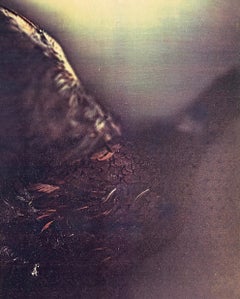
Front Entry, (Forest), Large Scale Cibachrome

1990

$6,000
£4,564.45
€5,469.28
CA$8,555.99
A$8,773.14
CHF 5,008.39
MX$113,701.69
NOK 56,902.44
SEK 59,882.94
DKK 40,875.44

About the Item

Ellen Brooks (born February 3, 1946) is an American photographer. She began her career on the West Coast, and is associated with the Los Angeles-based art community of the late 1960s and ‘70s. In 1982 she moved to New York, where her practice has since been based. Her work is known for its boundary-pushing forays into sculpture, and for her use of screens and image altering pro-filmic photographic processes. She has shown at the Museum of Modern Art (MOMA), the Whitney Museum of American Art, the Los Angeles Museum of Contemporary Art, and the Centre Pompidou, and has worked in the permanent collections of the MOMA, the Whitney, the National Museum of American Art, the Getty Museum, and others. Biography Ellen Brooks was born in Los Angeles, California. She received both her Bachelor’s degree and her Master’s degree in Fine Arts from the University of California, Los Angeles, in 1968 and 1971 respectively. Her early works dealt primarily with human figures, notably Beach Piece, an early work in which she employed the photographic medium to address issues of alienation versus bodily presence in space. The work, which featured larger-than-lifesize nude figures in various poses of recline, was installed on Venice Beach, from which the figures appeared to half-emerge from the sand. During her graduate studies she constructed a series of flats [Flats 1–5] which were shown at the Museum of Modern Art in the 1970 exhibition Photography Into Sculpture. The flats addressed similar issues of scale to Beach Piece from the opposite direction, incorporating the viewer’s vantage point from above to obfuscate the objects’ situation in space. Following her MFA she moved to San Francisco, where her use of the photograph continued a progression of investigations of scale and installation. Her next major work, Adolescent Piece, also used nude bodies. The work would subsequently be refabricated and reinstalled in several different forms at different scales over the next four decades, at University of Las Vegas, San Francisco Art Institute, and at the Los Angeles Institute of Contemporary Art. Its most recent iteration, at MOCA in 2011, employed the original process of 1976, using Xerox transfers from photographic contact sheets. This installation “constituted a ‘fourth generation’ of the photographs,” according to the artist. “The first generation was the negative; the second, the eight-by-10-inch contact sheet, the third, the machine copy of the contact sheet onto wax paper, and the fourth, the images glued onto the gallery walls.” The work garnered significant attention during several of its stagings, due to the relative unguardedness of its young, unclothed subjects, all between the ages of ten and fifteen. Tableaux In the late ‘70s and into the 1980s, Brooks worked on an extended series called Tableaux. Like the earlier flats, the Tableaux used the reduced scale of maquettes to stage film still-esque scenes of domestic interiors and dilemmas, often incorporating disarray or ambiguous circumstances within their three walls. Created using miniature figures and other ephemera from the everyday world, these were meant to recall both the rote “stock” characters of soap opera, and domestic dramas constructed from real life accounts and from magazines. The scenes were photographed and subsequently sized up once again. The series was shown at Barbara Gladstone Gallery in 1982, and a selection of the works was also included in the 1983 Whitney Biennial. In 1985, Brooks installed lightboxes of photo transparencies as a site-specific window display at the New Museum of Contemporary Art’s then-location on Broadway. Using highly staged iconography appropriated from various cultural intersections of art and commerce, the display’s location was meant to address the work’s position to commercial interests, both metaphorically and in terms of its physical siting. Screen Pieces Beginning in the late 1980s, Brooks began to translate her interest in appropriated and generic imagery to a literal process, incorporating ever-increasing levels of distance from the source material. The artist employed a black foam-based material she would refer to as a screen, which compressed and flattened visual information. Placed between the camera and the subject, itself taken from advertising print, calendars and other reproductions, the screen acted as an additional point of interception between the initial object and its image. Current Projects More recently Brooks has expanded her sculptural practice out from maquettes into large-scale sculptural reconstitutions of photo-based printed fabrics, creating a series of optically charged large-format abstract photographs. The sculptures serve as source material for, and exist peripherally to the final photographs. She served on the faculty of New York University’s Tisch School of the Arts in the Photography Department from 1985 to 2008, and has taught at the Cooper Union, the School of Visual Arts, and the Rhode Island School of Design among others. She was a recipient of the National Endowment for the Arts grant twice, in 1979 and 1991, and served on the final NEA panel for photography, shortly before the collapse of the Association’s funding and subsequent dismantling of many of its programs. In 2011, she was included in two retrospective exhibitions: for LA MOCA’s Under the Big Black Sun exhibition as part of the Pacific Standard Time citywide initiative, and in Photography into Sculpture at Cherry and Martin Gallery. She lives and works in New York. Collections (Selected List) Museum of Modern Art, New York Whitney Museum of American Art, New York Getty Museum of Art, Malibu, California Los Angeles County Museum of Art, California San Francisco Museum of Modern Art, California National Museum of American Art, Washington, D.C. Allen Memorial Art Museum, Oberlin College, Ohio University of California at Los Angeles, California Albright-Knox Museum, Buffalo, New York Museo d’ Arte Contemporaneo, Mexico City, Mexico Deutsche Bank, Frankfurt, Germany City of Paris National Gallery of Canada, Ottawa, Canada Musee d’Art Contemporain of Montreal, Ontario, Canada Southeast Banking Corporation, Coral Gables, Florida Capitol Group Corporation (commissioned project) New York Allan Goldring, New York City, New York Standard Oil Merrill Lynch Goldman Sachs Corporation Polaroid Corporation
  • Creator:
    Ellen Brooks (1946, American)
  • Creation Year:
    1990
  • Dimensions:
    Height: 54.5 in (138.43 cm)Width: 45.5 in (115.57 cm)
  • Medium:
  • Movement & Style:
  • Period:
  • Condition:
  • Gallery Location:
    Surfside, FL
  • Reference Number:
    1stDibs: LU38217587212

More From This Seller

View All
Seasons 1981 Photo Color Copier Print Photograph Museum Collected Art Xerography

Seasons 1981 Photo Color Copier Print Photograph Museum Collected Art Xerography

By Leslie Schiff

Located in Surfside, FL

SEASONS (1981) This is for the single print listed here. (not the outside folder or title sheet) Title: Jewels. This one is hand signed and dated verso. Seasons explores the seasons of Man, Woman, Child, Civilization, Nature and Technology. First digital artwork purchased by the Metropolitan Museum. Date: 1980-1981 Medium: vintage color photocopy print. “I worked at The Metropolitan Museum in 1981, when they acquired [Lesley’s] SEASONS portfolio. We knew we wanted it, even though we didn’t have a category for it.” David Kiehl, Curator of Prints and Special Collections The Whitney Museum of American Art, New York City. Lesley Schiff (born 1951) is an American fine artist. Schiff studied painting at the Art Institute Chicago before developing her signature practice using color laser printers to create images. Her work is included in the collections of the Whitney Museum of American Art, the Mead Art Museum and the Metropolitan Museum of Art and other major museums, corporate and private collections globally. Lesley Schiff revolutionized the photocopier from being an office tool to just another instrument in the artist's arsenal. Rather than addressing the tool in her work, Schiff instead uses the photocopier like a paintbrush to realize her vision. Once a painter, Schiff says: “I never intended to stop painting. I just decided to start painting with a modern tool. Working with the color laser printer keeps you in your culture. It's like America. Plugged in. Electronic. Direct." Painting with light, Schiff's body of work outlines a cycle of life: man, woman, child, civilization, nature, technology. More recent works challenge the viewer to understand the concept of eye-levels and perspectives, reinventing the way we see. Schiff's work was the Metropolitan Museum of Art's first digital acquisition, and most recently, was featured at the Whitney Museum of American Art in "Experiments in Electrostatics". She uses a color laser printer “like a paintbrush” to create her art. She has said about her work and her tool: “I never intended to stop painting. I just decided to start painting with a modern tool. Working with the color laser printer keeps you in your culture. It's like America. Plugged in. Electronic. Direct—but no matter how hi-tech my tools become, I’m a painter, but instead of painting with oils, I paint with light. The Whitney Museum will show Lesley Schiff's pioneering SEASONS portfolio in its entirety. Many prominent collections acquired SEASONS as their first digital artwork. She participated in the Punk Art show in the 1970's. Her work kind of relates to Fluxus and Dada. Leslie Schiff moved from Chicago to New York in the early 1970s. Much of her art involves collage and the Xerox photocopy machine. Her images are rooted in her personal psyche and have an intuitive meaning that is not always easily understood. In exhibitions, Xerox sheets are combined and displayed decoratively on the wall. Schiff has also created books; and made video and sound tapes. She was included in the seminal New York/New Wave 1981 exhibition show at MoMA PS1 along with Jean-Michel Basquiat, William S.Burroughs, David Byrne, Larry Clark, Crash (John Matos), Ronnie Cutrone, Brian Eno, Nan Goldin, Keith Haring, Ray Johnson, Joseph Kosuth, Robert Mapplethorpe, Kenny Scharf, Steven Sprouse, Andy Warhol and Lawrence Weiner. She did a “visual biography,” comprised of portraits of Bob Dylan—depicted at different ages, from his 20s to his 60s—illustrations of his lyrics, and images of iconic objects like his sunglasses and harmonica. Schiff collaborated with Matthew Carter...

Category

1980s Contemporary Color Photography

Materials

Color

Seasons 1981 Photo Color Copier Print Photograph Museum Collected Art Xerography

Seasons 1981 Photo Color Copier Print Photograph Museum Collected Art Xerography

By Leslie Schiff

Located in Surfside, FL

SEASONS (1981) This is for the single print listed here. (not the outside folder or title sheet) Title: Pine Tree. This one is hand signed and dated verso. Seasons explores the seasons of Man, Woman, Child, Civilization, Nature and Technology. First digital artwork purchased by the Metropolitan Museum. Date: 1980-1981 Medium: vintage color photocopy print. “I worked at The Metropolitan Museum in 1981, when they acquired [Lesley’s] SEASONS portfolio. We knew we wanted it, even though we didn’t have a category for it.” David Kiehl, Curator of Prints and Special Collections The Whitney Museum of American Art, New York City. Lesley Schiff (born 1951) is an American fine artist. Schiff studied painting at the Art Institute Chicago before developing her signature practice using color laser printers to create images. Her work is included in the collections of the Whitney Museum of American Art, the Mead Art Museum and the Metropolitan Museum of Art and other major museums, corporate and private collections globally. Lesley Schiff revolutionized the photocopier from being an office tool to just another instrument in the artist's arsenal. Rather than addressing the tool in her work, Schiff instead uses the photocopier like a paintbrush to realize her vision. Once a painter, Schiff says: “I never intended to stop painting. I just decided to start painting with a modern tool. Working with the color laser printer keeps you in your culture. It's like America. Plugged in. Electronic. Direct." Painting with light, Schiff's body of work outlines a cycle of life: man, woman, child, civilization, nature, technology. More recent works challenge the viewer to understand the concept of eye-levels and perspectives, reinventing the way we see. Schiff's work was the Metropolitan Museum of Art's first digital acquisition, and most recently, was featured at the Whitney Museum of American Art in "Experiments in Electrostatics". She uses a color laser printer “like a paintbrush” to create her art. She has said about her work and her tool: “I never intended to stop painting. I just decided to start painting with a modern tool. Working with the color laser printer keeps you in your culture. It's like America. Plugged in. Electronic. Direct—but no matter how hi-tech my tools become, I’m a painter, but instead of painting with oils, I paint with light. The Whitney Museum will show Lesley Schiff's pioneering SEASONS portfolio in its entirety. Many prominent collections acquired SEASONS as their first digital artwork. She participated in the Punk Art show in the 1970's. Her work kind of relates to Fluxus and Dada. Leslie Schiff moved from Chicago to New York in the early 1970s. Much of her art involves collage and the Xerox photocopy machine. Her images are rooted in her personal psyche and have an intuitive meaning that is not always easily understood. In exhibitions, Xerox sheets are combined and displayed decoratively on the wall. Schiff has also created books; and made video and sound tapes. She was included in the seminal New York/New Wave 1981 exhibition show at MoMA PS1 along with Jean-Michel Basquiat, William S.Burroughs, David Byrne, Larry Clark, Crash (John Matos), Ronnie Cutrone, Brian Eno, Nan Goldin, Keith Haring, Ray Johnson, Joseph Kosuth, Robert Mapplethorpe, Kenny Scharf, Steven Sprouse, Andy Warhol and Lawrence Weiner. She did a “visual biography,” comprised of portraits of Bob Dylan—depicted at different ages, from his 20s to his 60s—illustrations of his lyrics, and images of iconic objects like his sunglasses and harmonica. Schiff collaborated with Matthew Carter...

Category

1980s Contemporary Color Photography

Materials

Color

Seasons 1981 Photo Color Copier Print Photograph Museum Collected Art Xerography

Seasons 1981 Photo Color Copier Print Photograph Museum Collected Art Xerography

By Leslie Schiff

Located in Surfside, FL

SEASONS (1981) This is for the single print listed here. (not the outside folder or title sheet) Title: Bird (in flight). This one is hand signed and dated verso. Seasons explores the seasons of Man, Woman, Child, Civilization, Nature and Technology. First digital artwork purchased by the Metropolitan Museum. Date: 1980-1981 Medium: vintage color photocopy print. “I worked at The Metropolitan Museum in 1981, when they acquired [Lesley’s] SEASONS portfolio. We knew we wanted it, even though we didn’t have a category for it.” David Kiehl, Curator of Prints and Special Collections The Whitney Museum of American Art, New York City. Lesley Schiff (born 1951) is an American fine artist. Schiff studied painting at the Art Institute Chicago before developing her signature practice using color laser printers to create images. Her work is included in the collections of the Whitney Museum of American Art, the Mead Art Museum and the Metropolitan Museum of Art and other major museums, corporate and private collections globally. Lesley Schiff revolutionized the photocopier from being an office tool to just another instrument in the artist's arsenal. Rather than addressing the tool in her work, Schiff instead uses the photocopier like a paintbrush to realize her vision. Once a painter, Schiff says: “I never intended to stop painting. I just decided to start painting with a modern tool. Working with the color laser printer keeps you in your culture. It's like America. Plugged in. Electronic. Direct." Painting with light, Schiff's body of work outlines a cycle of life: man, woman, child, civilization, nature, technology. More recent works challenge the viewer to understand the concept of eye-levels and perspectives, reinventing the way we see. Schiff's work was the Metropolitan Museum of Art's first digital acquisition, and most recently, was featured at the Whitney Museum of American Art in "Experiments in Electrostatics". She uses a color laser printer “like a paintbrush” to create her art. She has said about her work and her tool: “I never intended to stop painting. I just decided to start painting with a modern tool. Working with the color laser printer keeps you in your culture. It's like America. Plugged in. Electronic. Direct—but no matter how hi-tech my tools become, I’m a painter, but instead of painting with oils, I paint with light. The Whitney Museum will show Lesley Schiff's pioneering SEASONS portfolio in its entirety. Many prominent collections acquired SEASONS as their first digital artwork. She participated in the Punk Art show in the 1970's. Her work kind of relates to Fluxus and Dada. Leslie Schiff moved from Chicago to New York in the early 1970s. Much of her art involves collage and the Xerox photocopy machine. Her images are rooted in her personal psyche and have an intuitive meaning that is not always easily understood. In exhibitions, Xerox sheets are combined and displayed decoratively on the wall. Schiff has also created books; and made video and sound tapes. She was included in the seminal New York/New Wave 1981 exhibition show at MoMA PS1 along with Jean-Michel Basquiat, William S.Burroughs, David Byrne, Larry Clark, Crash (John Matos), Ronnie Cutrone, Brian Eno, Nan Goldin, Keith Haring, Ray Johnson, Joseph Kosuth, Robert Mapplethorpe, Kenny Scharf, Steven Sprouse, Andy Warhol and Lawrence Weiner. She did a “visual biography,” comprised of portraits of Bob Dylan—depicted at different ages, from his 20s to his 60s—illustrations of his lyrics, and images of iconic objects like his sunglasses and harmonica. Schiff collaborated with Matthew Carter...

Category

1980s Contemporary Color Photography

Materials

Color

Seasons 1981 Photo Color Copier Print Photograph Museum Collected Art Xerography

Seasons 1981 Photo Color Copier Print Photograph Museum Collected Art Xerography

By Leslie Schiff

Located in Surfside, FL

SEASONS (1981) This is for the single print listed here. (not the outside folder or title sheet) Title: Woman (with Chinese Fan). This one is hand signed and dated verso. Seasons explores the seasons of Man, Woman, Child, Civilization, Nature and Technology. First digital artwork purchased by the Metropolitan Museum. Date: 1980-1981 Medium: vintage color photocopy print. “I worked at The Metropolitan Museum in 1981, when they acquired [Lesley’s] SEASONS portfolio. We knew we wanted it, even though we didn’t have a category for it.” David Kiehl, Curator of Prints and Special Collections The Whitney Museum of American Art, New York City. Lesley Schiff (born 1951) is an American fine artist. Schiff studied painting at the Art Institute Chicago before developing her signature practice using color laser printers to create images. Her work is included in the collections of the Whitney Museum of American Art, the Mead Art Museum and the Metropolitan Museum of Art and other major museums, corporate and private collections globally. Lesley Schiff revolutionized the photocopier from being an office tool to just another instrument in the artist's arsenal. Rather than addressing the tool in her work, Schiff instead uses the photocopier like a paintbrush to realize her vision. Once a painter, Schiff says: “I never intended to stop painting. I just decided to start painting with a modern tool. Working with the color laser printer keeps you in your culture. It's like America. Plugged in. Electronic. Direct." Painting with light, Schiff's body of work outlines a cycle of life: man, woman, child, civilization, nature, technology. More recent works challenge the viewer to understand the concept of eye-levels and perspectives, reinventing the way we see. Schiff's work was the Metropolitan Museum of Art's first digital acquisition, and most recently, was featured at the Whitney Museum of American Art in "Experiments in Electrostatics". She uses a color laser printer “like a paintbrush” to create her art. She has said about her work and her tool: “I never intended to stop painting. I just decided to start painting with a modern tool. Working with the color laser printer keeps you in your culture. It's like America. Plugged in. Electronic. Direct—but no matter how hi-tech my tools become, I’m a painter, but instead of painting with oils, I paint with light. The Whitney Museum will show Lesley Schiff's pioneering SEASONS portfolio in its entirety. Many prominent collections acquired SEASONS as their first digital artwork. She participated in the Punk Art show in the 1970's. Her work kind of relates to Fluxus and Dada. Leslie Schiff moved from Chicago to New York in the early 1970s. Much of her art involves collage and the Xerox photocopy machine. Her images are rooted in her personal psyche and have an intuitive meaning that is not always easily understood. In exhibitions, Xerox sheets are combined and displayed decoratively on the wall. Schiff has also created books; and made video and sound tapes. She was included in the seminal New York/New Wave 1981 exhibition show at MoMA PS1 along with Jean-Michel Basquiat, William S.Burroughs, David Byrne, Larry Clark, Crash (John Matos), Ronnie Cutrone, Brian Eno, Nan Goldin, Keith Haring, Ray Johnson, Joseph Kosuth, Robert Mapplethorpe, Kenny Scharf, Steven Sprouse, Andy Warhol and Lawrence Weiner. She did a “visual biography,” comprised of portraits of Bob Dylan—depicted at different ages, from his 20s to his 60s—illustrations of his lyrics, and images of iconic objects like his sunglasses and harmonica. Schiff collaborated with Matthew Carter...

Category

1980s Contemporary Color Photography

Materials

Color

You May Also Like

Märchenwald (Fairytales) analog

Märchenwald (Fairytales) analog

By Stefanie Schneider

Located in Morongo Valley, CA

Untitled (Fairytales) - 2006 98x96cm, Edition 3/5. Analog C-Print, hand-Printed by the artist on Fuji Crystal Archive Paper, matte finish, based on the Polaroid. Certificate an...

Category

Early 2000s Contemporary Color Photography

Materials

Archival Paper, Photographic Paper, C Print, Color, Polaroid

Ray of Light, Ho Chi Minh City - Color Photography of Trees

Ray of Light, Ho Chi Minh City - Color Photography of Trees

By Richard Heeps

Located in Cambridge, GB

'Ray of Light', part of Richard Heeps Vietnam series 'This is Not America', this unusual photograph of trees has a spiritual quality. This artwork is a limited edition of 25 gloss ...

Category

2010s Contemporary Color Photography

Materials

Photographic Paper, C Print, Color, Silver Gelatin

Entrance (Kings Road) - observations at the Schindler House in Los Angeles

Entrance (Kings Road) - observations at the Schindler House in Los Angeles

By Mona Kuhn

Located in San Francisco, CA

In Kings Road (2022) Mona Kuhn lyrically reconsiders the realms of time and space within the midcentury architectural elements of the iconic Schindler House in Los Angeles. Built by Austrian architect Rudolph M. Schindler in 1922, the house was both a social and design experiment and an avant-garde hub for intellectuals and artists in the 1920s and ’30s. The body of works incorporates chromogenic color prints, reflecting vignettes and materials of the building's emotional architecture, juxtaposition with unique solarized gelatin silver prints capturing traces of an ethereal human presence. Entrance (2022) Kings Road: A Rudolph Schindler House 45" x 60" / 114cm x 152cm / edition of 3 30" x 40" / 76cm x 102cm /edition of 12 limited edition photograph printed under artist supervision + accompanied by signed artist certificate: artist signature label (8x10") signed/editioned/dated/titled by the artist + stamped for authenticity label is placed centered on verso of the mounted print __________________ About the artist Acclaimed for her contemporary depictions, Kuhn is considered a leading artist in the world of figurative discourse. Throughout a career spanning more than twenty years, the underlying theme of her work is her reflection on humanity’s longing for spiritual connection and solidarity. As she solidified her photographic style, Kuhn created a notable approach to the nude by developing friendships with her subjects, and employing a range of playful visual strategies that use natural light and minimalist settings to evoke a sublime sense of comfort between the human figure and its environment. Her work is natural, restful, and a reinterpretation of the nude in the canon of contemporary art. For the past two decades, the Los-Angeles based artist's works have been shown steadily, revealing an astonishing consistency in technique, of subject and of purpose. In 2001, Kuhn’s photographs were first seen by an influential audience during the exhibition at Charles Cowles Gallery in Chelsea, New York. Kuhn’s distinct aesthetic has propelled her as one of the most collectible contemporary art photographers—her work is in private and public collections worldwide and she is represented by galleries across the United States, Europe and Asia. Kuhn was born in São Paulo, Brazil, in 1969, of German descent. In 1989, Kuhn moved to the US and earned her BA from The Ohio State University, before furthering her studies at the San Francisco Art Institute. She is currently an independent scholar at The Getty Research Institute in Los Angeles. Occasionally, Mona teaches at UCLA and the Art Center College of Design in Pasadena. Kuhn’s first monograph, Photographs, was debuted by Steidl in 2004; followed by Evidence (2007), Native (2010), Bordeaux Series (2011), Private (2014), and She Disappeared into Complete Silence (2018/19). In addition, Stanley/Barker Editions published Kuhn's Bushes & Succulents in 2018. In 2021, Thames & Hudson published a career retrospective titled Works. Kuhn's most recent publication Kings Road (2022) with Steidl accompanies a multi-dimensional museum traveling exhibition shown in Europe and the US. Mona Kuhn’s work is in private and public collections worldwide, including The J. Paul Getty Museum, Los Angeles County Museum of Art, The Hammer Museum, Perez Art Museum Miami, Museum of Fine Arts, Houston, and the Kiyosato Museum in Japan. Kuhn's work has been exhibited at The Louvre Museum and Le Bal in Paris; The Whitechapel Gallery and Royal Academy of Arts in London; Musée de l’Elysée in Switzerland; Leopold Museum in Vienna Austria, The Polygon Gallery in Vancouver Canada, Taipei Fine Arts Museum in Taiwan and Australian Centre for Photography. Mona Kuhn lives and works in Los Angeles. __________________ Solo Exhibitions 2025 Mona Kuhn: Y Tu Desnudo será Un Gran Poema, Museum of Contemporary Art, Malaga, Spain Mona Kuhn: Kings Road, Lianzhou Museum of Photography, China 2024 Mona Kuhn: The Schindler House, A Love Affair, Galerie XII...

Category

21st Century and Contemporary Contemporary Color Photography

Materials

Photographic Film, Photographic Paper

Pando Forest #7 Color Photography, Edition of 5, 30x45 Inches

Pando Forest #7 Color Photography, Edition of 5, 30x45 Inches

By Karine Laval

Located in Brighton, GB

Pando Forest #7 is available in a Limited Edition of 5 + 2 Artist Proofs Karine Laval's new body of work continues her ongoing exploration of light in nature. Combining the natural landscape with a radical manipulation of light, Laval creates an other-worldly scape that bridges the gap between our reality and one that could only ever be imagined. The Pando Forest is an incredible display of vegetation in Utah's Fishlake National Park in the United States. Comprised of over 40,000 individual trees, this forest is really one living organism. Connected by one enormous root system, the forest continues to exist by producing clones of itself in response to environmental stresses. Creating small, temporary interventions in the organic landscape, Laval takes natural and artificial light and observes the interaction in nature through reflective surfaces. Marine blues and plush magentas describe this living organism, while radiant aquamarines...

Category

2010s Abstract Landscape Photography

Materials

C Print

Kyoto City, Kyoto Prefecture (1007-02)

Kyoto City, Kyoto Prefecture (1007-02)

By Yoko Ikeda

Located in New York, NY

20 x 24 inch type-c print Edition 10. Signed on verso. Throughout her career, photographer Yoko Ikeda has been finding poetry in the prosaic, and mystery in the mundane. Her photog...

Category

2010s Contemporary Color Photography

Materials

C Print