Want more images or videos?
Request additional images or videos from the seller.

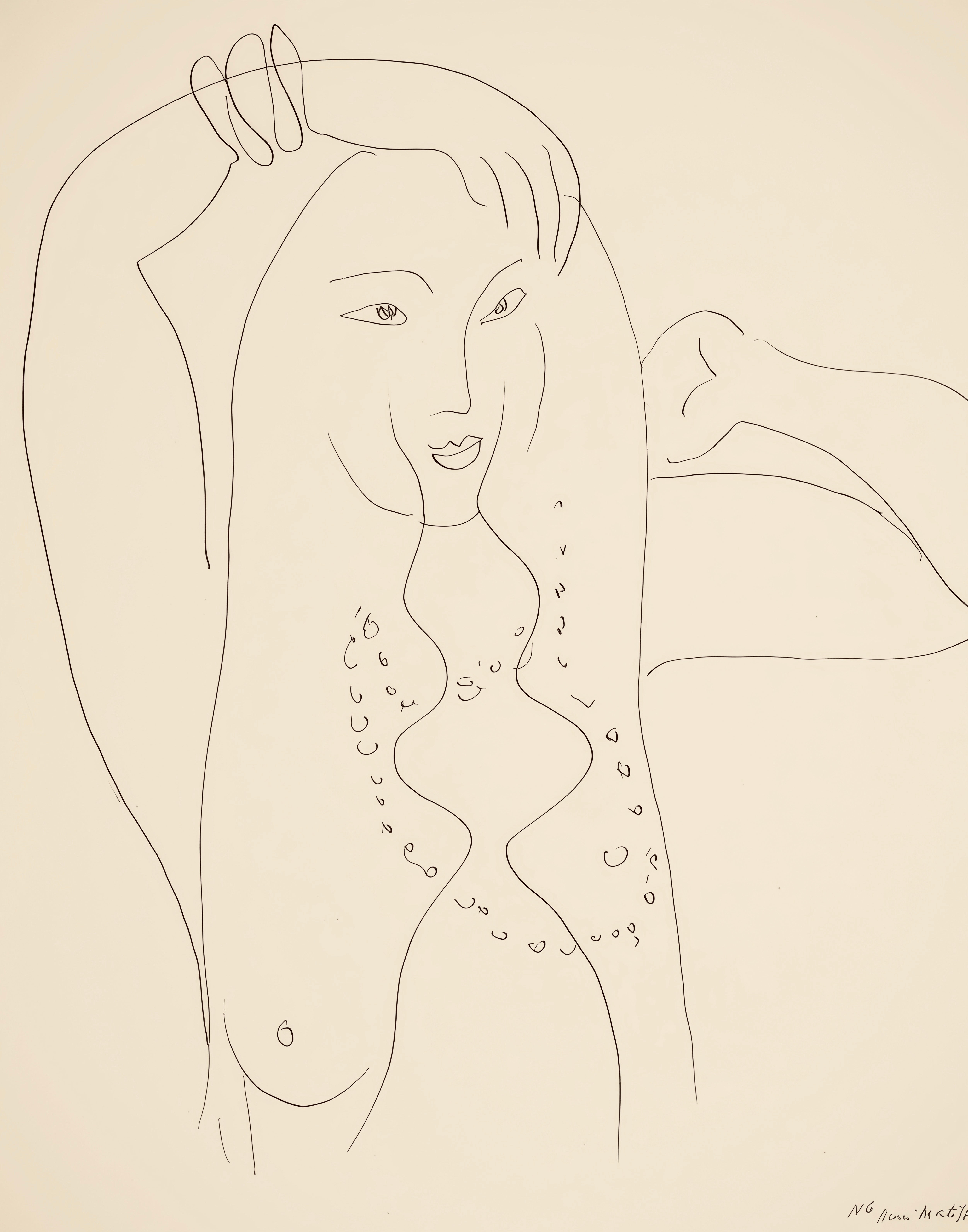
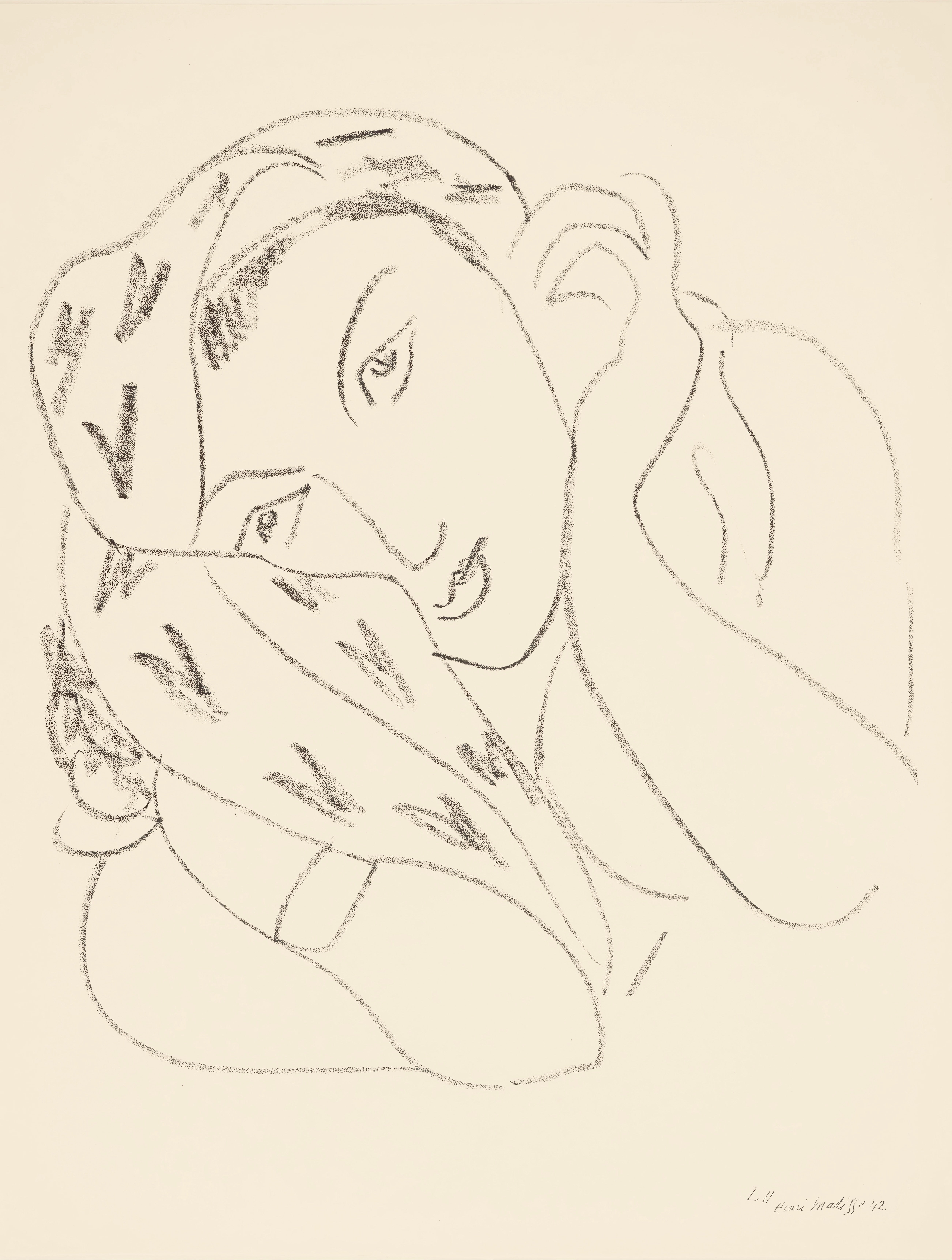
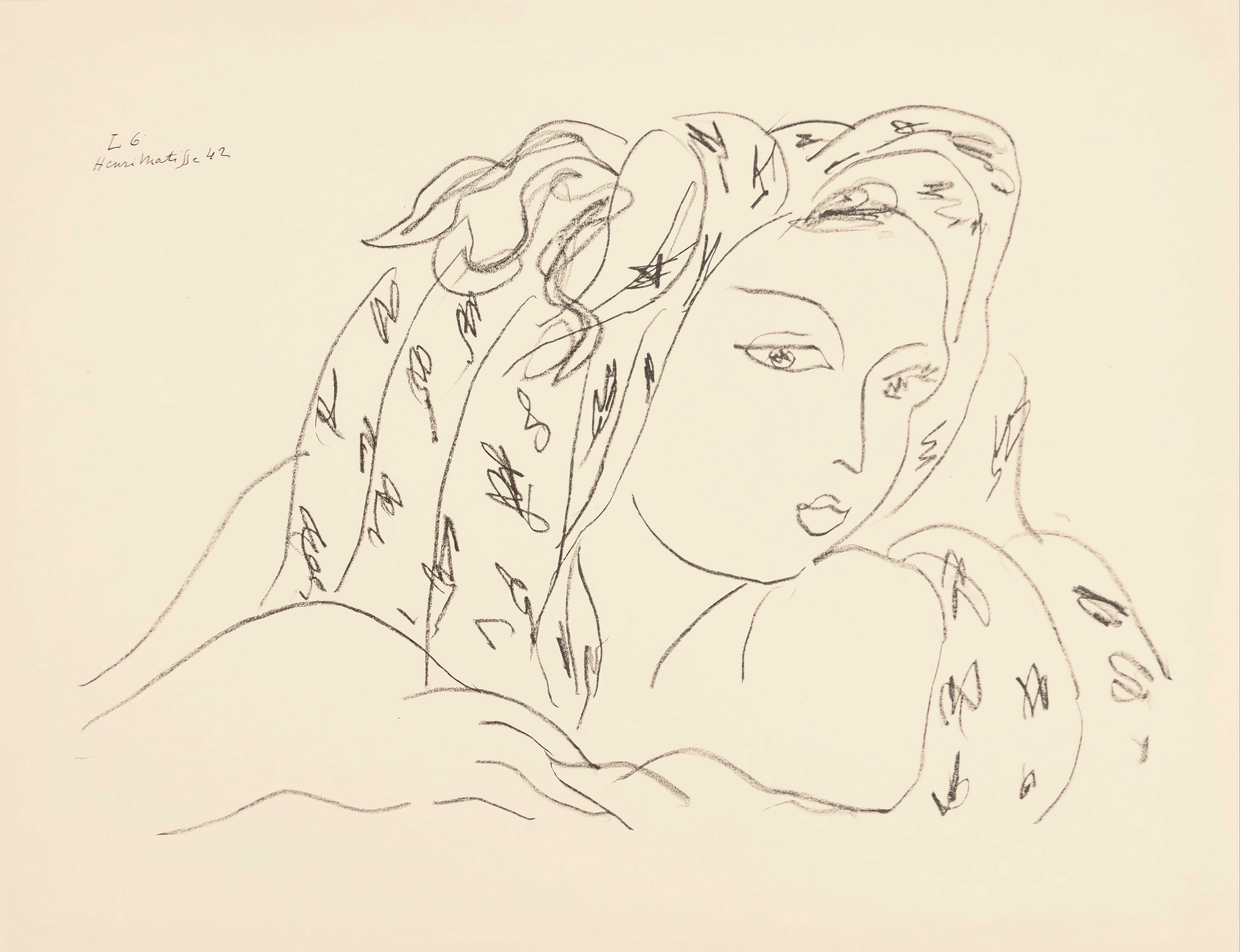
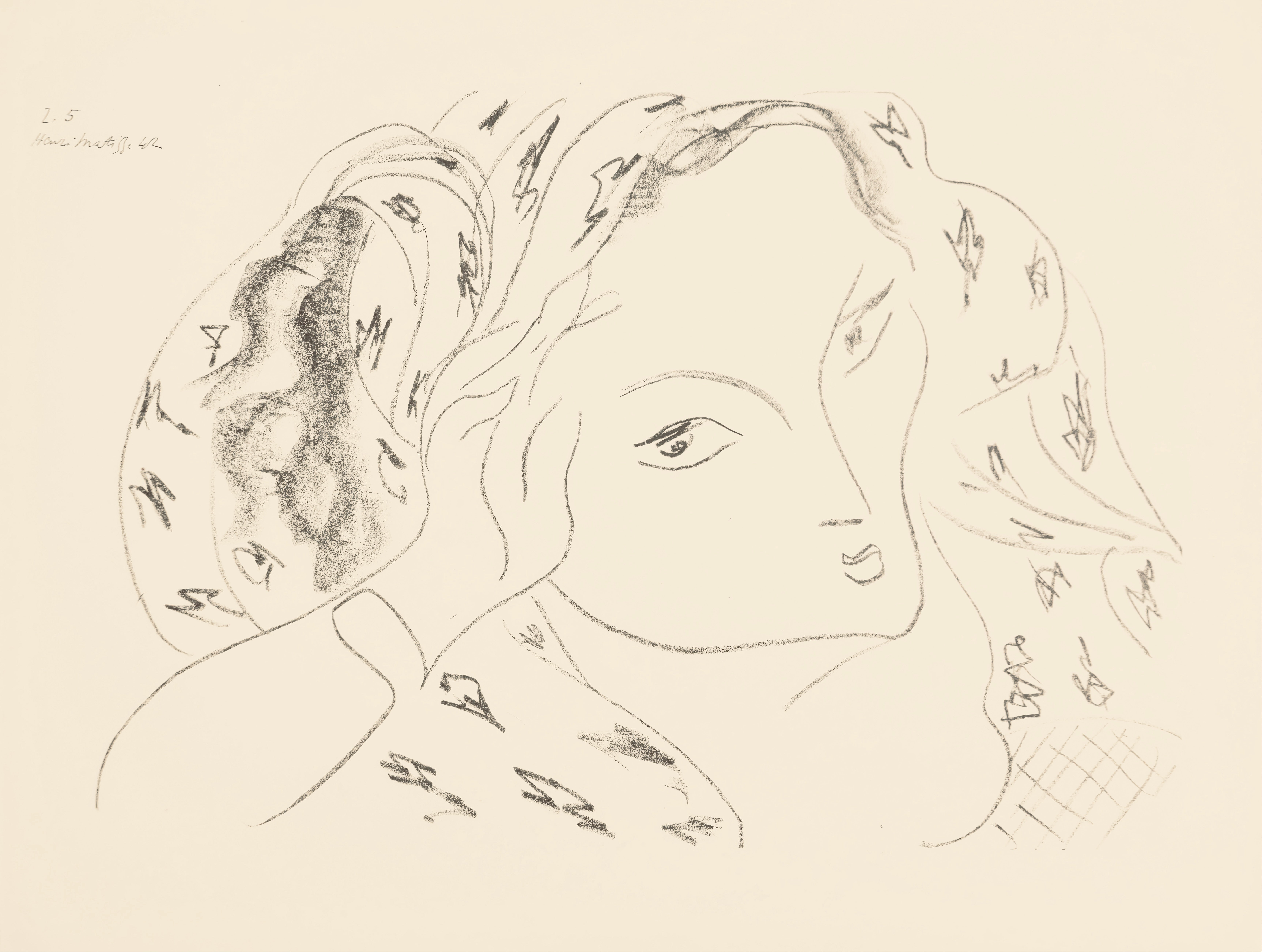
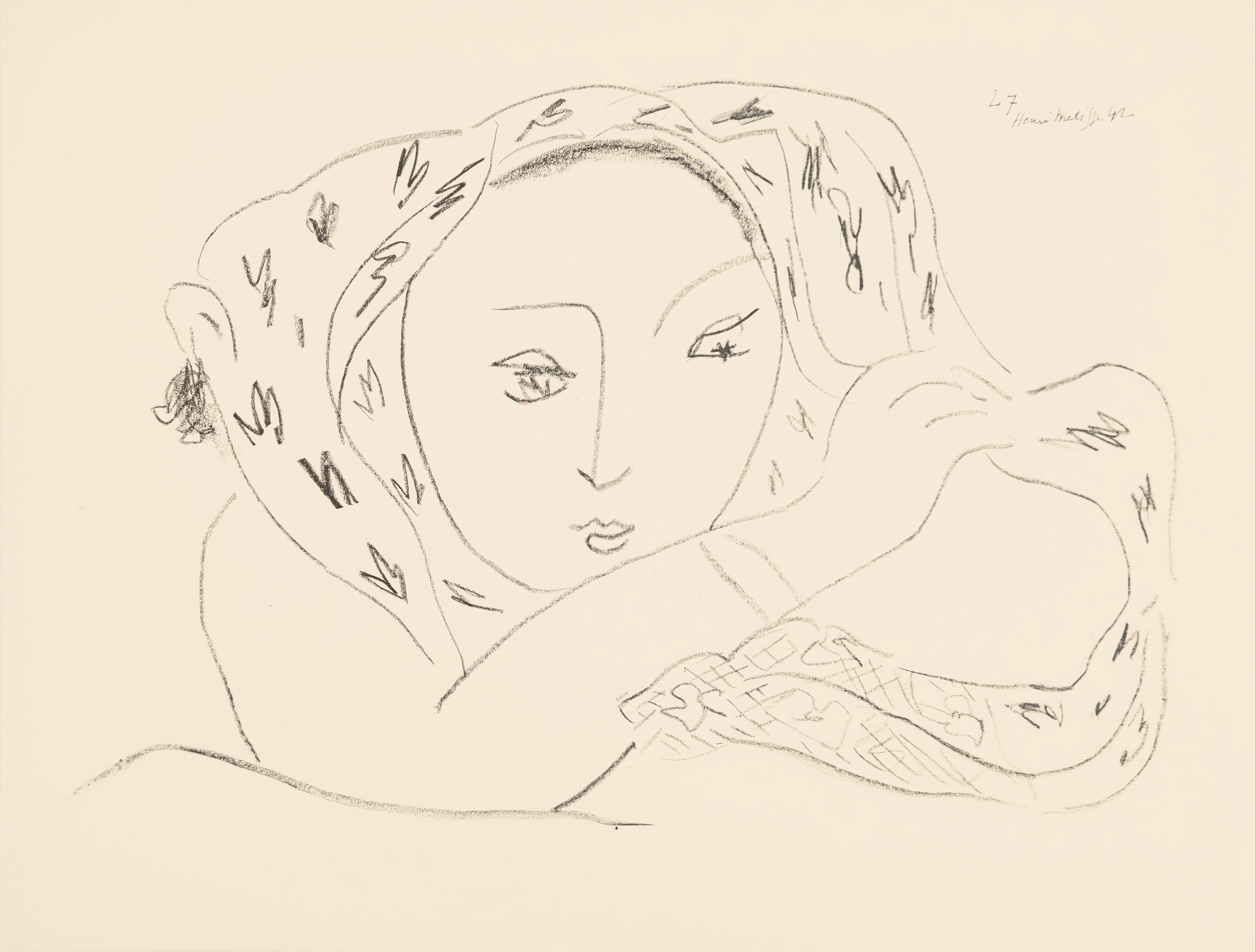
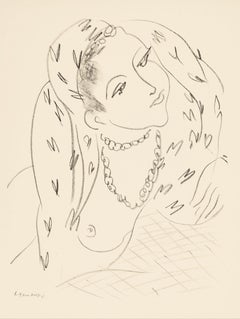
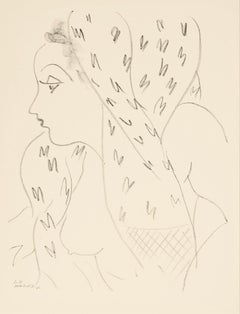
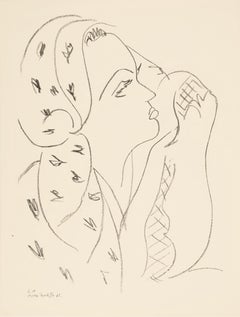
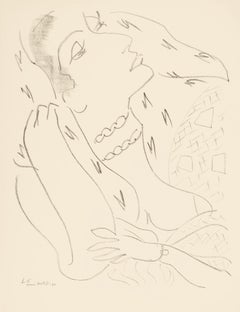
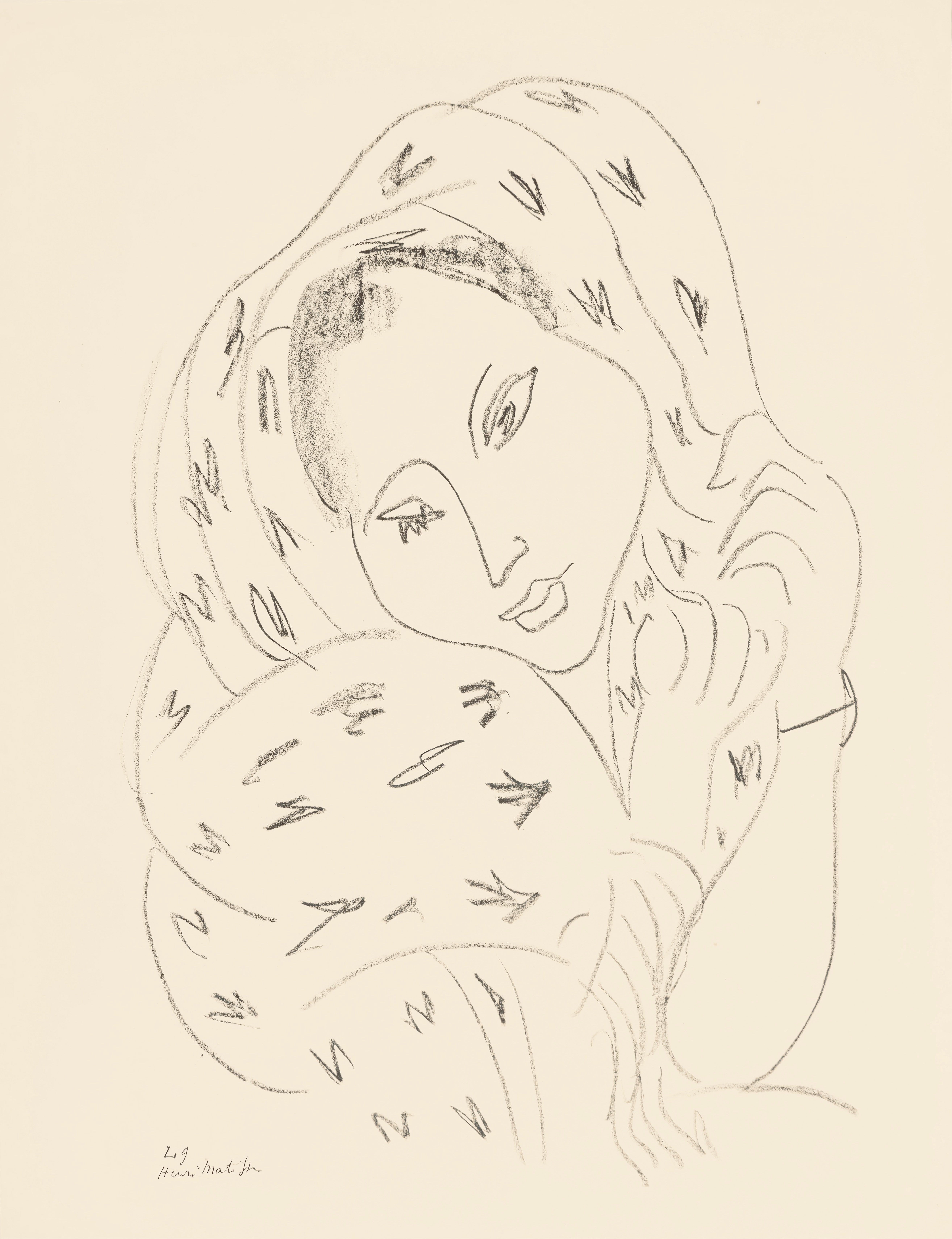
Henri Matisse, Series L, Var. 18, Drawings, Themes and Variations, 1943 (after)

1943

$716
$89520% Off
£545.91
£683.4620% Off
€654.50
€819.0120% Off
CA$1,030.08
CA$1,288.7020% Off
A$1,059.38
A$1,328.6320% Off
CHF 599.27
CHF 748.4220% Off
MX$13,566.25
MX$17,001.4320% Off
NOK 6,896.78
NOK 8,635.9420% Off
SEK 7,211.11
SEK 9,032.6920% Off
DKK 4,892.61
DKK 6,124.1920% Off

About the Item

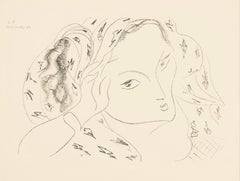
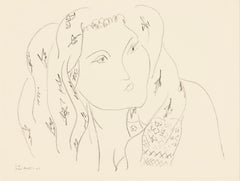
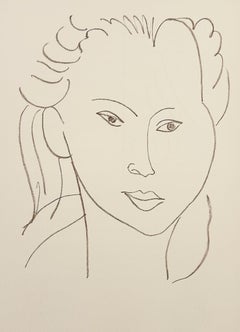
Artist: Henri Matisse (1869–1954) Title: Series L, Variation 18 (Serie L, var. 18) Year: February 27, 1943 Medium: Collotype on velin pur fil paper Paper Size: 12.88 x 9.62 inches (32.72 x 24.44 cm) Condition: Well preserved, consistent with age and medium Inscription: Signed in the plate and unnumbered, as issued Publisher: Martin Fabiani, Editeur, Paris Printer: Georges Duval, Paris Catalogue raisonne reference: Duthuit, Claude. Henri Matisse: Catalogue raisonne des ouvrages illustres. Editions Claude Duthuit, Paris, 1988, illustration 9 Notes: Excerpted from the folio (translated from French), Finished printing in Paris, on February 27, 1943, at the expense of Martin Fabiani, publisher, with the help of Roger Lacouriere. Henri Matisses "Themes and Variations" were rendered by G. Duval and the preface of Aragon, printed by Fequet et Baudier. Justification of the draw—This folio has been printed in CML examples, all numbered, namely: X examples on Imperial Japan, numbered from I to X. Signed by the artist: XX examples on Velin d'Arches, numbered from II to XXX, signed by the artist: CMXX examples on Velin pur fil, numbered from XXXI to CML. Additional notes: This exquisite collotype after Henri Matisse (1869–1954), titled Serie L, var. 18 (Series L, Variation 18), from the album Henri Matisse, Dessins, Themes et Variations (Drawings, Themes and Variations), originates from the 1943 edition published by Martin Fabiani, Editeur, Paris, and printed by Georges Duval, Paris, February 27, 1943. The work embodies Matisses mastery of pure line and rhythmic form, distilling grace and emotion into a composition of serene simplicity that reflects the height of his draughtsmanship. Henri Matisse, Dessins, Themes et Variations (Drawings, Themes and Variations), published by Martin Fabiani, Editeur, Paris, in 1943, stands among the artists most refined achievements in printmaking. Conceived and produced during the wartime years, the album represents Matisse’s meditation on line, rhythm, and beauty through a series of one hundred variations on recurring themes—figures, still lifes, and interiors. With each drawing, Matisse pursued a synthesis of observation and invention, transforming simplicity into poetic expression. The collotypes were printed by Georges Duval under Matisses supervision, while the text and preface by poet Louis Aragon were printed by Fequet et Baudier. Completed on February 27, 1943, and issued in a total of CML examples, the album remains a landmark in the history of modern printmaking, embodying Matisses lifelong belief in purity, harmony, and the expressive power of line. HENRI MATISSE (1869–1954) was a French painter, sculptor, draughtsman, and printmaker whose revolutionary vision redefined modern art through his daring use of color, line, and form. Celebrated as one of the greatest artists of the 20th century, Matisse led the Fauvist movement and devoted his life to the pursuit of balance, beauty, and emotional expression in visual art. His early works burst with vibrant hues and liberated brushwork, while his later “cut-out” compositions achieved a poetic simplicity that transformed the relationship between color and space. Deeply influenced by the work of Paul Cezanne, Vincent van Gogh, and Georges Seurat, as well as by the rhythmic patterns of Islamic art, Byzantine mosaics, and Japanese prints, Matisse forged a new visual language that celebrated joy, movement, and serenity. He was part of an extraordinary generation of artists who shaped the evolution of modernism, maintaining lifelong dialogue and friendly rivalry with contemporaries such as Pablo Picasso, Georges Braque, Marc Chagall, Andre Derain, Albert Marquet, and Raoul Dufy—peers who, like him, sought to expand the expressive potential of color and composition. Matisse’s influence extended across generations, inspiring modern and contemporary masters including Alexander Calder, Alberto Giacometti, Salvador Dali, Joan Miro, Wassily Kandinsky, Marcel Duchamp, and Man Ray, each of whom drew upon his fearless experimentation and refined visual harmony. His paintings, sculptures, and works on paper are held in the most prestigious museums in the world, including the Museum of Modern Art, the Centre Pompidou, the Tate, and the Hermitage Museum, where his art continues to symbolize the essence of creativity and human emotion. The highest price ever paid for a Henri Matisse artwork is approximately $80.8 million USD, achieved in 2018 at Christie’s New York for Odalisque couchee aux magnolias (1923). Henri Matisse Serie L, var. 18 (Series L, Variation 18) Dessins, Themes et Variations (Drawings, Themes and Variations) 1943, Matisse Martin Fabiani Editeur, Matisse Georges Duval, Matisse velin pur fil paper, Matisse collectible collotype
  • Creation Year:
    1943
  • Dimensions:
    Height: 12.88 in (32.72 cm)Width: 9.62 in (24.44 cm)
  • Medium:
  • Movement & Style:
  • After:
    Henri Matisse (1869-1954, French)
  • Period:
  • Condition:
  • Gallery Location:
    Fairfield, CT
  • Reference Number:
    1stDibs: LU1342118582262

More From This Seller

View All

You May Also Like

Henri Matisse 'Figure Study' Lithograph, from Derriere le Miroir 1952

Henri Matisse 'Figure Study' Lithograph, from Derriere le Miroir 1952

By (after) Henri Matisse

Located in Pembroke Pines, FL

Artist: Henri Matisse Country: France Title: Untitled – 'Figure Study' Medium: Lithograph on Vellum paper Size: 15 x 11 inch Published: 1952 in France Provenance: Derriere le Miroir...

Category

1950s Contemporary Prints and Multiples

Materials

Lithograph

Nu assis, chevelure claire

Nu assis, chevelure claire

By Henri Matisse

Located in London, GB

Lithograph on Japon paper, Edition of 50 Paper size: 43.7 x 28.1 cms (17.2 x 11.1 ins) Image size: 39.1 x 23.7 cms (15 3/8 x 9 1/4 ins)

Category

1920s Impressionist Nude Prints

Materials

Lithograph

"Mlle Landsberg" (grade planche, pl. 16)

"Mlle Landsberg" (grade planche, pl. 16)

By Henri Matisse

Located in Missouri, MO

"Mlle Landsberg" (grade planche, pl. 16), 1914 Henri Matisse (French, 1869-1954) Signed and Numbered Lower Right Edition 12/15 Image size: 7 7/8 x 4 5/16 inches Sheet size: 17 11/16 x 12 1/2 inches With frame: 19 1/2 x 14 1/2 inches Henri Matisse came from a family who were of Flemish origin and lived near the Belgian border. At eight o'clock on the evening of December 31, 1869, he was born in his grandparents' home in the town of Le Cateau in the cheerless far north of France. His father was a self-made seed merchant who was a mixture of determination and tightly coiled tension. Henri had no clear idea of what he wanted to do with his life. He was a twenty-year-old law clerk convalescing from appendicitis when he first began to paint, using a box of colors given to him by his mother. Little more than a year later, in 1890, he had abandoned law and was studying art in Paris. The classes consisted of drawing from plaster casts and nude models and of copying paintings in the Louvre. He soon rebelled against the school's conservative atmosphere; he replaced the dark tones of his earliest works with brighter colors that reflected his awareness of Impressionism. Matisse was also a violinist; he took an odd pride in the notion that if his painting eye failed, he could support his family by fiddling on the streets of Paris. Henri found a girlfriend while studying art, and he fathered a daughter, Marguerite, by her in 1894. In 1898 he married another woman, Amelie Parayre. She adopted the beloved Marguerite; they eventually had two sons, Jean, a sculptor and Pierre who became an eminent art dealer. Relations between Matisse and his wife were often strained. He often dallied with other women, and they finally separated in 1939 over a model who had been hired as a companion for Mme. Matisse. She was Madame Lydia, and after Mme. Matisse left, she remained with Matisse until he died. Matisse spent the summer of 1905 working with Andre Derain in the small Mediterranean seaport of Collioure. They began using bright and dissonant colors. When they and their colleagues exhibited together, they caused a sensation. The critics and the public considered their paintings to be so crude and so roughly crafted that the group became known as Les Fauves (the wild beasts). By 1907, Matisse moved on from the concerns of Fauvism and turned his attention to studies of the human figure. He had begun to sculpt a few years earlier. In 1910, when he saw an exhibition of Islamic art, he was fascinated with the multiple patterned areas and adapted the decorative universe of the miniatures to his interiors. As a continuation of his interest in the "exotic", Matisse made extended trips to Morocco in 1912 and 1913. At the end of 1917, Matisse moved to Nice; he would spend part of each year there for the remainder of his life. A meticulous dandy, he wore a light tweed jacket amd a tie when he painted. He never used a palette, but instead squeezed his colors on to plain white kitchen dishes...

Category

1910s Fauvist Figurative Prints

Materials

Drypoint, Etching

Henri Matisse Lithograph Print, 1972, En Rade from Poesies Antillaises

Henri Matisse Lithograph Print, 1972, En Rade from Poesies Antillaises

By Henri Matisse

Located in Washington, DC

Artist: Henri Matisse Title: En Rade Portfolio: Poesies Antillaises Medium: Lithograph Year: 1972 Edition: 250 Sheet Size: 14 7/8" x 11 1/8" Image Size: 14 7/8" x 11 1/8" Signature: ...

Category

1970s Post-Impressionist Prints and Multiples

Materials

Lithograph