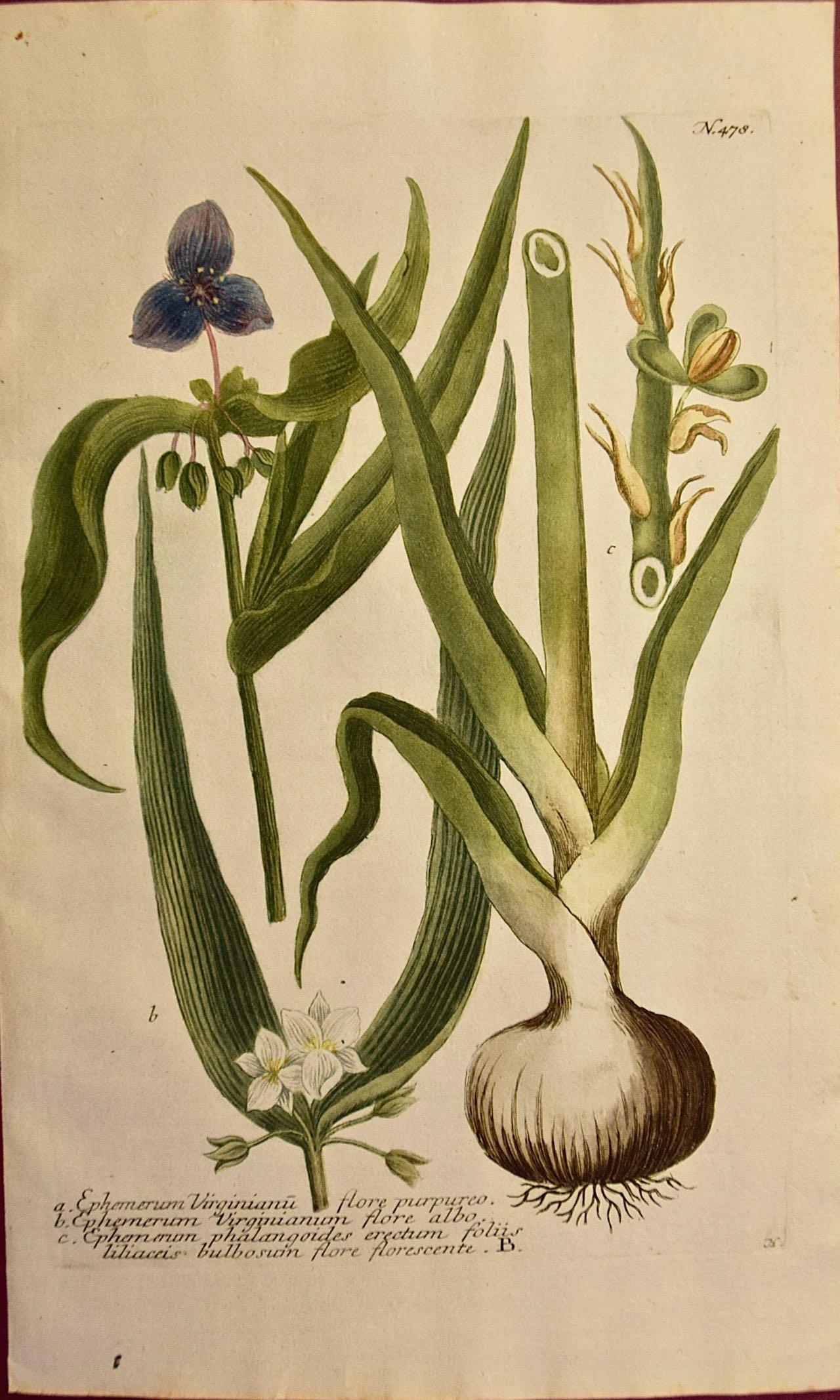
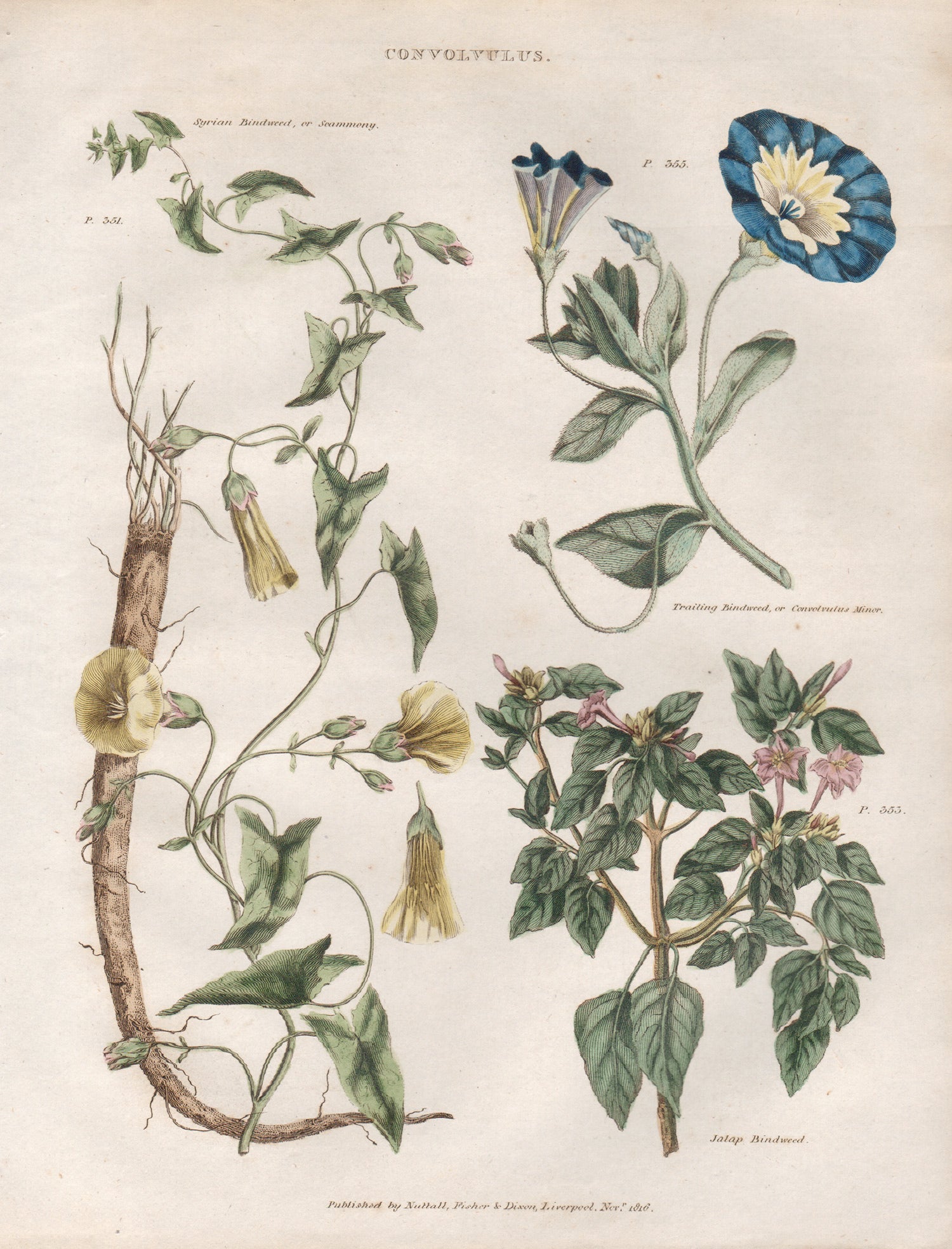
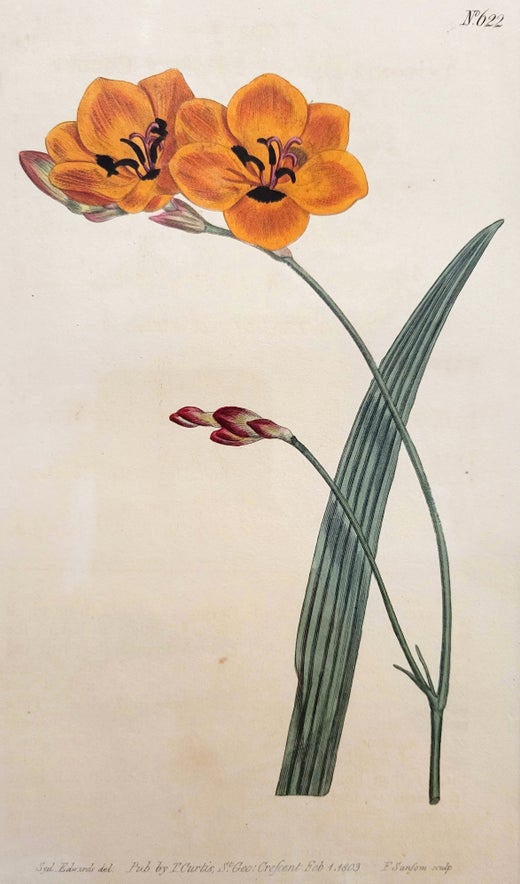
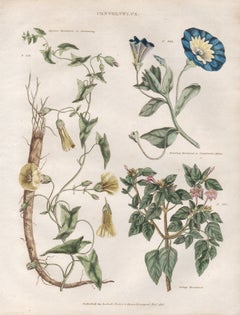
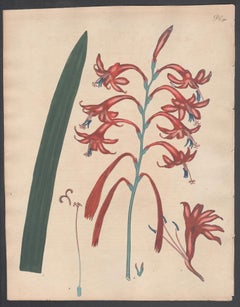
Artist: William Curtis (English, 1746-1799)
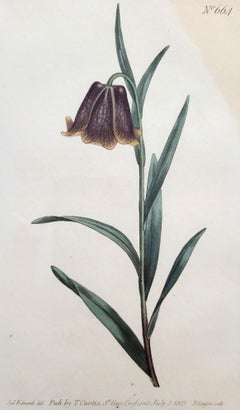
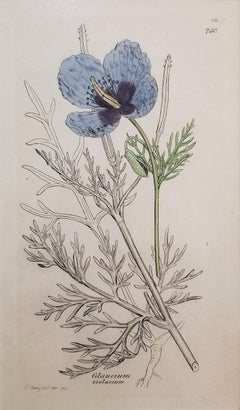
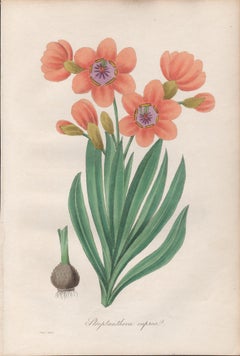
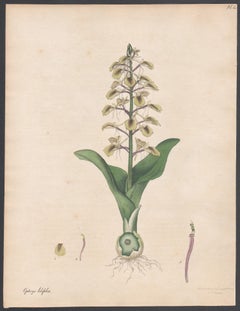
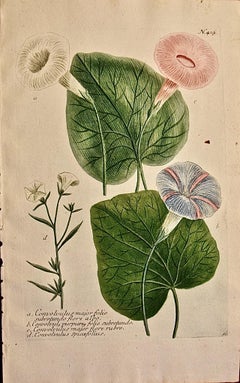
Title: "Soldanella Alpina Alpine Soldanella" (Vol. 2, Plate 49)
Portfolio: The Botanical Magazine; or, Flower-Garden Displayed
Year: 1788 (First series)
Medium: Original Hand-Colored Engraving on likely watermarked, laid paper
Limited edition: Unknown
Printer: Couchman and Fry, London, UK
Publisher: William Curtis, London, UK
Framing: Recently framed in a gold fluted moulding with 100% cotton rag matting
Framed size: 14.69" x 11.94"
Sheet size: approx. 9.25" x 5.5"
Image size: 5.13" x 2.5"
Reference: "Great Flower Books" - page 156-157; Henrey No. 472; Hunt No. 689; Nissen BBI No. 2350; Stafleu & Cowan TL2 No. 1290
Condition: In excellent condition with strong colors
Notes:
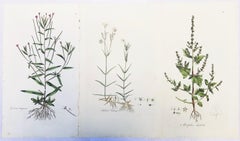
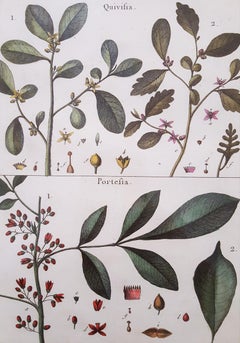
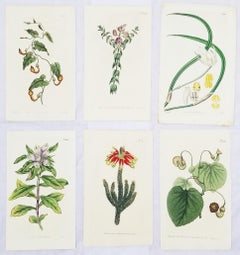
Comes from Curtis' monumental publication "The Botanical Magazine; or, Flower-Garden Displayed", (1787-1800's), which consists of 1,000's of hand-colored engravings. Printed from one copper plate in one color: black.
William Curtis edited the work until his death in 1799 (Vols. 1-13), John Sims then took over from 1801 until 1826. The third period, under the editorship of Sir William Hooker ran from 1827 to 1864, when Sir William’s son, Sir Joseph Hooker took over. The plates were worked on by many of the most prominent botanical artists of the time, including the work of John Curtis, Sydenham Edwards, James Sowerby, William Hooker, and perhaps most noteworthy of all, Walter Hood Fitch.
Biography:
William Curtis (11 January 1746 - 7 July 1799) was an English botanist and entomologist, who was born at Alton, Hampshire, site of the Curtis Museum. Curtis began as an apothecary, before turning his attention to botany and other natural history. The publications he prepared reached a wider audience than early works on the subject had intended. At the age of 25 he produced Instructions for collecting and preserving insects; particularly moths and butterflies.
Curtis was demonstrator of plants and Praefectus Horti at the Chelsea Physic Garden from 1771 to 1777. He established his own London Botanic Garden at Lambeth in 1779, moving to Brompton in 1789. He published Flora Londinensis (6 volumes, 1777–1798), a pioneering work in that it devoted itself to urban nature. Financial success was not found, but he went on the publish The Botanical Magazine in 1787, a work that would also feature hand coloured plates by artists such as James Sowerby and Sydenham Edwards. (William Kilburn is often erroneously cited as having contributed plates to Curtis's Botanical Magazine. Though he did provide illustrations to Flora Londinensis, his association with Curtis seems to have ended by 1777, 10 years before the first publication of the Botanical Magazine) Curtis was to gain wealth from the ventures into publishing, short sales on Londinensis were offset by over 3,000 copies of the magazine. Curtis said they had each brought 'pudding or praise'.
The genus Curtisia is named in his honour. His publication was continued as the esteemed botanical publication, Curtis's Botanical Magazine. The noted natural history illustrators, James Sowerby and Sydenham Edwards both found a start with the eminent magazine. He was buried in the churchyard at St. Mary's Church, Battersea where he is commemorated in a stained glass window, as many of his samples were collected from the churchyard there.