Want more images or videos?
Request additional images or videos from the seller
1 of 10

Unknown
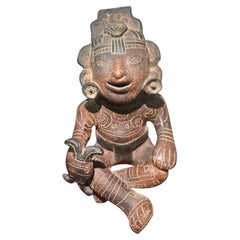
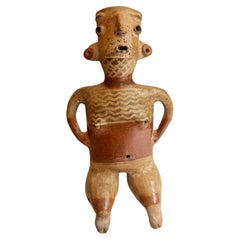
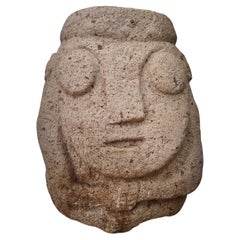
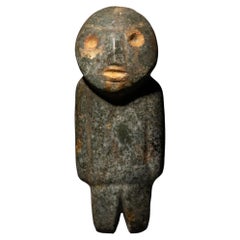
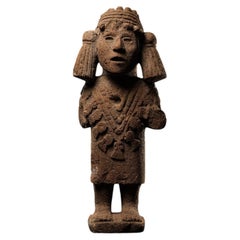
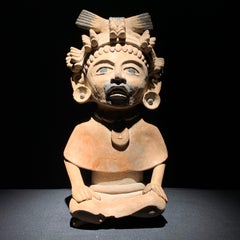
Costa Rican pre-Columbian sculptural figure ca. 1000-1500

ca. 1000-1500

Price:$3,500
$5,000List Price

You May Also Like

Pre Columbian Jalisco Figure West Mexico Circa B.C. 100-300 A.D

Pre Columbian Jalisco Figure West Mexico Circa B.C. 100-300 A.D

Located in London, GB

A Pre Columbian Jalisco warrior figure Jalisco West Mexico circa B.C. 100-300 A.D, A Fine small solid body standing figure with accented pointed nose modelled in grey clay with a w...

Category

Antique 15th Century and Earlier Mexican Antiquities

Materials

Pottery

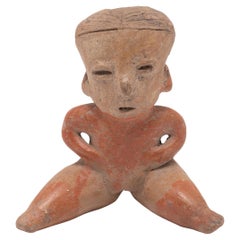
Nayarit Chinesco-Style Figure

Nayarit Chinesco-Style Figure

$1,480

H 6.5 in W 5.75 in D 3.5 in

Nayarit Chinesco-Style Figure

Located in Chicago, IL

This seated effigy figure was crafted in 300 BC to 300 AD from the ancient Nayarit region of Mexico and was likely used as a ritual or burial offering. The ceramic works of the Chine...

Category

Antique 15th Century and Earlier Mexican Pre-Columbian Figurative Sculpt...

Materials

Ceramic

Large Decorative Pre-Columbian Style Figure – 20th Century

Large Decorative Pre-Columbian Style Figure – 20th Century

Located in Madrid, ES

Impressive Pre-Columbian style figure from the 20th century, crafted in homage to ancient Mesoamerican art. The piece showcases stylized facial features and traditional ornamentation...

Category

Vintage 1950s Figurative Sculptures

Materials

Terracotta

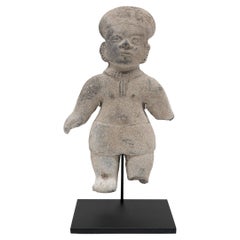
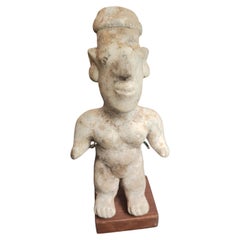
La Tolita-Tumaco Standing Female Figure

La Tolita-Tumaco Standing Female Figure

$980

H 7.5 in W 4.5 in D 2.5 in

La Tolita-Tumaco Standing Female Figure

Located in Chicago, IL

This standing effigy was crafted in 500 A.D. - 1000 A.D. Mesoamerica using the gray clay paste that characterizes La Tolita-Tumaco ceramics of early Colombia-Ecuador. The art of La Tolita-Tumaco civilization is considered one of the most developed of the pre-Columbian period as metalwork and ceramics were the most popular form of cultural expression. The ceramic creations of this culture were often based on the human figure to create portraits of people and realistic daily scenes of life cycles and the human condition. This figure appears to be wearing a loincloth and is adorned with a beaded necklace and an elaborate coiffure or headdress. There are holes lining each ear indicating the potential use of ear spools...

Category

Antique 15th Century and Earlier South American Pre-Columbian Figurative...

Materials

Ceramic

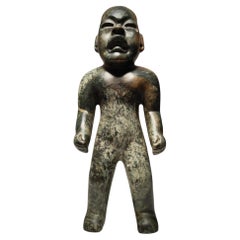
Important Olmec figure of Olmec ethnic dignitary from the preclassic period

Important Olmec figure of Olmec ethnic dignitary from the preclassic period

Located in Madrid, ES

Important Olmec figure of Olmec ethnic dignitary from the preclassic period (2500-200 BC) Important Olmec figure of dignitary of the Olmec ethnic group of...

Category

Antique 15th Century and Earlier Figurative Sculptures

Materials

Precious Stone

Pre Columbian Jalisco  Figure West Mexico Circa B.C. 100-300 A.D

Pre Columbian Jalisco Figure West Mexico Circa B.C. 100-300 A.D

$1,193Sale Price|30% Off

H 3.94 in W 7.09 in D 7.09 in

Pre Columbian Jalisco Figure West Mexico Circa B.C. 100-300 A.D

Located in London, GB

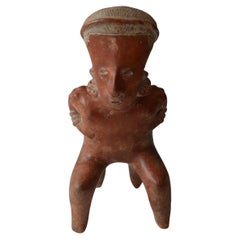
A Pre Columbian Jalisco seated figure Jalisco West Mexico circa B.C. 100-300 A.D, A Male pottery figure with red slip with elongated head and linear delineated hair wearing ear and nose ornaments, the slim body finely modelled with hands on chest seated...

Category

Antique 15th Century and Earlier Mexican Antiquities

Materials

Pottery

Pre Columbian Rare Large Zacatecas Figure Latin American Antiques Art

Pre Columbian Rare Large Zacatecas Figure Latin American Antiques Art

$2,149Sale Price|30% Off

H 10.63 in W 12.6 in D 7.09 in

Pre Columbian Rare Large Zacatecas Figure Latin American Antiques Art

Located in London, GB

Rare large Zacatecas seated Figure Pre-Columbian, West Mexico ca. 200 BCE – 300 CE A striking large terracotta figure from the Zacatecas culture, depicting a standing female with ...

Category

Antique 15th Century and Earlier Mexican Antiquities

Materials

Pottery

Stone Carved Anthropomorphic Sculpture From The Recuay Culture Peru 400bc-400ac

Stone Carved Anthropomorphic Sculpture From The Recuay Culture Peru 400bc-400ac

Located in Madrid, ES

ANTHROPOMORPHIC SCULPTURE CARVED IN STONE OF THE RECUAY CULTURE PERU 400BC-400AC Recuay is an archaeological culture of Ancient Peru that developed in the Sierra of the current Peruvian department of Áncash between 200 AD. C. until 600 d. C. It corresponds to the stage called Regional Developments, it has also been called the Huaylas or Santa culture. Like the other Early Intermediate cultures, little is known about this culture. The most accepted position is that it was an extension of the Chavin culture, after the influence of the "White on Red" style in the region. Regarding the political aspect of the recuay, there is a hypothesis that questions their autonomy and maintains that Recuay would be part of one of the many political units that made up the Moche state. The recuay style, characterized by its ceramics and stone sculpture, was initially described by Eduard Seler in 1893, based on ceramic specimens brought to the Ethnographic Museum in Berlin by Mariano M. Macedo. Seler named this style of pottery Recuay, based on the report that these pieces had been found in the town of Recuay. Later studies showed that this characteristic pottery was not originally from Recuay but from Copa, near Carhuaz, for which reason the name change to that of this town was proposed. Eventually the name of Huaylas was used for this culture. In 1919 Julio C. Tello explored the area and recovered lithic sculptures and Recuay-type ceramics. In the 1960s Rafael Larco Hoyle proposed changing the names of Recuay and Copa to Santa, arguing that the Recuay style had originated in the coastal regions of the Santa Valley. However, the name Recuay has persisted. Its chronology is also highly debatable. The time of its origin between 0 and 200 AD is discussed. C. and its end or collapse is commonly set to 600 d. C. probably caused by the invasion of the Huari conquerors. It encompassed almost the entire Callejón de Huaylas, a narrow valley fed by the Santa River and enclosed between two mountain ranges, the Cordillera Blanca to the west and the Cordillera Negra to the east. Its influence extended to the east to the Marañón river basin and to the west to the upper parts of the Santa, Casma and Huarmey valleys. To the north it reached the town of Pashash, in the province of Pallasca. The Copa area, Marca district, Recuay province, Ancash department seems to have been the center or main nucleus of cohesion of this culture. The name of the culture would then be justified, derived from the province of the same name. Other important settlements were those of Huilcahuaín (near the current city of Ancash), Cátac, Araucay, Tambo, Jancu, Upayacu and Pashash (near the current city of Cabana). Its main form of expression of art was through stone work (carving and masonry), inherited from its predecessor, the Chavín culture. In addition, they made sculptures in lumps that represent warriors with shields or trophy heads, with which they decorated their complex architectural constructions. They also made white clay pottery...

Category

Antique 15th Century and Earlier Figurative Sculptures
Materials

Stone

Anthropomorphic idol. Mezcala, State of Guerrero, Mexico. 350-100 BC. 20 cm.

Anthropomorphic idol. Mezcala, State of Guerrero, Mexico. 350-100 BC. 20 cm.

Located in BARCELONA, ES

Anthropomorphic idol type M16 Mezcala, State of Guerrero, Mexico 350 - 100 BC Stone Height 20 cm and 24 cm with the stand. Condition Good state of preservation, no restorations....

Category

Antique 15th Century and Earlier Mexican Pre-Columbian Antiquities

Materials

Stone

Statue of Chalchiuhtlicue

Statue of Chalchiuhtlicue

$206,048

H 24.02 in W 12.6 in D 12.6 in

Statue of Chalchiuhtlicue

Located in London, GB

Standing figure of the Mexican goddess Chalchiuhtlicue carved from grey volcanic stone with a reddish-brown patina. The goddess stands frontally with her feet shoulder width apart. H...

Category

Antique 15th Century and Earlier Mexican Pre-Columbian Antiquities

Materials

Stone

More From This Seller

View All
Veracruz Mexico Pre-Columbian ceramic Warrior figure sculpture

Veracruz Mexico Pre-Columbian ceramic Warrior figure sculpture

Located in Wilton Manors, FL

Figure of a Chanting Warrior Ceramic with bitumen highlights 300-600 CE (Classic Period) Mexico, Veracruz, possibly Nopiloa Veracruz Culture Pre-Columbian, Mexico, Vera Cruz culture...

Category

15th Century and Earlier Figurative Sculptures
Materials

Ceramic

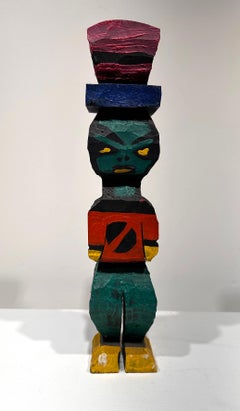
Standing Figure

Standing Figure

By Tom Cramer 1

Located in Wilton Manors, FL

Tom Cramer (b.1960). Standing Figure, 1988. Carved wood and polymer paint. Measures 11.5 inches high. Excellent condition. Signed and dated under base. Tom Cramer is an American artist working in Portland, Oregon noted for his intricately carved and painted wood reliefs and ubiquity throughout the city of Portland. Often called the unofficial Artist Laureate of Portland,[2] Cramer is one of the most visible and successful artists in the city. The influences on his work are both organic and technological. He is widely collected and is in many prominent west coast museum and private collections. He is in the permanent collections of the Portland Art Museum[3] in Portland Oregon, the Halle Ford Museum in Salem Oregon, the Jordan Schnitzer Museum in Eugene, Oregon, the Boise Art Museum in Idaho. Cramer made a name for himself in the 1980s and 1990s becoming a bridge between historical Oregon artists like Clifford Gleason and Milton Wilson...

Category

Late 20th Century Neo-Expressionist Figurative Sculptures

Materials

Wood, Latex

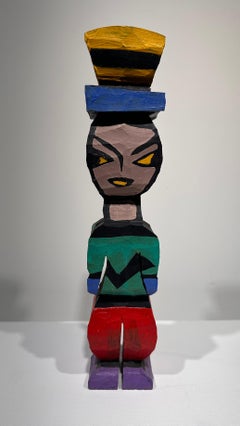
Standing Figure

Standing Figure

By Tom Cramer 1

Located in Wilton Manors, FL

Tom Cramer (b.1960). Standing Figure, 1980. Carved wood and polymer paint. Measures 11.5 inches high. Excellent condition. Signed and dated under base. Tom Cramer is an American artist working in Portland, Oregon noted for his intricately carved and painted wood reliefs and ubiquity throughout the city of Portland. Often called the unofficial Artist Laureate of Portland,[2] Cramer is one of the most visible and successful artists in the city. The influences on his work are both organic and technological. He is widely collected and is in many prominent west coast museum and private collections. He is in the permanent collections of the Portland Art Museum[3] in Portland Oregon, the Halle Ford Museum in Salem Oregon, the Jordan Schnitzer Museum in Eugene, Oregon, the Boise Art Museum in Idaho. Cramer made a name for himself in the 1980s and 1990s becoming a bridge between historical Oregon artists like Clifford Gleason and Milton Wilson...

Category

Late 20th Century Neo-Expressionist Figurative Sculptures

Materials

Wood, Latex

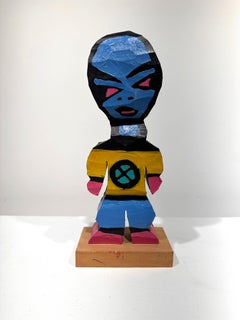
Standing Figure

Standing Figure

By Tom Cramer 1

Located in Wilton Manors, FL

Tom Cramer (b.1960). Standing Figure, 1998. Carved wood and polymer paint. Measures 10.25 inches high. Excellent condition. Signed and dated under base. Tom Cramer is an American artist working in Portland, Oregon noted for his intricately carved and painted wood reliefs and ubiquity throughout the city of Portland. Often called the unofficial Artist Laureate of Portland,[2] Cramer is one of the most visible and successful artists in the city. The influences on his work are both organic and technological. He is widely collected and is in many prominent west coast museum and private collections. He is in the permanent collections of the Portland Art Museum[3] in Portland Oregon, the Halle Ford Museum in Salem Oregon, the Jordan Schnitzer Museum in Eugene, Oregon, the Boise Art Museum in Idaho. Cramer made a name for himself in the 1980s and 1990s becoming a bridge between historical Oregon artists like Clifford Gleason and Milton Wilson...

Category

Late 20th Century Neo-Expressionist Figurative Sculptures

Materials

Wood, Latex

Untitled (Outsider Art Surrealist Figural Sculpture)

Untitled (Outsider Art Surrealist Figural Sculpture)

Located in Wilton Manors, FL

Rocco Monticolo (b. 1931). Untitled, 2022. Found antique object, wood, paint. Signed on reverse of face. Monticolo was born in Italy in 1931 and came to America in 1946. He joined ...

Category

2010s Surrealist Sculptures

Materials

Steel

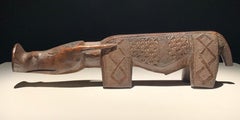
Kuba African Warthog Divining Figure tribal arts sculpture

Kuba African Warthog Divining Figure tribal arts sculpture

Located in Wilton Manors, FL

Warthog Divining Figure. Kuba, DRC. Late 19th century. Carved wood with palm oil patina, 12.5 incehes (l), 3.25 inches (h), 2 5/8 inches (d). Loss evident at tip of right ear and on snout. Provenance: Ex. collection Martin and Faith-Dorian Wright; J.J. Klegman; Angelo Caggiula-Carulucci, chief magistrate in Belgian Congo for King Leopold...

Category

Late 19th Century Abstract Figurative Sculptures

Materials

Wood