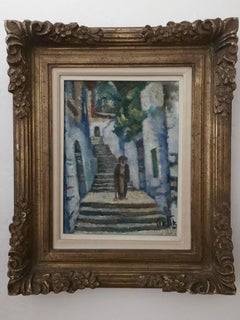
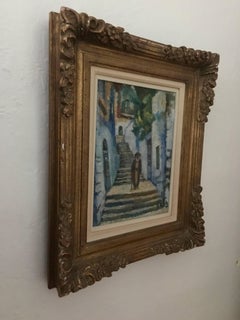
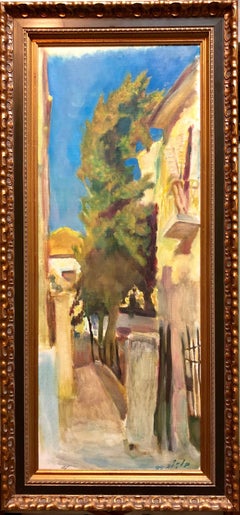
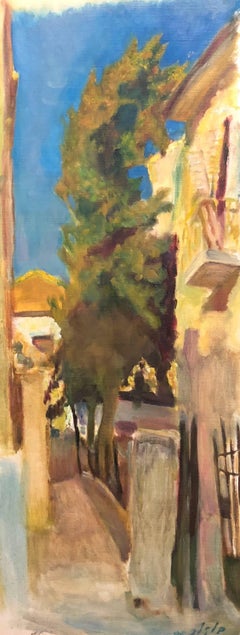
Andre Elbaz for sale on 1stDibs
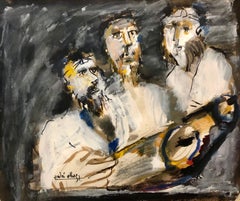
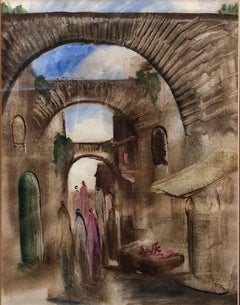
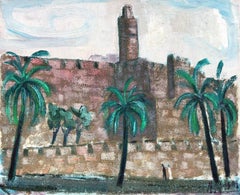
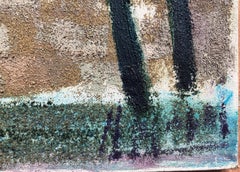
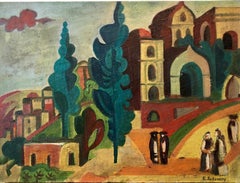
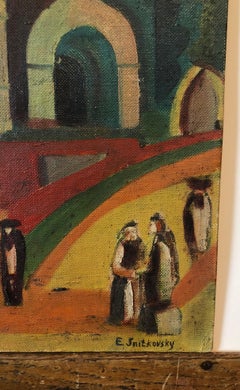
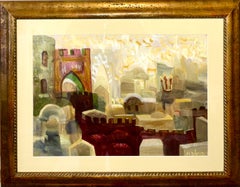
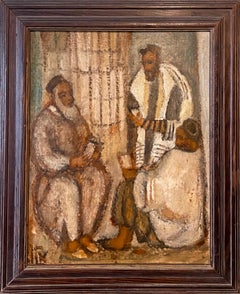
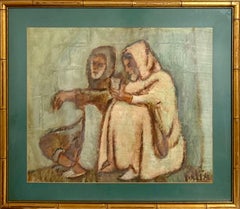
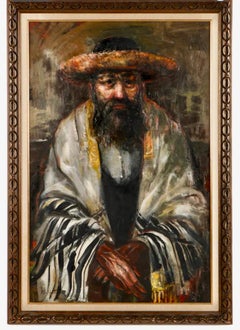
André Elbaz (born April 26, 1934, El Jadida, Morocco) is a famous Moroccan painter and filmmaker.
Elbaz studied art and theatre in Rabat and Paris from 1950 to 1961. He started painting only at the age of 21, until which age he had been interested mainly in theatre. A few years later, he managed to combine his two passions into a new approach in art-therapy, inventing together with his wife, a psychiatrist, the Pictodrame, which brought him world recognition.
His first exhibition, which was very successful, took place in Casablanca in 1961 and earned him an appointment as Professor at the Beaux-Arts school in Casablanca. Years later, in 1976, he exhibited his paintings at the Tel-Aviv Museum.
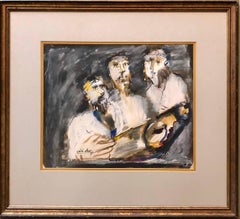
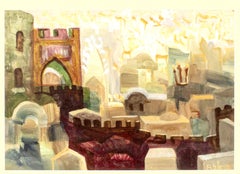
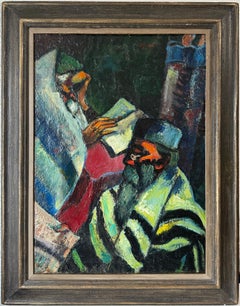
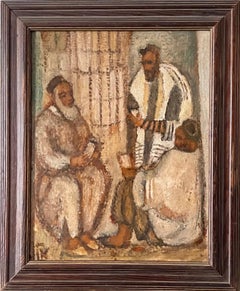
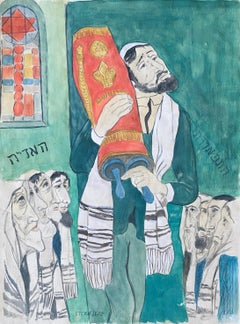
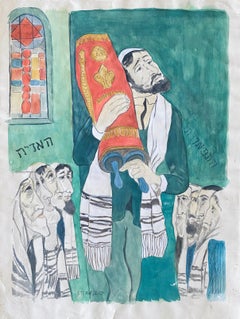
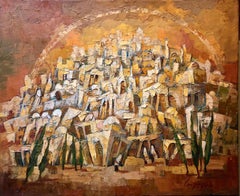
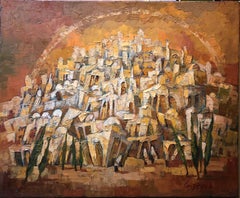
In parallel to his career as a painter, Elbaz is also known as a filmmaker. He produced several short films in France, Canada and the United States. One of them, La nuit n'est jamais complète (The night is never complete), won a prize at the "5th Biennale de Paris in 1967" .[citation needed] Among the themes chosen for the many films he produced, there was a short one about the Warsaw Ghetto uprising, as well as a series of drawings entitled Seuls (Alone), with texts written by both Elie Wiesel and Naim Kattan. Both the short movie and the drawings were a result of his fascination by Holocaust related themes. This fascination also inspired him for other works that were shown at an exhibition at Yad Vashem in Jerusalem, in 1985. His paintings are famous for boasting traditional Jewish themes and he often present them in a chiefly expressionist style.
A retrospective of his lifetime achievements and works was held in 1990 at the Georges Pompidou Center in Paris.
A Close Look at Expressionist Art
While “expressionist” is used to describe any art that avoids naturalism and instead employs a bold use of flattened forms and intense brushwork, Expressionist art formally describes early-20th-century work from Europe that drew on Symbolism and confronted issues such as urbanization and capitalism. Expressionist artists experimented in paintings and prints with skewed perspectives, abstraction and unconventional, bright colors to portray how isolating and anxious the world felt rather than how it appeared.
Between 1905 and 1920, Austrian and German artists, in particular, were inspired by Postimpressionists such as Paul Gauguin and Vincent van Gogh in their efforts to strive for a new authenticity in their work. In its geometric patterns and decorative details, Expressionist art was also marked by eclectic sources like German and Russian folk art as well as tribal art from Africa and Oceania, which the movement’s practitioners witnessed at museums and world’s fairs.
Groups of artists came together to share and promote the themes now associated with Expressionism, such as Die Brücke (The Bridge) in Dresden, which included Erich Heckel, Ernst Ludwig Kirchner and Karl Schmidt-Rottluff and investigated alienation and the dissolution of society in vivid color. In Munich, Der Blaue Reiter (The Blue Rider), a group led by Wassily Kandinsky and Franz Marc, instilled Expressionism with a search for spiritual truths. In his iconic painting The Scream, prolific Norwegian painter Edvard Munch conveyed emotional turmoil through his depiction of environmental elements, such as the threatening sky.
Expressionism shifted around the outbreak of World War I, with artists using more elements of the grotesque in reaction to the escalation of unrest and violence. Printmaking was especially popular, as it allowed artists to widely disseminate works that grappled with social and political issues amid this time of upheaval. Although the art movement ended with the rise of Nazi Germany, where Expressionist creators were labeled “degenerate,” the radical ideas of these artists would influence Neo-Expressionism that emerged in the late 1970s with painters like Jean-Michel Basquiat and Francesco Clemente.
Find a collection of authentic Expressionist paintings, sculptures, prints and more art on 1stDibs.
Finding the Right Figurative-paintings for You
Figurative art, as opposed to abstract art, retains features from the observable world in its representational depictions of subject matter. Most commonly, figurative paintings reference and explore the human body, but they can also include landscapes, architecture, plants and animals — all portrayed with realism.
While the oldest figurative art dates back tens of thousands of years to cave wall paintings, figurative works made from observation became especially prominent in the early Renaissance. Artists like Michelangelo, Leonardo da Vinci and other Renaissance masters created naturalistic representations of their subjects.
Pablo Picasso is lauded for laying the foundation for modern figurative art in the 1920s. Although abstracted, this work held a strong connection to representing people and other subjects. Other famous figurative artists include Francis Bacon and Lucian Freud. Figurative art in the 20th century would span such diverse genres as Expressionism, Pop art and Surrealism.
Today, a number of figural artists — such as Sedrick Huckaby, Daisy Patton and Eileen Cooper — are making art that uses the human body as its subject.
Because figurative art represents subjects from the real world, natural colors are common in these paintings. A piece of figurative art can be an exciting starting point for setting a tone and creating a color palette in a room.
Browse an extensive collection of figurative paintings on 1stDibs.