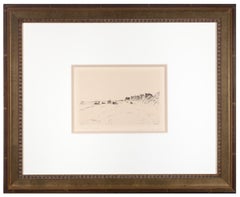
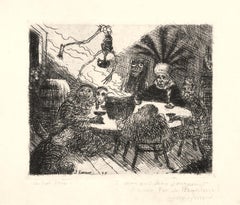
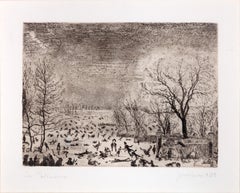
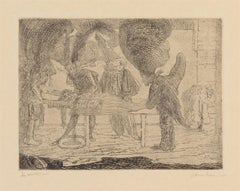
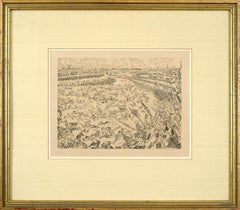
On 1stDibs, you can find the most appropriate ensor etching for your needs in our varied inventory. There are many
Modern,
Surrealist and
Impressionist versions of these works for sale. Finding the perfect ensor etching may mean sifting through those created during different time periods — you can find an early version that dates to the 19th Century and a newer variation that were made as recently as the 20th Century. If you’re looking to add a ensor etching to create new energy in an otherwise neutral space in your home, you can find a work on 1stDibs that features elements of
beige,
gray,
brown,
white and more. Artworks like these — often created in
etching,
drypoint and
engraving — can elevate any room of your home.
A ensor etching can differ in price owing to various characteristics — the average selling price for items in our inventory is $7,834, while the lowest priced sells for $1,500 and the highest can go for as much as $19,278.
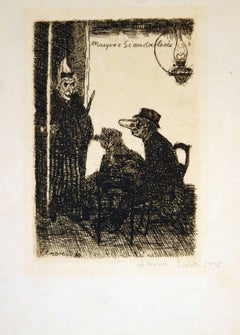
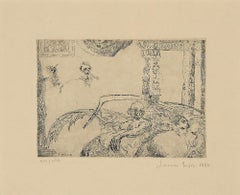
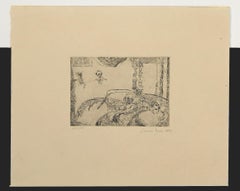
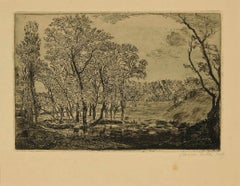
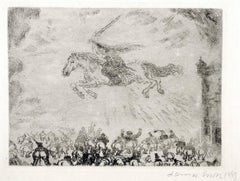
James Ensor is a Belgian painter and printmaker and an important influence on Expressionism and Surrealism. Ensor's early works, such as Russian Music (1881) and The Drunkards (1883), depict realistic scenes in a somber style, after which his palette subsequently brightened and he favored increasingly bizarre subject matter. Such paintings as The Scandalized Masks (1883) and Skeletons Fighting over a Hanged Man (1891) feature figures in grotesque masks inspired by the ones sold in his mother's gift shop for Ostend's annual Carnival. Subjects such as carnivals, masks, puppetry, skeletons and fantastic allegories are dominant in Ensor's mature work. Ensor dressed skeletons up in his studio and arranged them in colorful, enigmatic tableaux on the canvas and used masks as a theatrical aspect in his still lifes. Attracted by masks' plastic forms, bright colors and potential for psychological impact, he created a format in which he could paint with complete freedom. Ensor was a prolific and accomplished printmaker. He created 133 etchings and drypoints throughout his career, with 86 of them made between 1886 and 1891 during the height of Ensor's most creative period. Ensor himself recognized that the prints were a key part of his artistic legacy, stating in a letter to Albert Croquez in 1934, "Yes, I intend to go on working for a long time yet so that generations to come may hear me. I intend to survive, and I think of the solid copper plate, the unalterable ink, easy reproduction, faithful prints and I adopt etching as a means of expression.”
Bring energy and an array of welcome colors and textures into your space by decorating with figurative fine-art prints and works on paper.
Figurative art stands in contrast to abstract art, which is more expressive than representational. The oldest-known work of figurative art is a figurative painting — specifically, a rock painting of an animal made over 40,000 years ago in Borneo. This remnant of a remote past has long faded, but its depiction of a cattle-like creature in elegant ocher markings endures.
Since then, figurative art has evolved significantly as it continues to represent the world, including a breadth of works on paper, including printmaking. This includes woodcuts, which are a type of relief print with perennial popularity among collectors. The artist carves into a block and applies ink to the raised surface, which is then pressed onto paper. There are also planographic prints, which use metal plates, stones or other flat surfaces as their base. The artist will often draw on the surface with grease crayon and then apply ink to those markings. Lithographs are a common version of planographic prints.
Figurative art printmaking was especially popular during the height of the Pop art movement, and this kind of work can be seen in artist Andy Warhol’s extensive use of photographic silkscreen printing. Everyday objects, logos and scenes were given a unique twist, whether in the style of a comic strip or in the use of neon colors.
Explore an impressive collection of figurative art prints for sale on 1stDibs and read about how to arrange your wall art.