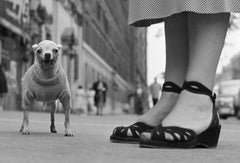
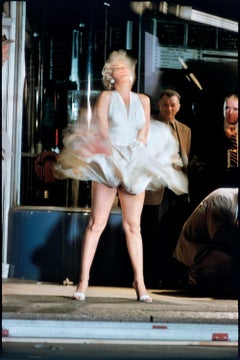
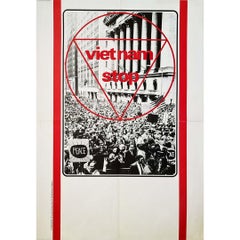
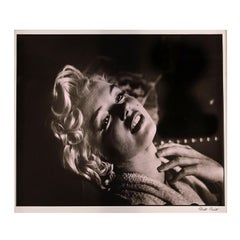
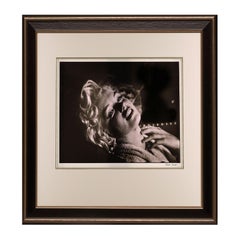
Born in Paris in 1928 to Russian parents, Erwitt spent his childhood in Milan, then emigrated to the US, via France, with his family in 1939. As a teenager living in Hollywood, he developed an interest in photography and worked in a commercial darkroom before experimenting with photography at Los Angeles City College. In 1948, he moved to New York and exchanged janitorial work for film classes at the New School for Social Research.
Erwitt traveled in France and Italy in 1949 with his trusty Rolleiflex camera. In 1951, he was drafted for military service and undertook various photographic duties while serving in a unit of the Army Signal Corps in Germany and France.
While in New York, Erwitt met Edward Steichen, Robert Capa and Roy Stryker, the former head of the Farm Security Administration. Stryker initially hired Erwitt to work for the Standard Oil Company, where he was building up a photographic library for the company, and subsequently commissioned him to undertake a project documenting the city of Pittsburgh.
In 1953, Erwitt joined Magnum Photos and worked as a freelance photographer for Collier’s, Look, LIFE, Holiday and other luminaries in that golden period for illustrated magazines. To this day, he is for hire and continues to work for a variety of journalistic and commercial outfits.
In the late 1960s, Erwitt served as Magnum’s president for three years. He then turned to film: in the 1970s, he produced several notable documentaries and in the 1980s eighteen comedy films for HBO. Erwitt became known for benevolent irony, and for a humanistic sensibility traditional to the spirit of Magnum.
There’s a lot to love about black and white photography.
The unique and timeless quality of a black and white photograph accentuates any room. Some might argue that we’re naturally drawn to color photography because it’s the world we know best. This is a shared belief, particularly in the era of camera-phone photography, editing apps and the frenetic immediacy of sharing photos on social media. But when we look at black and white photography, we experience deep, rich shadows and tonal properties in a way that transfixes us. Composition and textures are crisp and engaging. We’re immediately drawn to the subjects of vintage street photography and continue to feel the emotional impact of decades-old photojournalism. The silhouettes of mountains in black and white landscape photography are particularly pronounced, while portrait photography and the skylines of urban cityscapes come to life in monochrome prints.
When decorating with fine photography, keep in mind that some color photographs may not be suitable for every space. However, you can be more daring with black and white photos. The gray tones are classic, sophisticated and generally introduce elegance to any corner of your home, which renders black and white prints amazingly versatile.
Black and white photography adapts to its surroundings like a chameleon might. A single large-scale black and white photograph above the sofa in your living room is going to work with any furniture style, and as some homeowners and designers today are working to introduce more muted tones and neutral palettes to dining rooms and bedrooms, the integration of black and white photography — a hallmark of minimalist decor — is a particularly natural choice for such a setting.
Another advantage to bringing black and white photography into your home is that you can style walls and add depth and character without worrying about disrupting an existing color scheme. Black and white photographs actually harmonize well with accent colors such as yellow, red and green. Your provocative Memphis Group lighting and bold Pierre Paulin seating will pair nicely with the black and white fine nude photography you’ve curated over the years.
Black and white photography also complements a variety of other art. Black and white photos pair well with drawings and etchings in monochromatic hues. They can also form part of specific color schemes. For example, you can place black and white prints in colored picture frames for a pop of color. And while there are no hard and fast rules, it’s best to keep black and white prints separate from color photographs. Color prints stand out in a room more than black and white prints do. Pairing them may detract attention from your black and white photography. Instead, dedicate separate walls or spaces to each.
Once you’ve selected the photography that best fits your space, you’ll need to decide how to hang the images. If you want to hang multiple photos, it’s essential to know how to arrange wall art. A proper arrangement can significantly enhance a living space.
On 1stDibs, explore a vast collection of compelling black and white photography by artists such as Mark Shaw, Jack Mitchell (a photographer you should know), Berenice Abbott and David Yarrow.