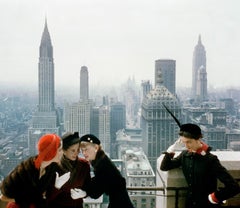
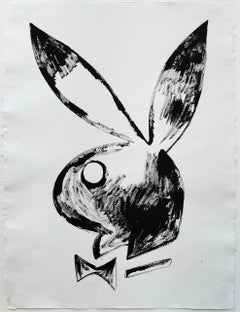
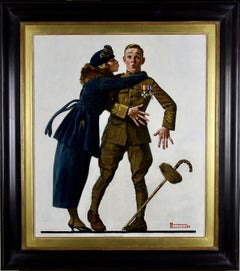
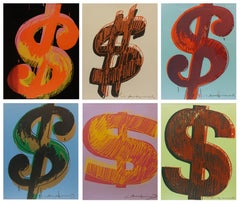
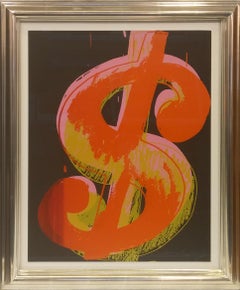
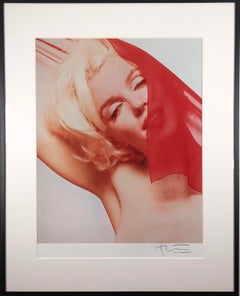
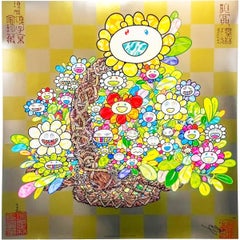
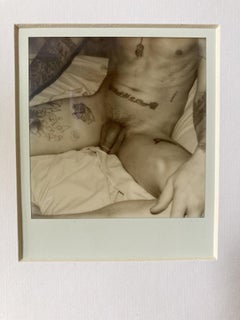
There is a broad range of ormond editions for sale on 1stDibs. Today, if you’re looking for
contemporary editions of these works and are unable to find the perfect match for your home, our selection also includes
contemporary. If you’re looking to add ormond editions that pop against an otherwise neutral space in your home, the works available on 1stDibs include that feature elements of
black,
brown,
beige,
gray and more. There have been many well-done artworks of this subject over the years, but those made by
Ormond Gigli and
Gered Mankowitz are often thought to be among the most beautiful. Each of these unique pieces was handmade with extraordinary care, with artists most often working in
c print,
silver gelatin print and
archival pigment print. If space is limited, there are small ormond editions measuring 9 across, while our inventory also includes pieces up to 53 inches across to better suit those in the market for large iterations.
Ormond Gigli (1925–2019) was a highly regarded American photojournalist, best known for his breathtaking portraiture and surreal fashion photography. With a career spanning over four decades, Gigli's visual narratives appeared in prominent international publications such as TIME, LIFE, Paris Match, and Colliers.
Gigli began his journey in the 1950s, gaining recognition for his captivating photographs of theater, film, and dance. His subjects were a medley of cultural icons — Sophia Loren, Gina Lollobrigida, Anita Ekberg, Marcel Duchamp, Willem de Kooning, John F. Kennedy, Halston, Marlene Dietrich, Judy Garland, Liza Minelli, Laurence Olivier, Alan Bates, Richard Burton, Louis Armstrong, Miles Davis, and many more.
Gigli’s approach to portraiture was as much about his technical prowess and compositional elegance as it was about his ability to elicit his subject's spirit and character, a skill that would mark him as one of the luminaries of his time, akin to contemporaries such as Richard Avedon, Irving Penn, and Diane Arbus.
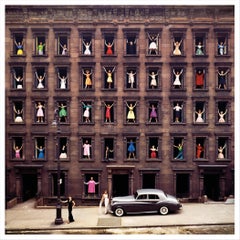
Yet, the pièce de résistance of Gigli's illustrious career is the iconic photograph known as Girls in the Windows, taken in 1960. This masterwork exemplifies Gigli's innovative vision and ability to transform the everyday into a tableau vivant of unparalleled aesthetic appeal. The image depicts 43 women poised in the windows of a New York City brownstone, exuding an ephemeral vibrancy that captures the essence of 1960s fashion and art photography.
Born in New York City in 1925, Gigli's passion for photography blossomed when he received his first camera from his father. After graduating from the School of Modern Photography in 1942, he served as a Navy photographer during World War II. Post-war, Gigli lived the bohemian life in Paris, before returning to New York where his career took off in 1952 after a series of celebrity portraits for LIFE magazine.
Gigli's modus operandi for Girls in the Windows was to immortalize the beauty of the soon-to-be-demolished buildings opposite his East 58th Street studio. Within the constraints of a two-hour window, Gigli meticulously arranged models, some of whom volunteered from an agency, some friends, and others being his wife and the demolition supervisor's wife. The final result was a symphony of color, form, and life, beautifully encapsulated within the frames of the brownstone windows.
Gigli recalled in an interview with TIME magazine: "What had seemed to some as too dangerous or difficult to accomplish, became my fantasy fulfilled, and my most memorable self-assigned photograph. It has been an international award winner ever since. Most professional photographers dream of having one signature picture they are known for. Girls in the Windows is mine."
Today, Girls in the Windows stands as a testament to Gigli's creativity and daring. As vibrant and evocative as it was in 1960, the photograph continues to resonate, its allure undiminished by the passage of time. Much like the timeless works of his contemporaries, Gigli's photograph is an ode to the beauty of everyday life, captured in a moment of extraordinary serendipity.
Shop authentic Ormond Gigli photography and prints on 1stDibs.
(Biography provided by International Fine Arts Consortium — IFAC Arts)
Color photography evokes emotion that can bring a viewer into the scene. It can transport one to faraway places or back into the past.
The first color photograph, taken in 1861, was more of an exercise in science than art. Photographer Thomas Sutton and physicist James Clerk Maxwell used three separate exposures of a tartan ribbon — filtered through red, green and blue — and composited them into a single image, resulting in the first multicolor representation of an object.
Before this innovation, photographs were often tinted by hand. By the 1890s, color photography processes were introduced based on that 1860s experiment. In the early 20th century, autochromes brought color photography to a commercial audience.
Now color photography is widely available, with these historic photographs documenting moments and scenes that are still vivid generations later. Photographers in the 20th and 21st centuries have offered new perspectives in the evolving field of modern color photography with gripping portraiture, snow-capped landscapes, stunning architecture and lots more.
In the voluminous collection of photography on 1stDibs, find vibrant full-color images by Slim Aarons, Helen Levitt, Gordon Parks, Stefanie Schneider, Steve McCurry and other artists. Bring visual interest to any corner of your home with color photography — introduce a salon-style gallery hang or another arrangement that best fits your space.