Leon Bibel Art

1913-1995

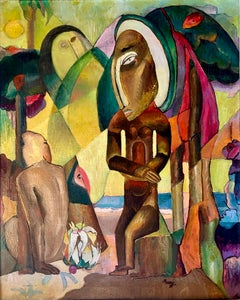
Leon Bibel, a painter, printmaker and sculptor, was born in Poland in 1913 but moved with his family to San Francisco as a child. He trained at the California School of Fine Arts and received a scholarship to study under the German Impressionist Maria Riedelstein. He worked in collaboration with Bernard Zackheim, a student of Diego Rivera, to create frescoes for the San Francisco Jewish Community Center and the University of California Medical School. In 1936, Bibel moved from California to join the Federal Art Project of the New York City Work Projects Administration. He was assigned to the Graphic Art Project and the Easel Project at Harlem Art Center. He also taught at both PS 94 Kings College School and Bronx House in New York City. Bibel’s program in the WPA ended in 1941 and he moved with his wife to South Brunswick, New Jersey, ceasing his artistic pursuits to support his family. He resumed his artistic work in the early 1960s and continued to explore the mediums of painting and sculpture until his death. A constant innovator, Bibel experimented with diverse printmaking mediums. His work is distinguished by its boldly conceived, dramatic composition and passionately executed expressionist renderings. Bibel's parents immigrated from Poland and he remained staunchly pacifist, even throughout WWII. Much of his work during this period focused on the destructiveness of war and the consequent suffering and alienation of humankind. An artist of the people, his work is imbued with a sense of humanity and a concern for social justice and the plight of the working man. Bibel’s numerous exhibitions include the solo exhibition at Newark Museum in 1966, Jersey City Museum in 1967, Hunterdon Art Museum, Rutgers State University and New Jersey State Museum in 1978. He has also exhibited at Rider College, in 1983, Rutgers Hillel Foundation from 1985–86. His work is held in the permanent collections of the Metropolitan Museum of Art, the Museum of Fine Arts in Boston, the Newark Museum, the Zimmerli Art Museum of Rutgers, the Amon Carter Museum of American Art, the Klutznick Museum and the New Brunswick State Theater, as well as many corporate and private collections.

to
9
9
8
1
9

Use search to find more

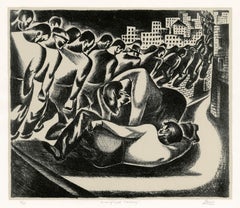
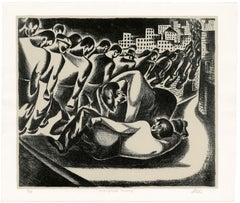
'Unemployed Marchers' — American Modernism, WPA

'Unemployed Marchers' — American Modernism, WPA

By Leon Bibel

Located in Myrtle Beach, SC

Leon Bibel, 'Unemployed Marchers', 2-color lithograph, c. 1938, edition 25. Signed, titled, and numbered '2/25' in pencil. A fine, richly-inked impression on off-white, wove paper, w...

Category

1930s American Modern Leon Bibel Art

Materials

Lithograph

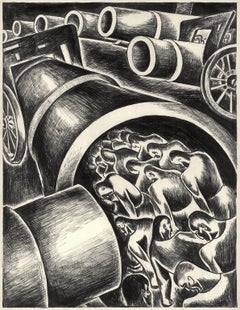
War Machine     — Spanish Civil War, Anti-fascism

War Machine — Spanish Civil War, Anti-fascism

By Leon Bibel

Located in Myrtle Beach, SC

Leon Bibel, 'Untitled (War Machine)', brush and ink, c. 1936. Estate stamped, verso. A fine expressionist rendering, on cream wove drawing board, with marg...

Category

1930s American Modern Leon Bibel Art

Materials

Ink

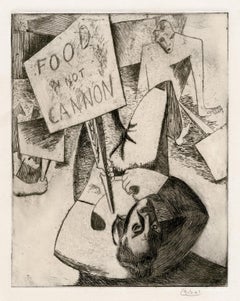
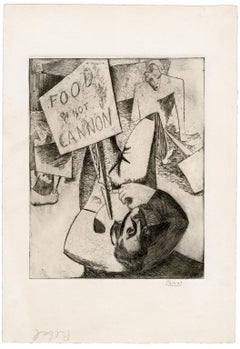
'Food Not Cannon' — WPA Modernist Work of  Social Conscience

'Food Not Cannon' — WPA Modernist Work of Social Conscience

By Leon Bibel

Located in Myrtle Beach, SC

Leon Bibel, 'Food Not Cannon', etching, 1937, edition 12 (an early state, probably unique). Signed in pencil. A fine impression, on cream wove paper, with full margins (7/8 to 2 1/8 ...

Category

1930s American Modern Leon Bibel Art

Materials

Etching

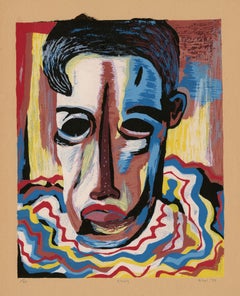
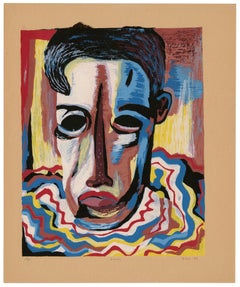
'Clown' — WPA American Expressionism

'Clown' — WPA American Expressionism

By Leon Bibel

Located in Myrtle Beach, SC

Leon Bibel, 'Clown', color serigraph, 1939, edition 20. Signed, dated, titled, and numbered '/20' in pencil. A fine, richly-inked, painterly impression, with fresh colors, on buff la...

Category

1930s American Modern Leon Bibel Art

Materials

Screen

Death March — Spanish Civil War, Anti-fascism

Death March — Spanish Civil War, Anti-fascism

By Leon Bibel

Located in Myrtle Beach, SC

Leon Bibel, 'Untitled (Death March)', brush and ink, c. 1936. Estate stamped, verso. A fine expressionist rendering, on cream wove drawing board, with margins (3/8 to 5/16 inch). Minor toning at the board edges, otherwise in very good condition. Image size 12 5/16 x 9 3/8 inches; sheet size 13 x 10 inches. Matted to museum standards, unframed. One of a series of powerful Anti-fascist brush and ink drawings created by the artist at the commencement of the Spanish Civil War...

Category

1930s American Modern Leon Bibel Art

Materials

Ink

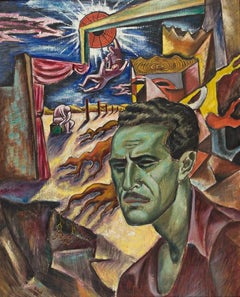
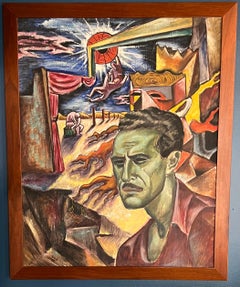
"Drama Teacher" 1938 WPA Mid 20th Century American Theatre Surrealism Modernism

"Drama Teacher" 1938 WPA Mid 20th Century American Theatre Surrealism Modernism

By Leon Bibel

Located in New York, NY

"Drama Teacher" 1938 WPA Mid 20th Century American Theatre Surrealism Modernism. 30 x 24 inches. Oil on Canvas. Signed land dated ’38 lower left. The photograph in the listing depicts the artist's friend who taught drama and about whom the painting is based Painter, printmaker and sculptor, Leon Bibel was born in San Francisco in 1913. He trained at the California School of Fine Arts and received a scholarship to study under the German Impressionist Maria Riedelstein. He worked in collaboration with Bernard Zackheim, a student of Diego Rivera, to create frescoes for the San Francisco Jewish Community Center and the University of California Medical School. In 1936 Bibel moved from California to join the Federal Art Project at Harlem Art...

Category

1930s American Modern Leon Bibel Art

Materials

Canvas, Oil

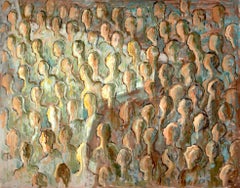
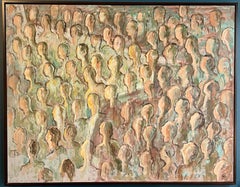
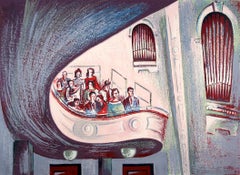
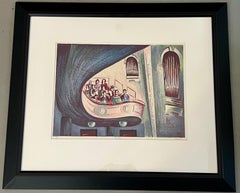
"Audience" Mid 20th Century American Figurative Theatre Performance Contemporary

"Audience" Mid 20th Century American Figurative Theatre Performance Contemporary

By Leon Bibel

Located in New York, NY

"Audience" Mid 20th Century American Figurative Theatre Performance Contemporary Leon Bibel (1912 - 1995) "The Audience," 52 ½ x 41 ¼ inches. Oil on canvas, c. 1963. Signed lower right. Framed. BIO Painter, printmaker and sculptor, Leon Bibel was born in San Francisco in 1913. He trained at the California School of Fine Arts and received a scholarship to study under the German Impressionist Maria Riedelstein. He worked in collaboration with Bernard Zackheim, a student of Diego Rivera, to create frescoes for the San Francisco Jewish Community Center and the University of California Medical School. In 1936 Bibel moved from California to join the Federal Art Project at Harlem Art...

Category

1960s American Modern Leon Bibel Art

Materials

Canvas, Oil

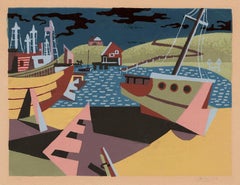
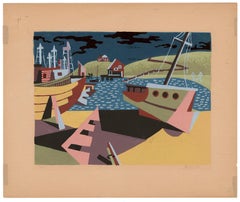
'Abstract Boats' — American Modernism, WPA Signed Serigraph, 1938

'Abstract Boats' — American Modernism, WPA Signed Serigraph, 1938

By Leon Bibel

Located in Myrtle Beach, SC

Leon Bibel, 'Abstract Boats', color serigraph, 1938, edition 12. Signed, dated, and numbered ' /12' in pencil. A fine, painterly impression, with fresh colors, on buff wove paper; t...

Category

1930s American Modern Leon Bibel Art

Materials

Screen

Related Items
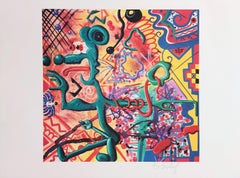
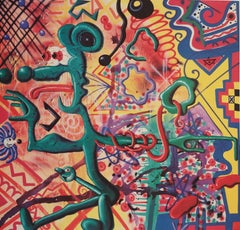
Ratfinkbonerthunk : Surrealist Rat - Original Giclee Print, Handsigned

Ratfinkbonerthunk : Surrealist Rat - Original Giclee Print, Handsigned

By Kenny Scharf

Located in Paris, IDF

Kenny Scharf Ratfinkbonerthunk : Surrealist Rat, 1990 Original Giclee Print Handsigned in pencil On Arches vellum 56 x 76 cm (c. 22 x 30 in) Published by Editions Vermorel in 1990 ...

Category

1990s American Modern Leon Bibel Art

Materials

Giclée, Screen

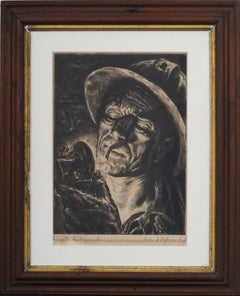
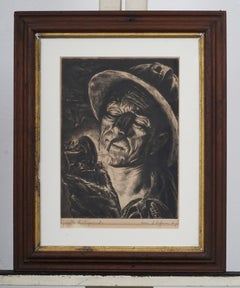
"Cigarette Underground" Signed Framed Vintage WPA Mining Industrial Print

"Cigarette Underground" Signed Framed Vintage WPA Mining Industrial Print

By Irwin D. Hoffman

Located in Buffalo, NY

"Cigarette Underground" Vintage WPA Mining Industrial Print by Irwin D. Hoffman (1901 - 1989). Signed in pencil and framed in an antique frame. Measuring: 18 by 15 inches overall, an...

Category

20th Century American Modern Leon Bibel Art

Materials

Etching

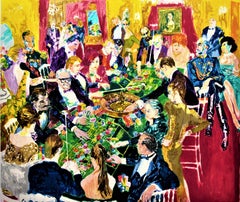
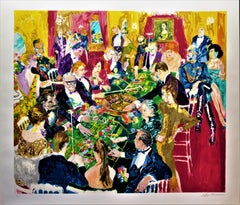
Baden Baden, Casino
Baden Baden, Casino

LeRoy NeimanBaden Baden, Casino, 1987

$4,000

H 42 in W 48 in D 0.01 in

Baden Baden, Casino

By LeRoy Neiman

Located in San Francisco, CA

This artwork titled "Baden Baden, Casino" 1988 is an original color serigraph by noted American artist LeRoy Neiman, 1921-2012. It is hand signed and numbered 261/375 in pencil by the artist. The image size is 36 x 42 inches, sheet size is 42 x 48 inches. With the blind stamp of the printer Styria Studio at the lower left corner margin. It is in excellent condition, three small pieces of hanging tape remain on the back. About the artist: Mr. Neiman's kinetic, quickly executed paintings and drawings, many of them published in Playboy, offered his fans gaudily colored visual reports on heavyweight boxing matches, Super Bowl games and Olympic contests, as well as social panoramas like the horse races at Deauville, France, and the Cannes Film Festival. Quite consciously, he cast himself in the mold of French Impressionists like Toulouse-Lautrec, Renoir and Degas, chroniclers of public life who found rich social material at racetracks, dance halls and cafes. Mr. Neiman often painted or sketched on live television. With the camera recording his progress at the sketchpad or easel, he interpreted the drama of Olympic Games and Super Bowls for an audience of millions. When Bobby Fischer and Boris Spassky faced off in Reykjavik, Iceland, to decide the world chess championship, Mr. Neiman was there, sketching. He was on hand to capture Federico Fellini directing "8 ½" and the Kirov Ballet performing in the Soviet Union. In popularity, Mr. Neiman rivaled American favorites like Norman Rockwell, Grandma Moses and Andrew Wyeth. A prolific one-man industry, he generated hundreds of paintings, drawings, watercolors, limited-edition serigraph prints and coffee-table books yearly, earning gross annual revenue in the tens of millions of dollars. Although he exhibited constantly and his work was included in the collections of dozens of museums around the world, critical respect eluded him. Mainstream art critics either ignored him completely or, if forced to consider his work, dismissed it with contempt as garish and superficial — magazine illustration with pretensions. Mr. Neiman professed not to care. Maybe the critics are right," he told American Artist magazine in 1995. "But what am I supposed to do about it — stop painting, change my work completely? I go back into the studio, and there I am at the easel again. I enjoy what I'm doing and feel good working. Other thoughts are just crowded out." His image suggested an artist well beyond the reach of criticism. A dandy and bon vivant, he cut an arresting figure with his luxuriant ear-to-ear mustache, white suits, flashy hats and Cuban cigars. "He quite intentionally invented himself as a flamboyant artist not unlike Salvador Dalí, in much the same way that I became Mr. Playboy in the late '50s," Hugh Hefner told Cigar Aficionado magazine in 1995. LeRoy Runquist was born on June 8, 1921, in St. Paul. His father, a railroad worker, deserted the family when LeRoy was quite young, and the boy took the surname of his stepfather. He showed a flair for art at an early age. While attending a local Roman Catholic school, he impressed schoolmates by drawing ink tattoos on their arms during recess. As a teenager, he earned money doing illustrations for local grocery stores. "I'd sketch a turkey, a cow, a fish, with the prices," he told Cigar Aficionado. "And then I had the good sense to draw the guy who owned the store. This gave me tremendous power as a kid." After being drafted into the Army in 1942, he served as a cook in the European theater but in his spare time painted risqué murals on the walls of kitchens and mess halls. The Army's Special Services Division, recognizing his talent, put him to work painting stage sets for Red Cross shows when he was stationed in Germany after the war. On leaving the military, he studied briefly at the St. Paul School of Art (now the Minnesota Museum of American Art) before enrolling in the School of the Art Institute of Chicago, where, after four years of study, he taught figure drawing and fashion illustration throughout the 1950s. When the janitor of the apartment building next door to his threw out half-empty cans of enamel house paint, Mr. Neiman found his métier. Experimenting with the new medium, he embraced a rapid style of applying paint to canvas imposed by the free-flowing quality of the house paint. While doing freelance fashion illustration for the Carson Pirie Scott department store in Chicago in the early 1950s, he became friendly with Mr. Hefner, a copywriter there who was on the verge of publishing the first issue of a men's magazine. In 1954, after five issues of Playboy had appeared, Mr. Neiman ran into Mr. Hefner and invited him to his apartment to see his paintings of boxers, strip clubs and restaurants. Mr. Hefner, impressed, showed the work to Playboy's art director, Art Paul, who commissioned an illustration for "Black Country," a story by Charles Beaumont about a jazz musician. Thus began a relationship that endured for more than half a century and established Mr. Neiman's reputation. In 1955, when Mr. Hefner decided that the party-jokes page needed visual interest, Mr. Neiman came up with the Femlin, a curvaceous brunette who cavorted across the page in thigh-high stockings, high-heeled shoes, opera gloves and nothing else. She appeared in every issue of the magazine thereafter. Three years later, Mr. Neiman devised a running feature, "Man at His Leisure." For the next 15 years, he went on assignment to glamour spots around the world, sending back visual reports on subjects as varied as the races at Royal Ascot, the dining room of the Tour d'Argent in Paris, the nude beaches of the Dalmatian coast, the running of the bulls at Pamplona and Carnaby Street in swinging London. He later produced more than 100 paintings and 2 murals for 18 of the Playboy clubs that opened around the world. "Playboy made the good life a reality for me and made it the subject matter of my paintings — not affluence and luxury as such, but joie de vivre itself," Mr. Neiman told V.I.P. magazine in 1962. Working in the same copywriting department at Carson Pirie Scott as Mr. Hefner was Janet Byrne, a student at the Art Institute. She and Mr. Neiman married in 1957. She survives him. A prolific artist, he generated dozens of paintings each year that routinely commanded five-figure prices. When Christie's auctioned off the Playboy archives in 2003, his 1969 painting Man at His Leisure: Le Mans sold for $107,550. Sales of the signed, limited-edition print versions of his paintings, published in editions of 250 to 500, became a lucrative business in itself after Knoedler Publishing, a wholesale operation, was created in 1975 to publish and distribute his serigraphs, etchings, books and posters. Mr. Neiman's most famous images came from the world of sports. His long association with the Olympics began with the Winter Games in Squaw Valley in 1960, and he went on to cover the games, on live television, in Munich in 1972, Montreal in 1976, Lake Placid in 1980, and Sarajevo and Los Angeles in 1984, using watercolor, ink or felt-tip marker to produce images with the dispatch of a courtroom sketch artist. At the 1978 and 1979 Super Bowls, he used a computerized electronic pen to portray the action for CBS. Although he was best known for scenes filled with people and incident, he also painted many portraits. Athletes predominated, with Muhammad Ali and Joe Namath among his more famous subjects, but he also painted Leonard Bernstein, the ballet dancer Suzanne Farrell...

Category

21st Century and Contemporary American Modern Leon Bibel Art
Materials

Screen

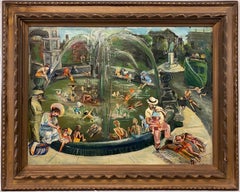
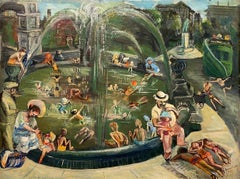
“Washington Square Park, 1938” NYC Social Realism Female American Artist Oil

“Washington Square Park, 1938” NYC Social Realism Female American Artist Oil

By Dorothy Eisner

Located in Yardley, PA

An exceptional, large, early work by American artist Dorothy Eisner (1906-1984). This painting was recently exhibited at Gracie Mansion in 2019 as part of “She Persists” - a show de...

Category

1930s American Modern Leon Bibel Art

Materials

Canvas, Oil

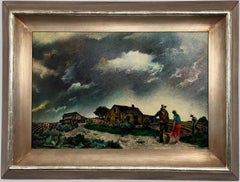
Late Afternoon  - Modernist Mid-Century Midwest Oil Painting

Late Afternoon - Modernist Mid-Century Midwest Oil Painting

By William Schwartz

Located in Marco Island, FL

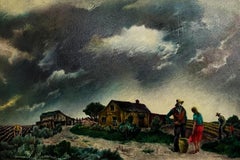
A quintessential American Scene landscape painted by the Chicago Modernist, William Schwartz. Workers in tilled fields surrounding a farmstead under dramatic skies. Painted in 1935...

Category

1930s American Modern Leon Bibel Art

Materials

Canvas, Oil

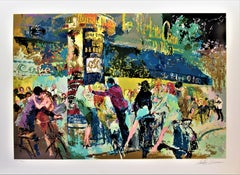
Left Bank Cafe, Paris

LeRoy NeimanLeft Bank Cafe, Paris, 1987

$5,780

H 32.25 in W 44 in D 0.01 in

Left Bank Cafe, Paris

By LeRoy Neiman

Located in San Francisco, CA

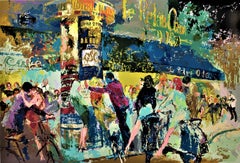
This artwork titled "Left Bank Cafe, Paris" 1987 is an original color serigraph by noted American artist LeRoy Neiman, 1921-2012. It is hand signed and numbered H.C 166/175 in pencil by the artist. The image size is 26 x 38 inches, sheet size is 32.25 x 44 inches. With the blind stamp of the printer Styria Studio at the lower left corner margin. It is in excellent condition, two small pieces of hanging tape remain on the back. About the artist: Mr. Neiman's kinetic, quickly executed paintings and drawings, many of them published in Playboy, offered his fans gaudily colored visual reports on heavyweight boxing matches, Super Bowl games and Olympic contests, as well as social panoramas like the horse races at Deauville, France, and the Cannes Film Festival. Quite consciously, he cast himself in the mold of French Impressionists like Toulouse-Lautrec, Renoir and Degas, chroniclers of public life who found rich social material at racetracks, dance halls and cafes. Mr. Neiman often painted or sketched on live television. With the camera recording his progress at the sketchpad or easel, he interpreted the drama of Olympic Games and Super Bowls for an audience of millions. When Bobby Fischer and Boris Spassky faced off in Reykjavik, Iceland, to decide the world chess championship, Mr. Neiman was there, sketching. He was on hand to capture Federico Fellini directing "8 ½" and the Kirov Ballet performing in the Soviet Union. In popularity, Mr. Neiman rivaled American favorites like Norman Rockwell, Grandma Moses and Andrew Wyeth. A prolific one-man industry, he generated hundreds of paintings, drawings, watercolors, limited-edition serigraph prints and coffee-table books yearly, earning gross annual revenue in the tens of millions of dollars. Although he exhibited constantly and his work was included in the collections of dozens of museums around the world, critical respect eluded him. Mainstream art critics either ignored him completely or, if forced to consider his work, dismissed it with contempt as garish and superficial — magazine illustration with pretensions. Mr. Neiman professed not to care. Maybe the critics are right," he told American Artist magazine in 1995. "But what am I supposed to do about it — stop painting, change my work completely? I go back into the studio, and there I am at the easel again. I enjoy what I'm doing and feel good working. Other thoughts are just crowded out." His image suggested an artist well beyond the reach of criticism. A dandy and bon vivant, he cut an arresting figure with his luxuriant ear-to-ear mustache, white suits, flashy hats and Cuban cigars. "He quite intentionally invented himself as a flamboyant artist not unlike Salvador Dalí, in much the same way that I became Mr. Playboy in the late '50s," Hugh Hefner told Cigar Aficionado magazine in 1995. LeRoy Runquist was born on June 8, 1921, in St. Paul. His father, a railroad worker, deserted the family when LeRoy was quite young, and the boy took the surname of his stepfather. He showed a flair for art at an early age. While attending a local Roman Catholic school, he impressed schoolmates by drawing ink tattoos on their arms during recess. As a teenager, he earned money doing illustrations for local grocery stores. "I'd sketch a turkey, a cow, a fish, with the prices," he told Cigar Aficionado. "And then I had the good sense to draw the guy who owned the store. This gave me tremendous power as a kid." After being drafted into the Army in 1942, he served as a cook in the European theater but in his spare time painted risqué murals on the walls of kitchens and mess halls. The Army's Special Services Division, recognizing his talent, put him to work painting stage sets for Red Cross shows when he was stationed in Germany after the war. On leaving the military, he studied briefly at the St. Paul School of Art (now the Minnesota Museum of American Art) before enrolling in the School of the Art Institute of Chicago, where, after four years of study, he taught figure drawing and fashion illustration throughout the 1950s. When the janitor of the apartment building next door to his threw out half-empty cans of enamel house paint, Mr. Neiman found his métier. Experimenting with the new medium, he embraced a rapid style of applying paint to canvas imposed by the free-flowing quality of the house paint. While doing freelance fashion illustration for the Carson Pirie Scott department store in Chicago in the early 1950s, he became friendly with Mr. Hefner, a copywriter there who was on the verge of publishing the first issue of a men's magazine. In 1954, after five issues of Playboy had appeared, Mr. Neiman ran into Mr. Hefner and invited him to his apartment to see his paintings of boxers, strip clubs and restaurants. Mr. Hefner, impressed, showed the work to Playboy's art director, Art Paul, who commissioned an illustration for "Black Country," a story by Charles Beaumont about a jazz musician. Thus began a relationship that endured for more than half a century and established Mr. Neiman's reputation. In 1955, when Mr. Hefner decided that the party-jokes page needed visual interest, Mr. Neiman came up with the Femlin, a curvaceous brunette who cavorted across the page in thigh-high stockings, high-heeled shoes, opera gloves and nothing else. She appeared in every issue of the magazine thereafter. Three years later, Mr. Neiman devised a running feature, "Man at His Leisure." For the next 15 years, he went on assignment to glamour spots around the world, sending back visual reports on subjects as varied as the races at Royal Ascot, the dining room of the Tour d'Argent in Paris, the nude beaches of the Dalmatian coast, the running of the bulls at Pamplona and Carnaby Street in swinging London. He later produced more than 100 paintings and 2 murals for 18 of the Playboy clubs that opened around the world. "Playboy made the good life a reality for me and made it the subject matter of my paintings — not affluence and luxury as such, but joie de vivre itself," Mr. Neiman told V.I.P. magazine in 1962. Working in the same copywriting department at Carson Pirie Scott as Mr. Hefner was Janet Byrne, a student at the Art Institute. She and Mr. Neiman married in 1957. She survives him. A prolific artist, he generated dozens of paintings each year that routinely commanded five-figure prices. When Christie's auctioned off the Playboy archives in 2003, his 1969 painting Man at His Leisure: Le Mans sold for $107,550. Sales of the signed, limited-edition print versions of his paintings, published in editions of 250 to 500, became a lucrative business in itself after Knoedler Publishing, a wholesale operation, was created in 1975 to publish and distribute his serigraphs, etchings, books and posters. Mr. Neiman's most famous images came from the world of sports. His long association with the Olympics began with the Winter Games in Squaw Valley in 1960, and he went on to cover the games, on live television, in Munich in 1972, Montreal in 1976, Lake Placid in 1980, and Sarajevo and Los Angeles in 1984, using watercolor, ink or felt-tip marker to produce images with the dispatch of a courtroom sketch artist. At the 1978 and 1979 Super Bowls, he used a computerized electronic pen to portray the action for CBS. Although he was best known for scenes filled with people and incident, he also painted many portraits. Athletes predominated, with Muhammad Ali and Joe Namath among his more famous subjects, but he also painted Leonard Bernstein, the ballet dancer Suzanne Farrell...

Category

21st Century and Contemporary American Modern Leon Bibel Art
Materials

Screen

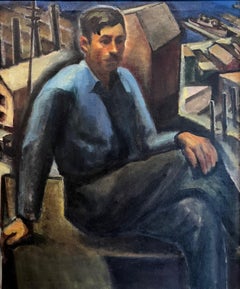
A Laborer Resting

Robert GilbertA Laborer Resting, 1930

$8,500

H 36 in W 30 in D 2 in

A Laborer Resting

By Robert Gilbert

Located in Los Angeles, CA

A Laborer Resting, 1930, oil on canvas, signed and dated lower center, 36 x 30 inches, inscribed verso “July – 1930 / Title – A Laborer Resting / Artist – Robert Gilbert / Price - $2...

Category

1930s American Modern Leon Bibel Art

Materials

Canvas, Oil

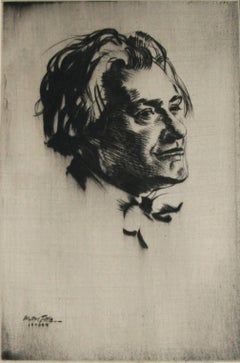
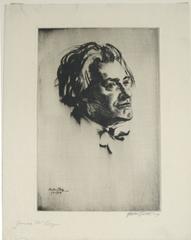
Portrait of James McBey.

Portrait of James McBey.

By Walter Tittle

Located in Plano, TX

James McBey. 1931. Drypoint. 8 7/8 x 5 7/8 (sheet 11 1/2 x 9 ). An extremely rich impression with drypoint burr, printed by the artist on cream wove paper. Signed in the plate lower ...

Category

1930s American Modern Leon Bibel Art

Materials

Drypoint, Etching

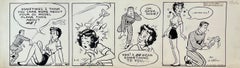
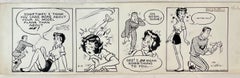
Rare 1950s Vintage Syndicated Ink Drawing Cartoon Strip Susie Q Smith Comic Art

Rare 1950s Vintage Syndicated Ink Drawing Cartoon Strip Susie Q Smith Comic Art

By Jerry Walter & Linda Walter

Located in Surfside, FL

SUSIE Q. SMITH Medium: Newspaper comics Distributed by: King Features Syndicate First Appeared: 1945 Creators: Linda and Jerry Walter 5.5 X 19.5 Dated August 13, 1954 in top right corner. Like her contemporaries, Aggie Mack, Candy and Patsy Walker (before her conversion to a superhero), Susie Q. Smith was a female Archie-type — not exactly an imitator, because Archie, who had started only four years earlier, hadn't yet become popular enough to spawn imitators, but part of his genre. She attended high school, where her teachers often seemed unreasonable to her, interacted with the opposite gender in a typically adolescent way, and her parents didn't completely understand her. And she was cute and perky as only a teenage girl can be. Susie was the star of a comic strip distributed by King Features, the biggest of the comic strip syndicates, whose other offerings have ranged from Jackys Diary to Prince Valiant. King launched the strip in both daily and Sunday form in 1945. Daily, she was only in a panel at first, but it expanded into a full, multi-panel strip on February 7, 1953. In a very odd turn of events, in 1953 the Walters chose to leave King Features behind and hitch their wagon at the McNaught Syndicate. The creators were Harold "Jerry" Walter and his wife, Linda. Jerry was also responsible for Jellybean Jones, who has nothing to do with Jughead Jones's young sister, a modern-day addition to the Archie cast of characters. Together, they did The Lively Ones during the 1960s. Though each was capable of doing both major jobs in comic strip production, their usual working method was for Jerry to dream up the ideas and write the dialog, while Linda did the artwork. The Walters also collaborated on a series of Susie Q. Smith comic books for Dell Comics. Instead of reprinting newspaper strips, these ran new stories by the Walters. Between 1951 and '54, four issues were published as part of the Four Color Comics series, where many minor comic strips, including Dotty Dripple, Timmy and Rusty Riley had found a home. It had no other media spin-offs. Susie Q. Smith had a respectable run in the newspapers, but it ended in 1959. Jerry Walter (1915 - 2007) was an abstract expressionist artist whose output of energetic and colorful paintings were the products of the rich artistic milieu of post-war New York City. He was born Harold Frank Walter in Mount Pleasant, Iowa on November 25, 1915. After graduating from Colgate University in 1937, Walter moved to New York City, where he studied drawing and painting at the New School and the Art Students’ League. Before concentrating seriously on his art, he spent several years as a successful copywriter and idea man for the advertising agencies of J. Walter Thompson, McCann Ericson, and BBDO. During this time, he also worked as a syndicated cartoonist. Collaborating with his wife, Linda, his best-known series was Susie Q. Smith, which first appeared in 1945 and described as a “female Archie type.” Very popular, the cartoon was later the subject of a series of comic books published from 1951 to 1954. After serving in the United States Army for three years during World War II, Walter began to paint seriously. He ascribed his earliest artistic influence to Joan Miró, whose Dog Barking at the Moon (1926) he viewed when he was twelve, the year he published his first cartoon. Walter later wrote that jazz, “the first native expression of so-called modernism” was a strong influence on his work. During the later 1940s, Walters spent time at the Research Studio in Maitland, Florida. Founded in 1937 by artist and architect J. André Smith and supported by the philanthropist Mary Curtis Bok, the Research Studio was a lively colony that hosted prominent artists, including Milton Avery, Ralston Crawford, and Doris Lee. While at the Studio, Walter’s work was purchased by Frank Crowninshield. A founding trustee of the Museum of Modern Art and editor of Vanity Fair, Crowinshield was a noted collector; his collection included important works by Pablo Picasso, Marc Chagall, Henri Matisse, Edgar Degas, George Bellows, and Pierre Bonnard. Returning to New York after his time at the Studio, Walter became an active member of the New York school of the abstract expressionist movement, and in the summer of 1956, Walter exhibited 13 paintings and a selection of drawings at New York’s Chase Gallery. The adroit manipulation of both color and composition evident in his work shows the influence of Abstract Expressionism, particularly Willem de Kooning, Arshile Gorky, and Hans Hofmann. illustrator and female cartoonist Linda Walter was the talented female mind behind the beloved "Susie Q. Smith" comic strip. She played an instrumental role in shaping the cultural landscape through her vibrant illustrations. Known for the timeless charm of the "Susie Q. Smith" comic strip, Linda's artistry brought joy and laughter to countless readers during the 1950s and continues to resonate with fans across generations. She was part of the Woodstock artists community. from Women in Comics: Linda Walter was the artist of newspaper strip Susie Q. Smith, which was written by her husband, Jerry. It was syndicated by King Features Syndicate and ran from 1945 to 1959. The Walters also contributed original Susie Q. Smith stories to Dell's Four Color comic books from 1951 to 1954. From 1964-1965, they created a singled panel comic called The Lively Ones. Vintage Golden Age of Comics era. The Golden Age of Comic Books describes an era in the history of American comic books from 1938 to 1956. During this time, modern comic books were first published and rapidly increased in popularity. The superhero archetype was created. Between 1939 and 1941 Detective Comics (DC) and its sister company, All-American Publications, introduced popular superheroes such as Batman and Robin, Wonder Woman, the Flash, Green Lantern, Doctor Fate, the Atom, Hawkman, Green Arrow and Aquaman. Timely Comics, the 1940s predecessor of Marvel Comics, had million-selling titles featuring the Human Torch, the Sub-Mariner, and Captain America. Another notable series was The Spirit by Will Eisner. Dell Comics' non-superhero characters (particularly the licensed Walt Disney animated-character comics) outsold the superhero comics of the day. The publisher featured licensed movie and literary characters such as Mickey Mouse, Donald Duck, Roy Rogers and Tarzan. Additionally, MLJ's introduction of Archie Andrews in Pep Comics #22 (December 1941) gave rise to teen humor comics, with the Archie Comics...

Category

1950s American Modern Leon Bibel Art
Materials

Paper, Ink

Sun Image

Jerre H. MurrySun Image, 1936

$7,500

H 30 in W 24 in D 2 in

Sun Image

By Jerre H. Murry

Located in Los Angeles, CA

Sun Image, 1936, oil on canvas, signed lower right, 30 x 24 inches, presented in a newer frame Jerre Murry was a California modernist painter. Born in Columbia, Missouri, Murry stu...

Category

1930s American Modern Leon Bibel Art
Materials

Canvas, Oil

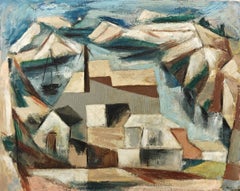
"Cubist Landscape" Albert Heckman, American Modernism, Woodstock, Earth Tones

"Cubist Landscape" Albert Heckman, American Modernism, Woodstock, Earth Tones

By Albert Heckman

Located in New York, NY

Albert Heckman Cubist Landscape Oil on canvas 16 x 20 inches Albert Heckman was born in Meadville, Western Pennsylvania, 1893. He went to New York City to try his hand at the art w...

Category

1940s American Modern Leon Bibel Art
Materials

Canvas, Oil

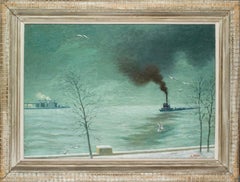
"Tugboat in New York Harbor" Ernest Fiene, Modernist, WPA, Cloudy Horizon

"Tugboat in New York Harbor" Ernest Fiene, Modernist, WPA, Cloudy Horizon

By Ernest Fiene

Located in New York, NY

Ernest Fiene Tugboat in New York Harbor Signed lower right Oil on canvas 24 1/2 x 34 1/2 inches Ernest Fiene was born in Elberfeld, Germany in 1894. As a teenager, Fiene immigrated...

Category

1930s American Modern Leon Bibel Art
Materials

Canvas, Oil

"High Noon" James Goodwin McManus, Skyscape, Connecticut Landscape, Modernist

"High Noon" James Goodwin McManus, Skyscape, Connecticut Landscape, Modernist

Located in New York, NY

James Goodwin McManus High Noon, circa 1935 Signed lower right Oil on canvas 25 x 30 inches Provenance Private Collection Ric Serrenho, North Granby, Connecticut (acquired from the above in 2004) James McManus...

Category

1930s American Modern Leon Bibel Art
Materials

Canvas, Oil

Previously Available Items
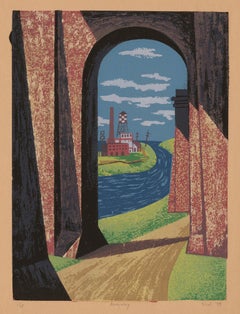
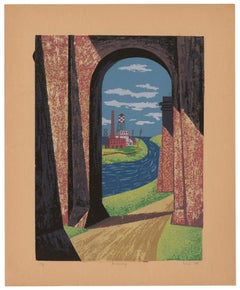
'Archway' — American Modernism, WPA

'Archway' — American Modernism, WPA

By Leon Bibel

Located in Myrtle Beach, SC

Leon Bibel, 'Archway', color serigraph, 1939, edition 25. Signed, dated, titled, and numbered ' /25' in pencil. A rich, painterly impression, with fresh colors, on buff wove paper; ...

Category

1930s American Modern Leon Bibel Art
Materials

Screen

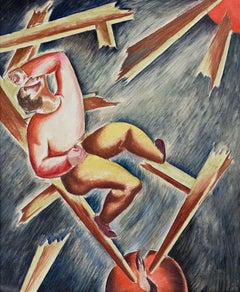
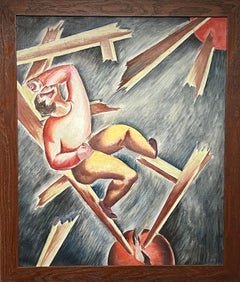
"Shattered" WPA Mid 20th Century Modernism American Scene Surrealism Figurative

"Shattered" WPA Mid 20th Century Modernism American Scene Surrealism Figurative

By Leon Bibel

Located in New York, NY

"Shattered" WPA Mid 20th Century Modernism American Scene Surrealism Figurative Leon Bibel (1912-1955) "Shattered" (1937) 20 x 24 inches Oil on canvas Estate stamp on the stretcher, verso. Provenance: Estate of the artist. Look at the last two photos in the listing. A new book about Leon Bibel was just published and there's a photo of the artist taken in front of the painting. Amazingness. BIO Leon Bibel continued painting through 1941 and resumed work in both painting and especially wood sculpture by 1960. He worked until his very last day in 1995. His last series of large wood sculptures were modeled on spice boxes, which were miniature buildings...

Category

1930s American Modern Leon Bibel Art
Materials

Canvas, Oil

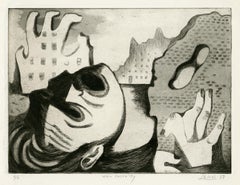
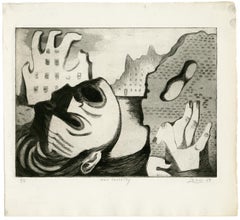
War Casualty — American Surrealism, Spanish Civil War, Anti-Fascism

War Casualty — American Surrealism, Spanish Civil War, Anti-Fascism

By Leon Bibel

Located in Myrtle Beach, SC

Leon Bibel, 'War Casualty', etching, 1937, edition 6. Signed, dated, titled, and numbered '5/6' in pencil. A fine, richly-inked impression, on cream wove paper, with full margins (1/2 to 1 7/8 inches); slight toning at the sheet edges, otherwise in excellent condition. Very scarce. Image size 7 3/8 x 9 7/8 inches (187 x 251 mm); sheet size 10 5/8 x 11 3/8 inches (270 x 289 mm). Archivally matted to museum standards, unframed. Created at the time of the Spanish Civil War and the rise of Hitler in Germany, this work stands as one of the most powerful surrealist/modernist anti-war images of the Work Progress Administration (WPA) period. ABOUT THE ARTIST Painter, printmaker, and sculptor, Leon Bibel, was born in Poland in 1913 but moved with his family to San Francisco as a child. He trained at the California School of Fine Arts and received a scholarship to study under the German Impressionist Maria Riedelstein. He worked in collaboration with Bernard Zackheim, a student of Diego Rivera, to create frescoes for the San Francisco Jewish Community Center and the University of California Medical School. In 1936 Bibel moved from California to join the Federal Art Project of the New York City WPA. He was assigned to the Graphic Art Project and the Easel Project at Harlem Art...

Category

1930s Surrealist Leon Bibel Art

Materials

Etching

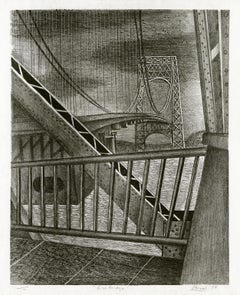
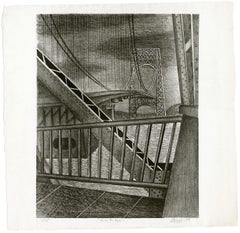
George Washington Bridge

George Washington Bridge

By Leon Bibel

Located in Myrtle Beach, SC

Leon Bibel, 'G. W. Bridge', lithograph, 1938, edition 10. Signed 'L Bibel', dated, titled, and numbered '/10' in pencil. A superb, finely-nuanced impression, on off-white, wove paper...

Category

1930s American Modern Leon Bibel Art
Materials

Lithograph

Leon Bibel art for sale on 1stDibs.
Find a wide variety of authentic Leon Bibel art available for sale on 1stDibs. You can also browse by medium to find art by Leon Bibel in canvas, fabric, oil paint and more. Much of the original work by this artist or collective was created during the 20th century and is mostly associated with the modern style. Not every interior allows for large Leon Bibel art, so small editions measuring 10 inches across are available. Customers who are interested in this artist might also find the work of Rockwell Kent, Arnold Ronnebeck, and Howard Norton Cook. Leon Bibel art prices can differ depending upon medium, time period and other attributes. On 1stDibs, the price for these items starts at $2,400 and tops out at $24,500, while the average work can sell for $5,500.
Artists Similar to Leon Bibel