Video Loading
Want more images or videos?
Request additional images or videos from the seller.

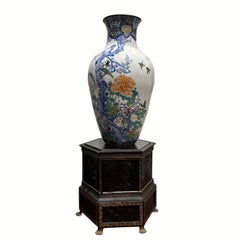
Arita Fukagawa/Koransha large balustraded Vase, with Kacho-Fujetsu motif , Base

$7,699.85
$9,624.8120% Off
£5,818.78
£7,273.4820% Off
€8,291.16VAT Included
€8,53020% Off
CA$10,978.10
CA$13,722.6320% Off
A$11,317.58
A$14,146.9720% Off
CHF 6,430.55
CHF 8,038.1920% Off
MX$143,259.91
MX$179,074.8920% Off
NOK 73,638.87
NOK 92,048.5820% Off
SEK 77,145.83
SEK 96,432.2920% Off
DKK 52,033.79
DKK 65,042.2320% Off

About the Item

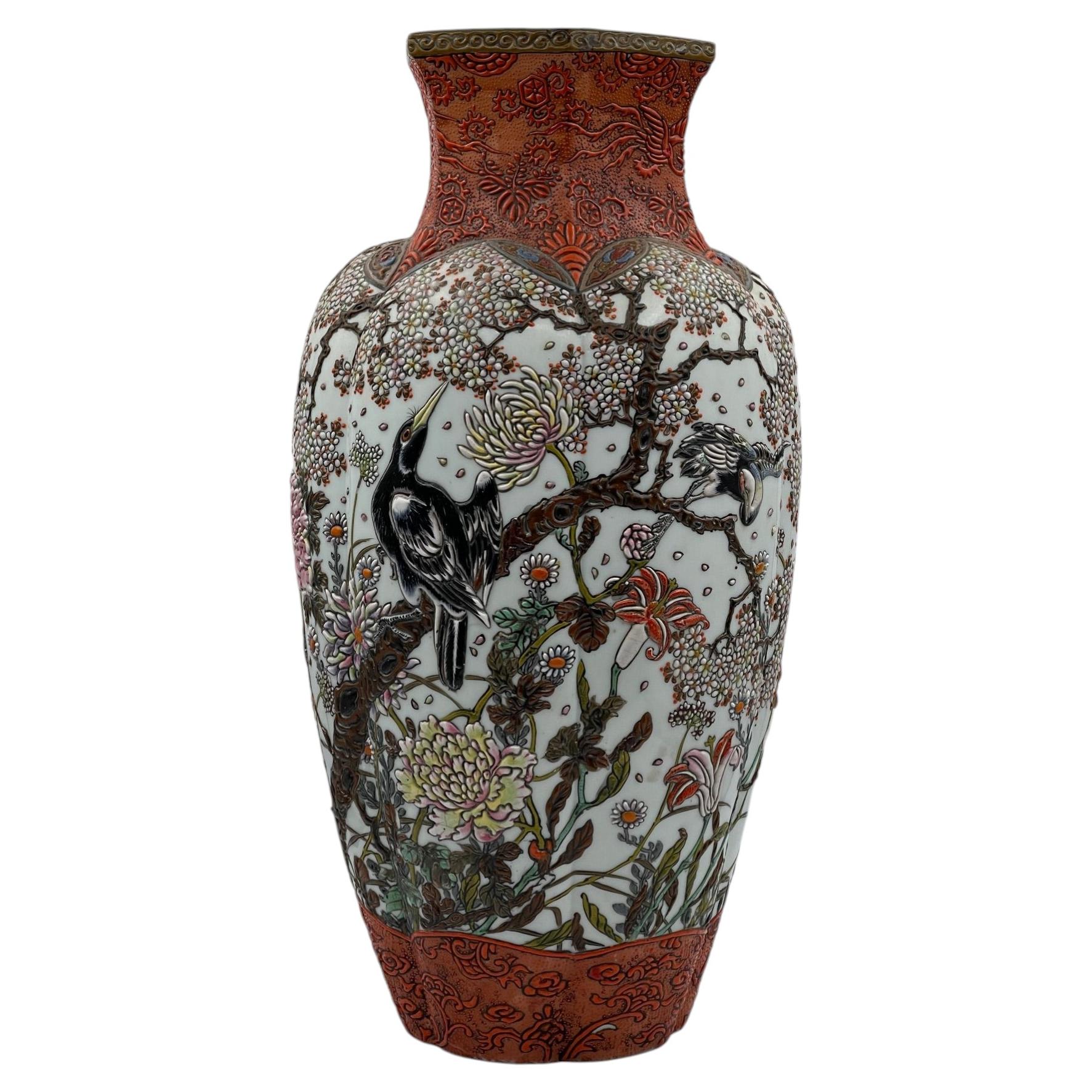
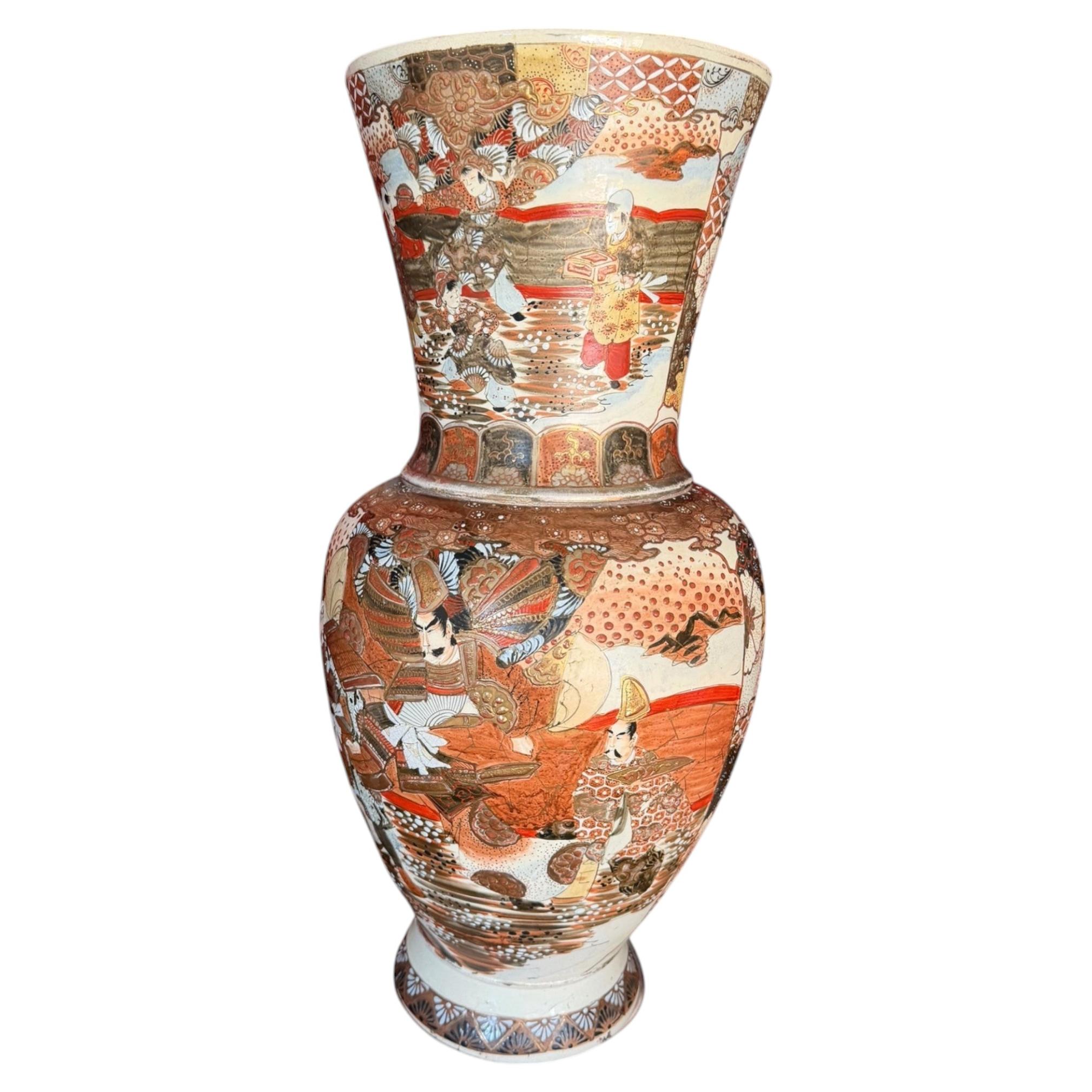
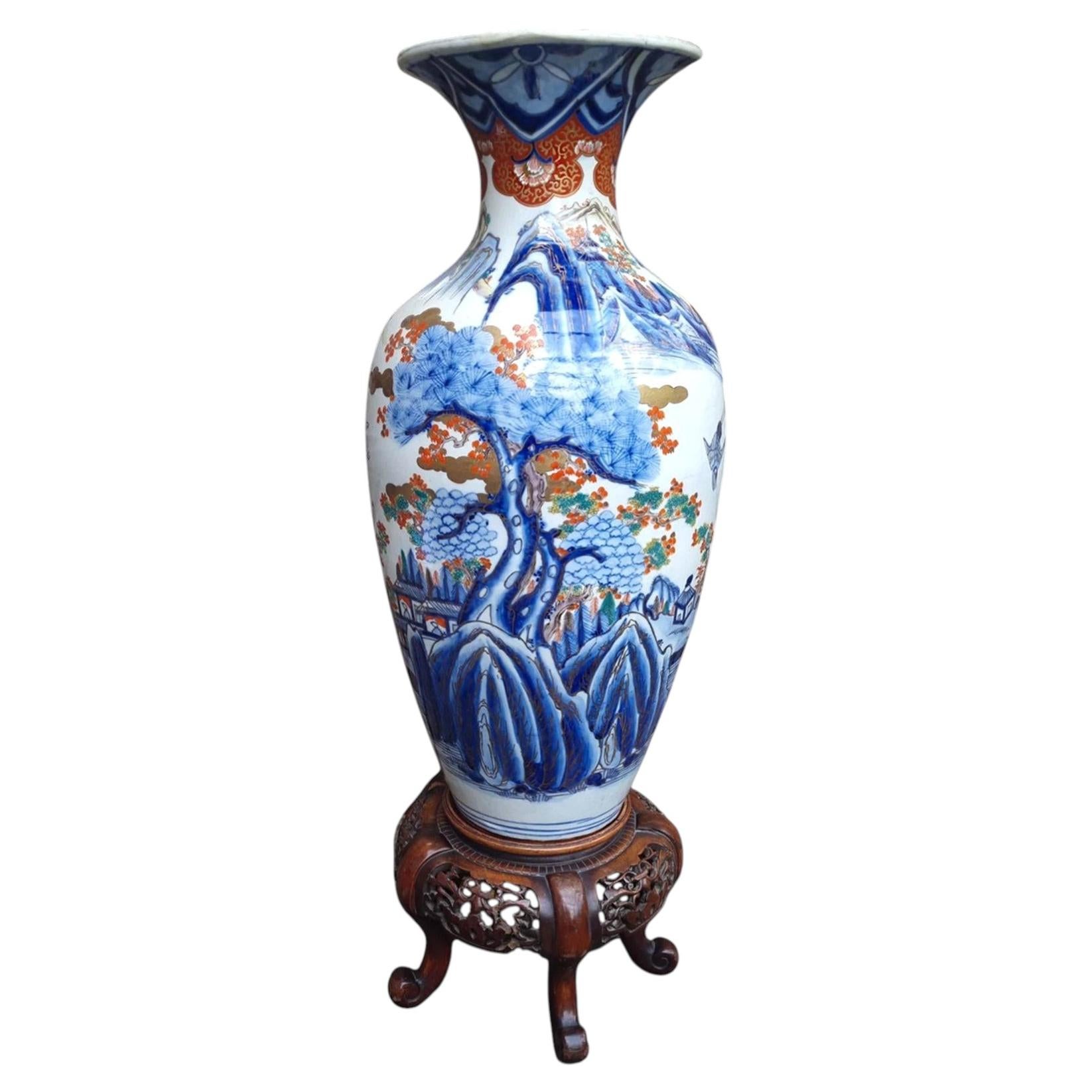
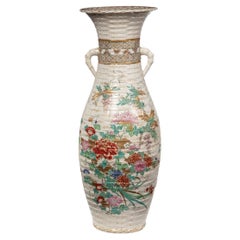
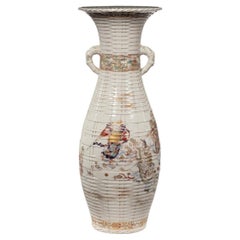
A unique and spectacular large balustraded vase, ornamented with a rich Kacho-Fujetsu (birds and flowers) motif in the vibrant colors characteristic of Imari porcelain. • Manufactured by Fukagawa/Koransha, Arita. • Iron red stamp on the base. Large hexagonal base with a metal core. Covered in finely carved precious wood panels framed by fretwork of floral and vegetal motifs carved in high relief on gilt metal. • Supported by four bronze lion's paw feet. • An export piece of extraordinary quality and beauty. • A museum-quality masterpiece. • Meiji period, circa 1880, 19th century. Dimensions: Vase: 90 cm x 50 cm - Base: 55 cm x 60 cm Origin: Private collection, London, England. Condition: Very good for its age and use FUKAGAWA is one of the most prestigious porcelain manufacturers in the Arita region of Japan. Its origins lie in an important family lineage dating back to 1650. In 1875, FUKAGAWA VIII merged the centuries-old tradition of Arita ceramics with the technical innovations of the late 19th century. A large number of pieces were exported through the East India Company. Its monumental vases, decorated with bold compositions on translucent white porcelain, and the use of a vibrant cobalt blue underglaze, earned it the Gold Medal at the Universal Exposition in Paris in 1900. In 1910, it became the official supplier to the Imperial Household of Japan (a position it still holds today). Its hallmark on the base always depicts Mount Fuji rising from a river. The large vase features a rounded, voluminous shape that tapers to a stylized base. It boasts sumptuous ornamentation in the Kacho-Fugetsu style (birds and flowers). The main scene is an exuberant display of oriental nature. Large peonies in ochre and orange tones, symbols of royalty and implicitly representing prosperity, honor, and beauty in Japanese culture, take center stage. This important and symbolic aesthetic is complemented by undulating cherry blossom branches that support nightingales in a penetrating, intense blue. The entire artistic representation is further enhanced by small wildflowers among moss-covered rock formations, which lend the depth characteristic of traditional Japanese landscape composition. The mouth of the vase is adorned with a geometric and floral pattern, following a brocade aesthetic that frames the entire natural scene below. The neck of the vase is framed by an intricate geometric motif of gilded outlines, whose narrative links us to the traditional opulence characteristic of these pieces during the Meiji era. Stamp and signature on the base in iron red. In magnificent condition. An opportunity to acquire this Masterpiece.
  • Dimensions:
    Height: 57.09 in (145 cm)Diameter: 23.63 in (60 cm)
  • Style:
    Qing (Of the Period)
  • Materials and Techniques:
  • Place of Origin:
  • Period:
  • Date of Manufacture:
    1880
  • Condition:
    Wear consistent with age and use.
  • Seller Location:
    Valladolid, ES
  • Reference Number:
    1stDibs: LU2943351817162

More From This Seller

View All
Pair of porcelain vases, Rosa family, Qing Dynasty, Canton, China

Pair of porcelain vases, Rosa family, Qing Dynasty, Canton, China

Located in Valladolid, ES

One of a kind pair of Chinese porcelain vases from Canton Province, in the Rose Family, or fencai, style, dating from the Qing Dynasty (1644-1912), 19th century. This pair of vases ...

Category

Antique 1870s Chinese Qing Porcelain

Materials

Porcelain

19th Century Qing Dynasty Tray Table with Fitzhugh Porcelain, China

19th Century Qing Dynasty Tray Table with Fitzhugh Porcelain, China

Located in Valladolid, ES

Technical data Materials: Porcelain tray, wooden legs Period: Qing Dynasty Country of origin: China Good condition for its age and use, with some flaws in the wooden structure Overall dimensions: 70 x 95 x 80 cm Porcelain dimensions: 70 x 58 cm Exquisite Fitzhugh pattern porcelain plate or tray, inlaid in a cabinet that highlights its oval profile and raised on four slightly curved square legs. The term "Fitzhugh" refers to a type of Chinese export porcelain produced primarily between 1780 and 1840, featuring blue and white designs. It originated with three members of two generations of the Fitzhugh family. Members of this family held important positions as ship captains and even as directors in the British East India Company. Within this company, high-ranking officials were allowed to engage in private trade. Between 1704 and the 1790s, porcelain pieces bearing this pattern were shipped to England. The design usually includes a central medallion, although it is occasionally replaced by a coat of arms or monogram. The medallion is surrounded by four groupings of flowers representing the four seasons—peony for spring; lotus for summer; chrysanthemum for autumn; and prunus for winter—and symbols that typically represent the four virtues of the Chinese scholar: music, painting, logical thinking, and calligraphy. The design is framed with a decorative border that may be a lattice and spearhead pattern, sometimes known by the term "Nanking," or a more elaborate border featuring butterflies, honeycomb shapes, and floral ornamentation. The definition of the Fitzhugh porcelain...

Category

Antique 19th Century Chinese Chinese Export Antiquities
Materials

Porcelain, Wood

Italian Glazed Porcelain Vase, Adriani e Rossi, late 20th century

Italian Glazed Porcelain Vase, Adriani e Rossi, late 20th century

By Camillo Adriani

Located in Valladolid, ES

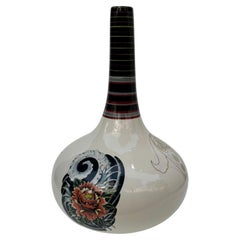
Amazing glazed porcelain vase created by the Italian design firm Adriani e Rossi in the late 20th century. The vase features a nearly circular, slightly flattened body, extending in...

Category

Vintage 1980s Italian Mid-Century Modern Porcelain

Materials

Porcelain

Qing Dynasty Indochina side chest, ,  carved wood on legs

Qing Dynasty Indochina side chest, , carved wood on legs

By Paquement Vietnam

Located in Valladolid, ES

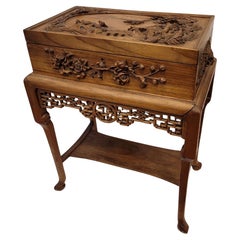
Gorgeous Late Qing Dynasty Indochina side chest, early 20th century, with carved apron and sides. Combining utility and aesthetics, this late Qing Dynasty side chest effortlessly str...

Category

Antique Early 1900s Vietnamese Qing Cabinets

Materials

Wood

Gueridon , Side table, ebonized and carved wood and marble, Qing Dynasty, China

Gueridon , Side table, ebonized and carved wood and marble, Qing Dynasty, China

Located in Valladolid, ES

Gorgeous small gueridon or side table of Chinese origin, made of ebonized and carved wood with an inlaid marble top, circa 1900, Qing Dynasty. It can also be used as a stand or pedes...

Category

Antique Early 1900s Chinese Anglo-Indian Gueridon

Materials

Marble

You May Also Like

Large Japanese Edo Period Arita Porcelain Vase with Stand, Early 19th Century

Large Japanese Edo Period Arita Porcelain Vase with Stand, Early 19th Century

Located in Nottingham, GB

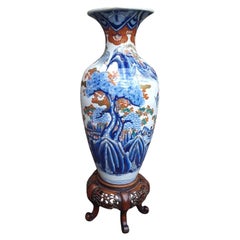
An impressive large Japanese Arita porcelain vase dating to the Edo period and early 19th century. Standing an imposing 72 cm high with its stand, the vase combines substantial scal...

Category

Antique Early 19th Century Vases

Materials

Porcelain

Large Meiji Period Satsuma Earthenware Floor Vase

Large Meiji Period Satsuma Earthenware Floor Vase

Located in Lymington, Hampshire

A large Meiji period Satsuma earthenware floor vase, the of baluster form, painted in pastel overglaze enamels and gilding with two large sprays of flowers including prunus blossom, ...

Category

Antique 1870s Japanese Meiji Ceramics

Materials

Enamel

Large Meiji Period Satsuma Earthenware Floor Vase

Large Meiji Period Satsuma Earthenware Floor Vase

Located in Lymington, Hampshire

A large Meiji period Satsuma earthenware floor vase, the skittle shaped body painted in pastel overglaze enamels and gilding with a continuous frieze of the Seven Gods...

Category

Antique 1870s Japanese Meiji Ceramics

Materials

Enamel

Large 19th Century Japanese Kutani Vase

Large 19th Century Japanese Kutani Vase

Located in Brighton, Sussex

A large and impressive 19th century Japanese Kutani lidded vase, having a dog of faux finial to the lid, inset painted panels depicting exotic birds, flowers and foliage. The ground ...

Category

Antique Late 19th Century Japanese Vases

Late 19th Century Chinese Ceramic Vase in the Japanese Style

Late 19th Century Chinese Ceramic Vase in the Japanese Style

Located in Dublin 8, IE

Late 19th century Chinese ceramic vase in the Japanese style, bulbous in shape with painted naturalistic detailing of trees, water, and birds. Solid deep blue banding highlights the ...

Category

Antique Late 19th Century Asian Ceramics

Materials

Ceramic