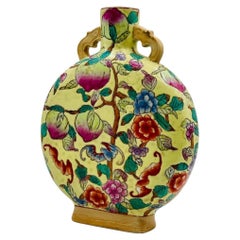
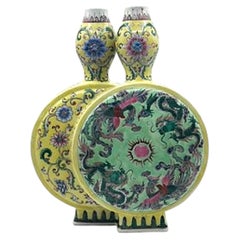
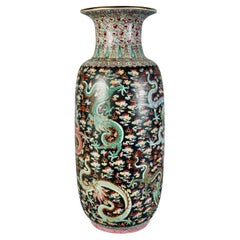
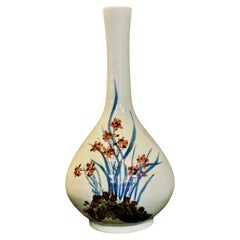
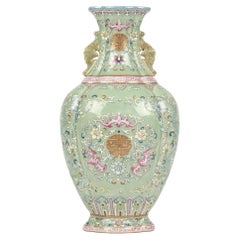
Chinese Qing Dynasty Famille Rose Porcelain Moon Flask with Peaches and Bats, ca. 1880
Origin: China
Period: Late Qing Dynasty, circa 1880
Style: Chinese Export / Qing Dynasty Decorative Arts
Materials: Hand-painted famille rose porcelain
Markings: Marked on the underside
Price: $3,900
Dimensions:
• Height: 10.5 in (26.67 cm)
• Width: 8 in (20.32 cm)
• Depth: 2.5 in (6.35 cm)
Description
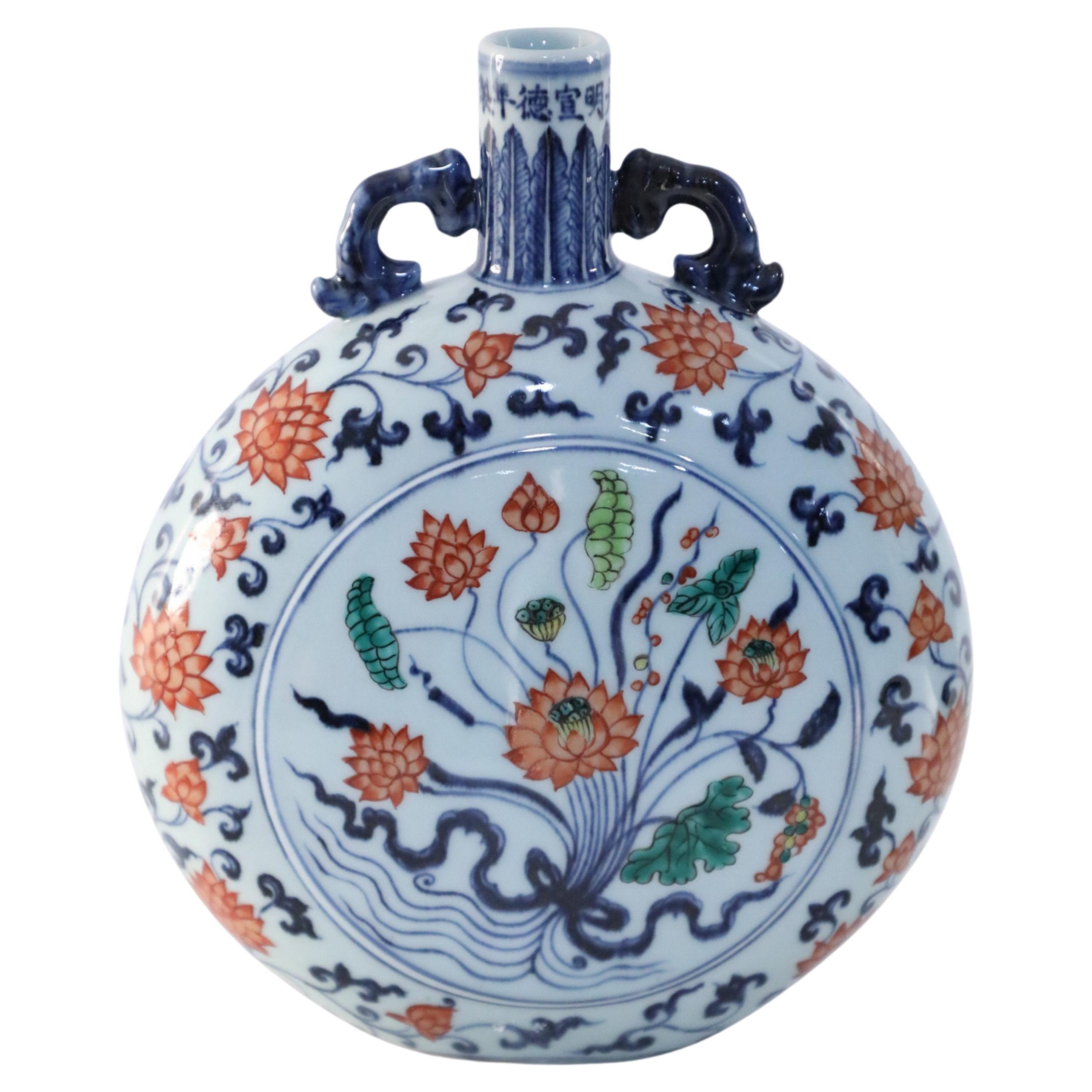
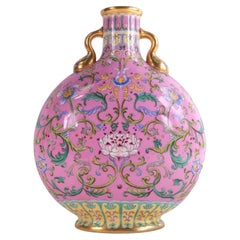
An exceptionally decorative Chinese famille rose porcelain moon flask, dating to the late Qing Dynasty, circa 1880, distinguished by its elegant flattened circular form, richly colored auspicious decoration, and beautifully executed polychrome enameling.
The flask, traditionally known as a bianhu or baoyueping (moon flask), features a broad, flattened circular body rising from a low rectangular foot to a slender cylindrical neck, flanked by a pair of gracefully modeled scrolling handles.
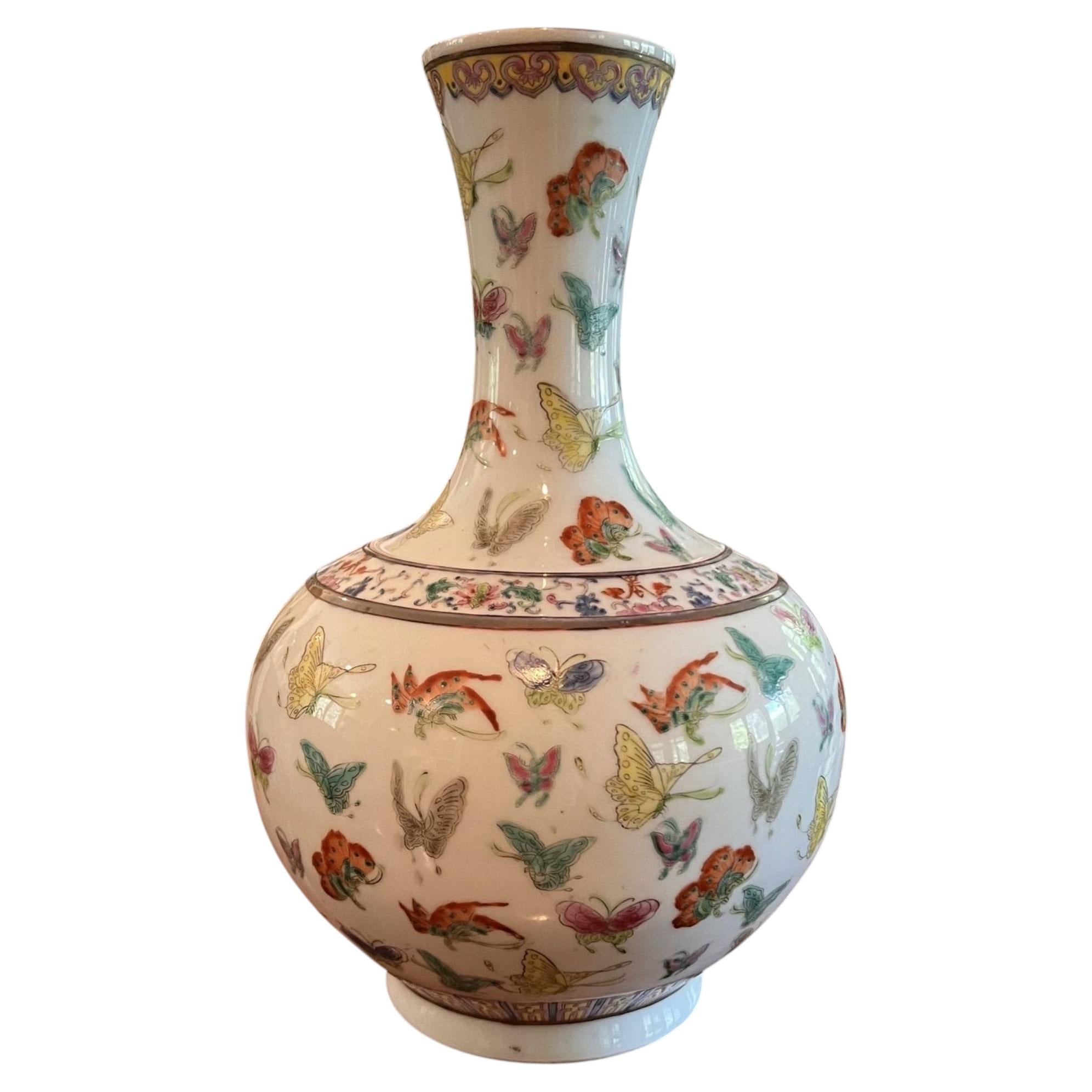
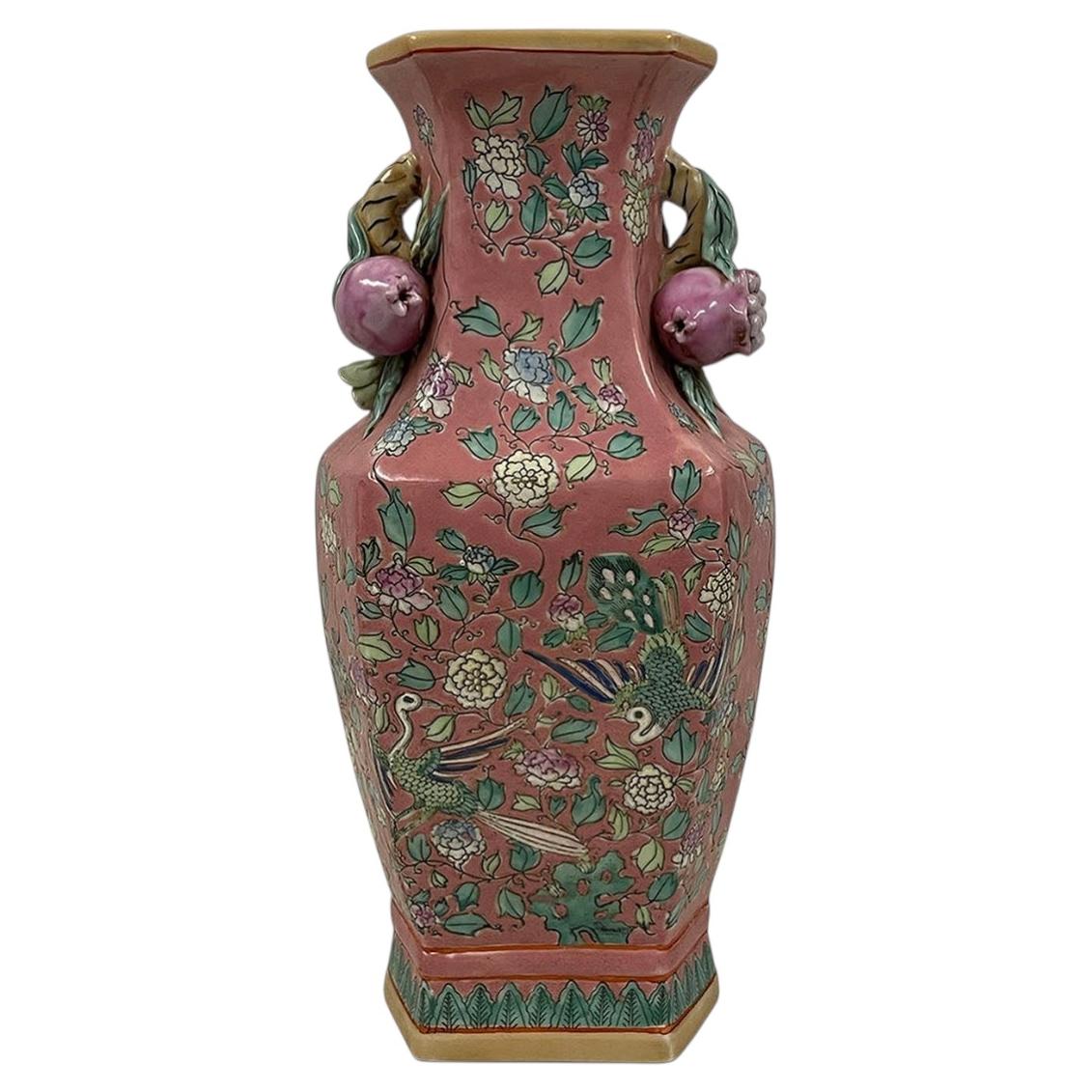
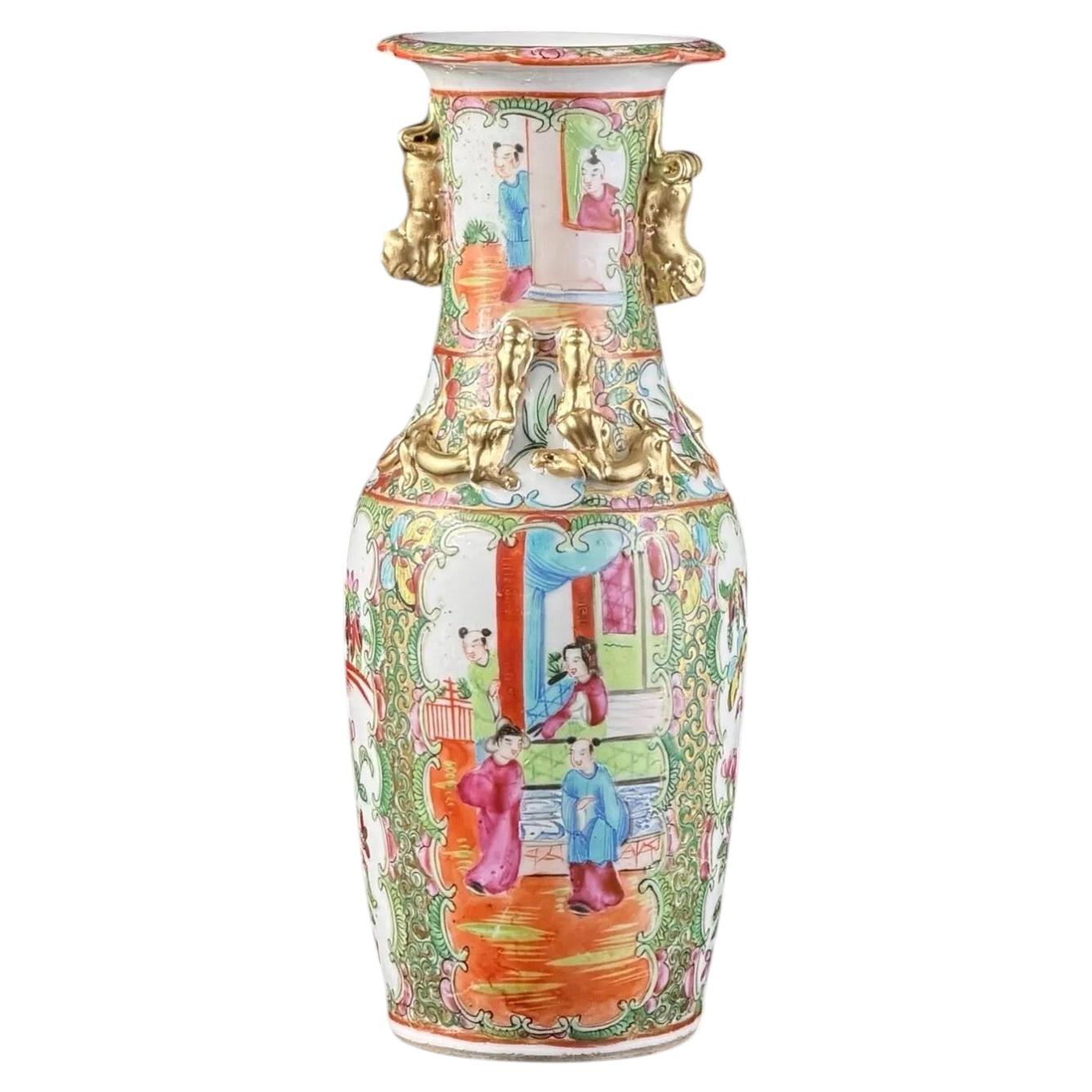
The surface is elaborately hand-painted with a lively composition of ripe peaches suspended from gracefully twisting branches, interspersed with delicate blossoms, colorful foliage, and stylized bats in flight. The decoration is rendered in the characteristic famille rose palette, with particularly attractive shades of rose pink, lavender, turquoise green, coral red, and soft blue, set against a warm ivory-toned ground.
The peaches are beautifully modeled with subtle tonal gradations, transitioning from pale green to rich pink and magenta, while the surrounding leaves are outlined in fine black lines and filled with vibrant turquoise and emerald-green enamels. Clusters of peony-like flowers in shades of purple and orange-red provide additional richness and visual contrast.
Particularly appealing are the small, animated bats distributed among the flowering branches, their outstretched wings and delicately painted details lending movement to the composition.
The richly ornamented circular body is balanced by the restrained architectural simplicity of the neck, handles, and foot, creating a harmonious combination of sculptural elegance and exuberant decoration.
The porcelain exhibits a lustrous glazed surface with subtle variations in tone, enhancing the depth and character of the hand-painted enamels. The underside bears a mark.
Symbolism: Peaches, Bats, and Auspicious Imagery
The decorative program of this moon flask is deeply rooted in traditional Chinese symbolism, in which natural forms and mythological creatures frequently express wishes for happiness, longevity, prosperity, and good fortune.
Peaches — Symbols of Immortality and Longevity
In Chinese mythology, peaches are closely associated with Shou, or longevity, and with the legendary peaches of immortality cultivated in the celestial garden of Xiwangmu, the Queen Mother of the West.
According to tradition, these magical fruits ripened only after extraordinarily long intervals and bestowed immortality upon those fortunate enough to consume them.
Consequently, peaches became enduring symbols of long life, good health, and the blessings of immortality.
Bats — Symbols of Happiness and Good Fortune
Bats occupy a particularly auspicious position in Chinese decorative arts because the Chinese word for bat, fu (蝠), is pronounced like the word for good fortune or happiness, fu (福).
Their depiction on porcelain, textiles, lacquerware, and other decorative objects was intended to convey blessings of prosperity, happiness, and good fortune.
When combined with peaches, bats create a particularly meaningful decorative composition, expressing wishes for both longevity and happiness.
Flowers — Beauty, Prosperity, and Renewal
The flowering branches and colorful blossoms further enrich the symbolic imagery, evoking abundance, natural beauty, renewal, and prosperity.
Together, these motifs form a harmonious and highly auspicious decorative scheme, characteristic of Chinese porcelain produced for refined domestic interiors.
Historical Background
Moon flasks, distinguished by their flattened circular bodies and narrow necks, have a long history in Chinese ceramic production.
Their origins can be traced to earlier vessel forms influenced by Central Asian and Middle Eastern prototypes, which were subsequently adapted and refined by Chinese potters.
During the Ming and Qing dynasties, the moon flask became an important decorative form, admired for its balanced proportions and expansive surfaces suitable for elaborate painted decoration.
The famille rose enamel palette, developed during the early 18th century, enabled Chinese porcelain painters to achieve a greater range of delicate colors, particularly soft pinks, purples, and nuanced tonal gradations.
By the 19th century, famille rose porcelain had become one of the most recognizable and admired categories of Chinese decorative ceramics, combining technical refinement with an exceptionally rich vocabulary of ornamental and symbolic motifs.
Decorative Appeal
A particularly attractive example of late Qing Dynasty decorative porcelain, this moon flask combines elegant proportions, richly colored famille rose enameling, and traditional Chinese auspicious symbolism.
Its flattened circular silhouette, gracefully scrolling handles, and beautifully composed decoration make it an appealing addition to a collection of Chinese ceramics or Asian decorative arts.
Equally effective as a freestanding decorative object, the vase would make a distinctive accent in a library, living room, or sophisticated interior, where its vibrant colors and elegant form can be appreciated