Want more images or videos?
Request additional images or videos from the seller
1 of 6

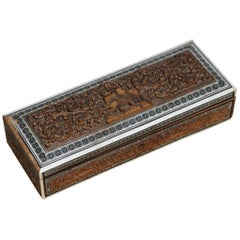
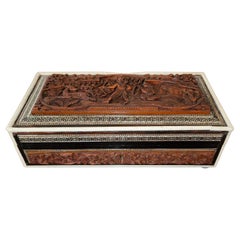
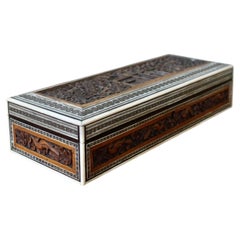
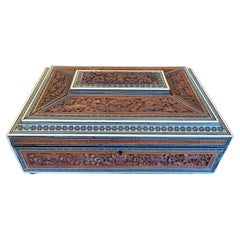
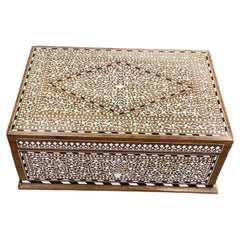
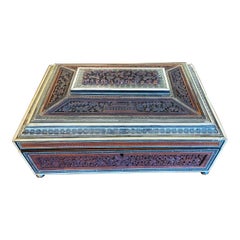
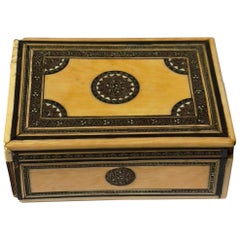
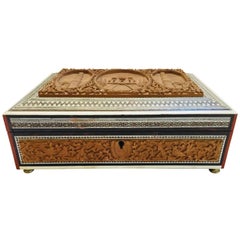
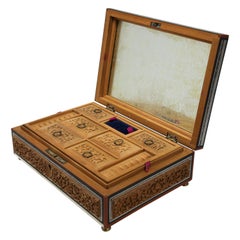
Anglo-Indian Vizagapatam Jewelry Inlaid Sadeli Mughal Style Box

$650List Price

You May Also Like

19th Century Anglo Indian Vizagapatam Carved Sandalwood Box Micro Mosaic Inlays

19th Century Anglo Indian Vizagapatam Carved Sandalwood Box Micro Mosaic Inlays

Located in West Sussex, Pulborough

We are delighted to offer for sale this lovely 19th century Anglo-Indian Vizagapatam carved sandalwood and inlaid box Mid-19th century Anglo-Indian Vizagapatam carved sandalwood box...

Category

Antique 19th Century Indian Anglo-Indian Decorative Boxes

Materials

Wood

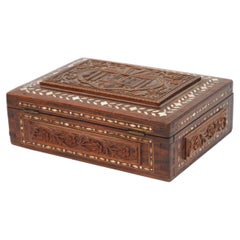
19C Anglo Indian Carved Teak Wood and Sadeli Mosaic Box

19C Anglo Indian Carved Teak Wood and Sadeli Mosaic Box

Located in Dallas, TX

PRESENTING A LOVELY 19th century Anglo-Indian Carved Teak Wood and Sadeli Mosaic Box, featuring a carving of a Hunt Scene. Made circa 1870 in Bombay, India during the Rule of the Br...

Category

Antique Late 19th Century Indian Anglo-Indian Jewelry Boxes

Materials

Silver, Pewter

Very Decorative Vizagapatam Box INDIA 19th Century

Very Decorative Vizagapatam Box INDIA 19th Century

Located in Ottawa, Ontario

VERY DECORATIVE VIZAGAPATAM BOX Vizagapatam, India, 19th Century. Rustic workmanship will only add to the decorative appeal of this Anglo-Indian footed domed casket in ebonized woo...

Category

Antique 19th Century Indian Anglo-Indian Decorative Boxes

Materials

Bone

Antique Anglo-Indian Hoshiarpur Inlaid Stationery Box, circa 1900

Antique Anglo-Indian Hoshiarpur Inlaid Stationery Box, circa 1900

Located in Nottingham, GB

A beautifully crafted Anglo-Indian stationery box from Hoshiarpur, Punjab, dating to circa 1900 and displaying the intricate decorative workmanship for which the region became renown...

Category

Early 20th Century Decorative Boxes

Materials

Brass, Copper

Antique Early Victorian Jewellery Box with Tray, England, 1840

Antique Early Victorian Jewellery Box with Tray, England, 1840

Located in High Peak, GB

P080 An elegant antique early Victorian rosewood sewing box or jewellery box with beautifully scroll inlaid front and hinged top which open to reveal newly relined interior with lift...

Category

Antique 19th Century English Early Victorian Cigar Boxes and Humidors

Materials

Wood

Indian "Bombay" Box w/Sadeli Work Framing Carved Panels and Raised on Metal Feet

Indian "Bombay" Box w/Sadeli Work Framing Carved Panels and Raised on Metal Feet

Located in Chapel Hill, NC

Indian "Bombay" dresser/jewelry box with a mirror in the lid and raised on a "tray" base with silvered feet. The exterior with exotic wood and sadeli work (micro-mosaic inlay) framin...

Category

Antique Late 19th Century Indian Decorative Boxes

Materials

Bone, Shell, Wood

19C Anglo Indian Highly Carved Sadeli Mosaic Sarcophagus Sewing Box

19C Anglo Indian Highly Carved Sadeli Mosaic Sarcophagus Sewing Box

Located in Dallas, TX

PRESENTING A GORGEOUS 19C Anglo Indian Highly Carved Sadeli Mosaic Sarcophagus Sewing Box. Made in Bombay, India circa 1860-80. Box made of sandalwood with highly carved teak wood reliefs and panels on all sides. Edged with bone and ebony veneers and glorious sadeli mosaic, made from tiny pieces of faux ivory, pewter, green semi-precious stone. The box is in a sarcophagus form with domed lid. The original brass carry handles are on the sides. The interior is in great condition and consists of a removeable mirror under the lid portion, with the original red velvet lining behind it. The base is removeable and contains a number of lidded compartments. 6 of the interior lids on the base, are each inlaid with sadeli mosaic banding. The rest are also carved and chased. The interior is fully complete with 7 lidded faux ivory/bone, thread canisters with sadeli domes and the original bone thimble. The box sits on 4 brass ball or bun feet with the original velvet lining on the base. Some minor repairs and losses, but this box is fully complete. This is ‘rare’ as many of these boxes have not survived in such condition! Included in the sale are 2 photos that were in the box (under the base tray). Interestingly, one of them is a view of downtown Nassau, New Providence (Bermuda) from the early 20C and stamped on the rear. What a ‘journey’ this piece has made! Made in India … travelled to Bermuda, probably via Britain … back to Ireland (where we bought it) …. then to Texas! These boxes were made by superb Indian craftsmen, specifically for sale to the ruling British elite. These types of boxes, carved padouk and sandalwood, (whilst beautiful and superbly crafted) were of a lesser quality, than the more profusely and intricately mosaic inlay, tortoiseshell and ivory boxes, made for the British ‘Upper Classes’ in the areas of Bombay and Vizagapatam. These type of boxes were much more affordable back in 1880 (and indeed today) and would probably have been bought by mid-level diplomats, civil servants or visitors. Sewing boxes (in general), were in EVERY Victorian home in Britain in the 19th Century and like other boxes etc were ‘status symbols’ of your place in society! The more ornate the box, the more ‘Upper Class’ you were! Of it’s type, this one, is one of the very higher quality one’s, than the norm! SADELI MOSAIC: “Anglo Indian boxes were made in India for the English residents from the early part of the 18th century. They were brought back or sent back to England usually by the people who had commissioned them. From the beginning of the nineteenth century they were imported more commercially, although not in any significant numbers until the middle decades. They were very highly valued, especially the early ones, to the extent that the designs were copied on late 19th and early 20th century tins. The ancient art of Sadeli Mosaic is said to have been introduced from Shiraz in Persia via Sind to Bombay, a long time before the Anglo Indian boxes were made. It was a technique, which required a high degree of skill and patience. It was executed very lavishly, in that the frequent cuts wasted a great amount of the precious materials used. The workmanship was however more than commensurable to the value of the materials. Ivory, silver, pewter (or other metals), wood and horn were cut into faceted rods which were bound together to form geometric patterns. When the glue has set, the rods were sliced in transverse sections. This gave the maker a number of angled circular pieces in the original pattern. Several variations of patterns could be achieved by combining the materials in different ways. The ivory was sometimes dyed green to give an extra color. The mosaic pieces in a combination of patterns, often separated by ivory, ebony, horn or silver stringing were used to veneer sandalwood boxes. In the early boxes, which date from the turn of the 18th to the 19th century, there are large panels of mosaic covering tops and sides of boxes. It took incredible skill to cover such large areas without any shakes or wavering of the pattern. The corners and joins on these boxes are impeccably matched. The makers (reputed to be Persian) of Sadeli mosaic made in the first two decades of the 19th century displayed a total understanding of the qualities of the different materials they used. They combined substances, which can expand and contract according to atmospheric conditions with others, which are hard and unyielding. The result was a sharp definition of the lines and patterns, which made up the whole design. On the early boxes the designs look deceptively simple. The fact is, they emerged from a culture, which had mastered geometry and understood how to generate a pattern from a set number of points. The patterns are so harmoniously combined that their incredible complexity is not immediately apparent. The earliest Sadeli boxes...

Category

Antique 19th Century Indian Anglo-Indian Decorative Boxes

Materials

Bone, Sandalwood, Teak

Indian Rosewood Jewellery Box with Fine White Floral Inlay

Indian Rosewood Jewellery Box with Fine White Floral Inlay

Located in Nottingham, GB

A beautifully crafted Indian jewellery box, handmade from high-quality rosewood and extensively decorated with exceptionally fine contrasting white inlay. The rectangular hinged lid...

Category

20th Century Jewelry Boxes

Materials

Rosewood, Velvet

19C Anglo Indian Highly Carved Teak Sadeli Mosaic Inlaid Sewing Box

19C Anglo Indian Highly Carved Teak Sadeli Mosaic Inlaid Sewing Box

Located in Dallas, TX

PRESENTING A LOVELY 19C Anglo Indian Highly Carved Sadeli Mosaic Inlaid Sewing Box. Made in Bombay, India, circa 1880. The box is made of sandalwood with highly carved raised teak wood panels on all sides, depicting temple scenes, animals and foliage. The box is in a sarcophagus form. It is edged in bone (and we can tell it is bone and not ivory, from the color and evidence of capillaries, which are not found in ivory), and banded with Bombay Sadeli mosaic and ebony veneer. The lid opens to reveal a removable tray with various open compartments and lidded compartments. 5 lidded compartments, 1 unlidded compartment and 8 holders for thimbles, etc The tray lifts to reveal a blue velvet (original) lined section, for storing jewelry etc, with sections for collars etc. The inside of the lid has a removable mirror (the mirror is missing on this one but can easily be replaced). Behind the mirror is the original green velvet lining. It has its original brass carry handles on the sides and sits on 4 silvered button feet (of recent origin). Some repairs to the exterior and condition issues (priced accordingly), but still a LOVELY COLLECTIBLE box! These boxes were made by superb Indian craftsmen, specifically for sale to the ruling British elite. These types of boxes, carved padouk and sandalwood, (whilst beautiful and superbly crafted) were of a lesser quality, than the more profusely and intricately mosaic inlay, tortoiseshell and ivory boxes, made for the British ‘Upper Classes’ in the areas of Bombay and Vizagapatam. These type of boxes were much more affordable back in 1880 (and indeed today) and would probably have been bought by mid-level diplomats, civil servants or visitors. Sewing boxes (in general), were in EVERY Victorian home in Britain in the 19th century and like other boxes etc were ‘status symbols’ of your place in society! The more ornate the box, the more ‘Upper Class’ you were! SADELI MOSAIC: “Anglo Indian boxes were made in India for the English residents from the early part of the 18th century. They were brought back or sent back to England usually by the people who had commissioned them. From the beginning of the nineteenth century they were imported more commercially, although not in any significant numbers until the middle decades. They were very highly valued, especially the early ones, to the extent that the designs were copied on late 19th and early 20th century tins. The ancient art of Sadeli Mosaic is said to have been introduced from Shiraz in Persia via Sind to Bombay, a long time before the Anglo Indian boxes were made. It was a technique, which required a high degree of skill and patience. It was executed very lavishly, in that the frequent cuts wasted a great amount of the precious materials used. The workmanship was however more than commensurable to the value of the materials. Ivory, silver, pewter (or other metals), wood and Horn were cut into faceted rods which were bound together to form geometric patterns. When the glue has set, the rods were sliced in transverse sections. This gave the maker a number of angled circular pieces in the original pattern. Several variations of patterns could be achieved by combining the materials in different ways. The ivory was sometimes dyed green to give an extra color. The mosaic pieces in a combination of patterns, often separated by ivory, ebony, Horn or silver stringing were used to veneer sandalwood boxes. In the early boxes, which date from the turn of the 18th to the 19th century, there are large panels of mosaic covering tops and sides of boxes. It took incredible skill to cover such large areas without any shakes or wavering of the pattern. The corners and joins on these boxes are impeccably matched. The makers (reputed to be Persian) of Sadeli mosaic made in the first two decades of the 19th century displayed a total understanding of the qualities of the different materials they used. They combined substances, which can expand and contract according to atmospheric conditions with others, which are hard and unyielding. The result was a sharp definition of the lines and patterns, which made up the whole design. On the early boxes the designs look deceptively simple. The fact is, they emerged from a culture, which had mastered geometry and understood how to generate a pattern from a set number of points. The patterns are so harmoniously combined that their incredible complexity is not immediately apparent. The earliest Sadeli boxes...

Category

Antique Late 19th Century Indian Anglo-Indian Decorative Boxes

Materials

Bone, Sandalwood, Teak

Antique Anglo-Indian Decorative Box with Marquetry.

Antique Anglo-Indian Decorative Box with Marquetry.

$1,713

H 1.34 in W 3.15 in D 2.21 in

Antique Anglo-Indian Decorative Box with Marquetry.

Located in Marbella, ES

A delicate and elegant antique box crafted from wood and richly decorated with marquetry, distinguished by its refined craftsmanship and intricate geometric design inspired by Orient...

Category

Antique 19th Century Indian Decorative Boxes

Materials

Wood

More From This Seller

View All
Antique Anglo-Indian Mughal Carved Sandalwood Taj Mahal Jewelry Box, circa 1870

Antique Anglo-Indian Mughal Carved Sandalwood Taj Mahal Jewelry Box, circa 1870

Located in Moreno Valley, CA

Antique Anglo-Indian Mughal Carved Sandalwood Taj Mahal Jewelry Box, circa 1870 An exquisite late 19th-century Anglo-Indian carved sandalwood jewelry box, dating to circa 1870, feat...

Category

Antique Late 19th Century Indian Anglo Raj Decorative Boxes

Materials

Sandalwood

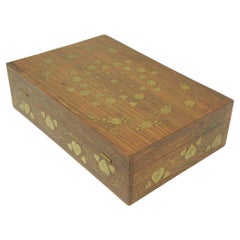
Anglo Indian Colonial Brass Inlaid Teak Jewelry Box

Anglo Indian Colonial Brass Inlaid Teak Jewelry Box

Located in Moreno Valley, CA

A Beautiful Anglo Indian, Colonial, brass inlaid teak jewelry lidded box made for the English market. handcrafted with floral and hearts brass inlays on top are surrounded by brass inlaid border, intricate brass inlays design of florals and scrolls carries through to all four sides so will display nicely on a shelf, desk or coffee table. Displays a desirable aged patina and the teak wood shows fine grain interest and deep caramel hues. A large Anglo-Indian teak colonial Campaign casket with brass inlay, the hinged cover opens to reveal an original fitted interior with two compartments interior lined with red velvet. This is a distinctive and highly appealing vintage semi antique Anglo Indian jewelry...

Category

Mid-20th Century Indian Anglo-Indian Decorative Boxes

Materials

Brass

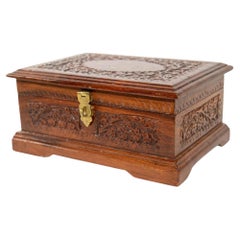
Hand-Carved Anglo-Raj Jewelry Box by Artist Rajhastani, Wood, 1940

Hand-Carved Anglo-Raj Jewelry Box by Artist Rajhastani, Wood, 1940

By Rajhastani

Located in Moreno Valley, CA

Large Anglo-Raj Hand-Carved Wooden Jewelry Box, Rajasthan, India, Early 20th Century Striking early 20th-century Anglo-Raj handcrafted wooden jewelry box, richly carved in deep reli...

Category

Early 20th Century Indian Anglo Raj Decorative Boxes

Materials

Sandalwood

Anglo-Indian Footed Box with Lidded Compartments, 19th Century

Anglo-Indian Footed Box with Lidded Compartments, 19th Century

Located in Moreno Valley, CA

19th century Anglo-Indian wooden box fitted with various compartments finely hand carved. The top is finely hand carved with the Taj Mahal. The interior with removable hand carved nine-lidded compartments, the front cover has a mirror, the whole exhibiting very fine workmanship. This fine late Victorian Anglo-Indian box from India is in great condition for it age. A beautiful example of an Anglo-Indian fine art...

Category

Antique Late 19th Century Indian Anglo-Indian Decorative Boxes

Materials

Sandalwood