By Tahan Paris
Located in Saint-Ouen, FR
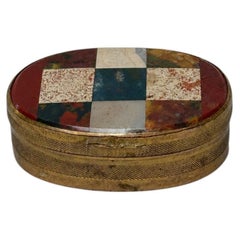
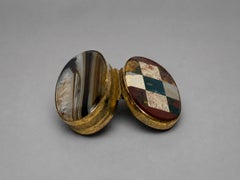
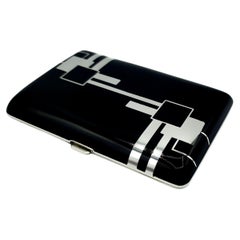
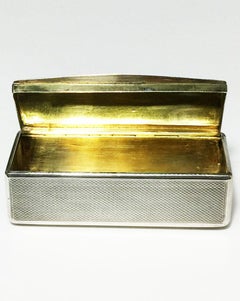
A French Napoléon III rectangular shape jewelry casket
With gilded bronzes and five hand-painted curved enamel plaques in gold and green on gold paillon, on a black emerald green background, decorated with reserves with white fleurons and lozenges, turquoise and rubies Coteau's enamels in relief.
It opens with a flap, on the top, and its own original key, topped at each angle with ormolu acanthus leaves
Upholstered silk interior
Napoléon III Period
circa 1880
“Prince of small cabinetmaking”, Tahan marked his time by the care taken to each of his pieces, both objects of art and utility. Generally of small or medium dimensions, these pieces of furniture have invaded the bourgeois interiors, so that according to the Book of Elegant Economy (1859), “they alone make the whole physiognomy of the time”.
It is in Belgium in Spa, a small town of the Ardennes, that Pierre Lambert Tahan, table maker, begins this business with formidable destiny. He left Spa for Paris in 1804, and set up his “boxes and necessaries” factory in the Temple district.
His son Jean Pierre Alexandre (1813-1892) was hence born in Paris, and helped him as soon as 1837, then took over the total direction of the company in 1844, his father ceasing all activity then. Jean Pierre Alexandre will then use his ingenuity to begin his great pioneering work.
First of all, he separated the studio on rue de Quincampoix, from the shop in the rue basse du rampart. He develops the production of boxes but also realizes larger furniture items, “bonheur-du-jour”, desks, sewing tables. As early as 1845, he also began to advertise in the newspapers, a practice still very little used.
“Supplier of the King and Princes”, he won a silver medal at the Exhibition of Industrial Products in 1849, and was then called "the Prince of Small Cabinetmaking." In 1855, he was awarded the title of "Supplier of the Emperor" at the Universal Exhibition where he exhibited an extraordinary sculpted aviary. The Court commissioned indeed a large number of works, including rosewood planters, lounge tables for the Palais des Tuileries, and a cabinet in mahogany and gilt bronze for Napoleon III’s office. His shop migrated 34 rue de la Paix (1849-1866), then 11 Boulevard des Italiens, (1866-1878).
In 1861, Tahan is thus designated as "one of those manufacturers who outstrip fashion and set the tone instead of following." (La Chronique des Arts et de la Curiosité). Indeed, he collaborates quickly with Julien-Nicolas...
Category
French Napoleon III Antique 1880s Snuff Boxes and Tobacco Boxes