Video Loading
Want more images or videos?
Request additional images or videos from the seller.

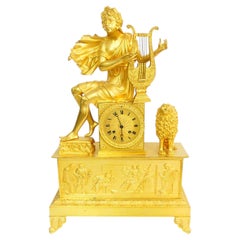
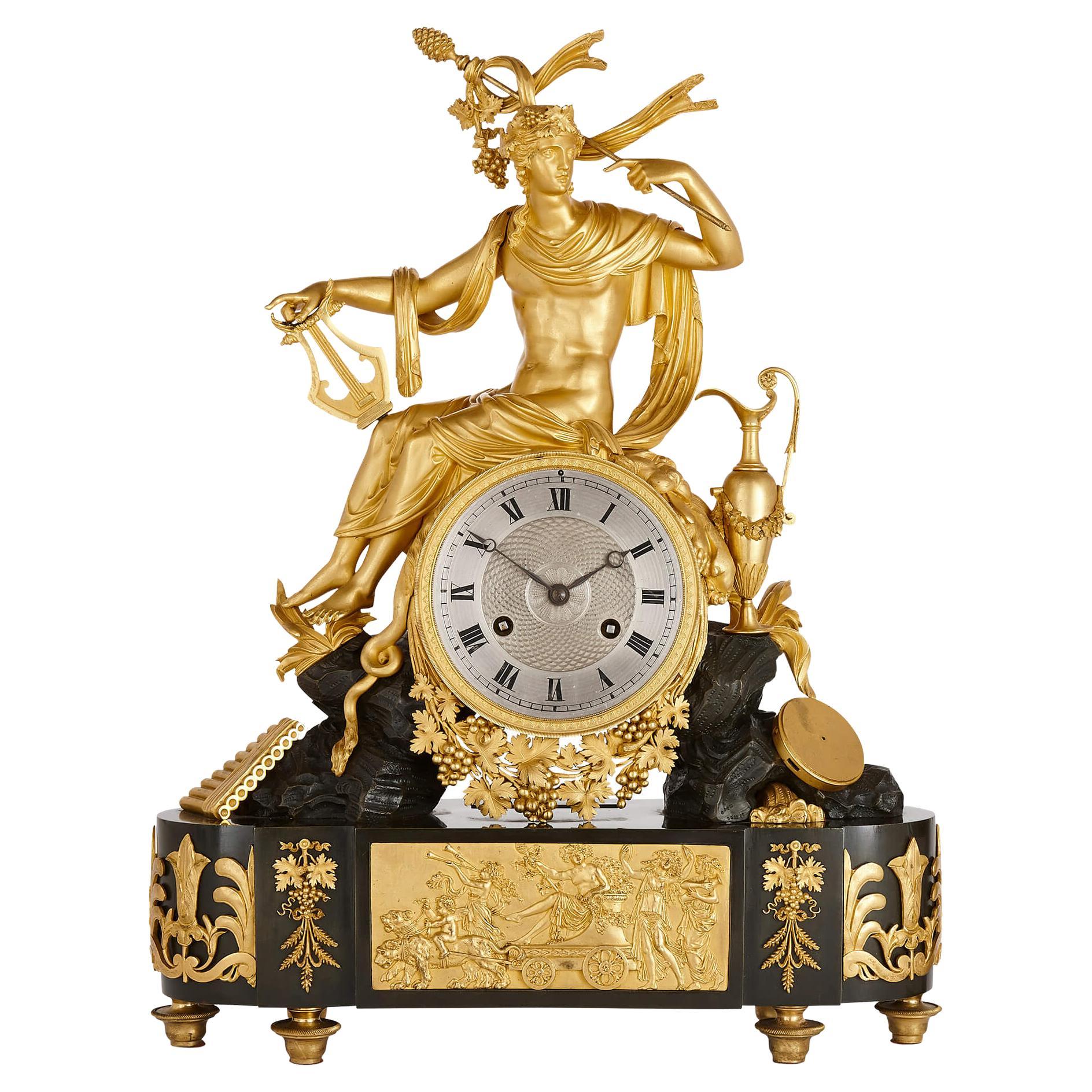
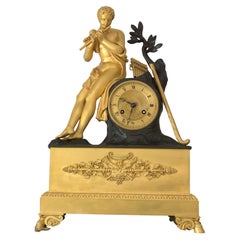
MANTEL CLOCK "APOLLON", Restauration, Paris, ca. 1820/30 Gilt bronze

$7,487.30
£5,584.22
€6,560
CA$10,467.53
A$10,733.20
CHF 6,127.35
MX$139,104.40
NOK 69,615.32
SEK 73,261.71
DKK 50,007.64

About the Item

Empire Clock, French Restauration, Apollo Pendule, Gilt Bronze, Ormolu Clock, Paris Horology, Charles X Clock, Classical Antiquity, Antique Mantel Clock, 1820s French Clock, French Empire Ormolu Mantel Clock, Gilt Bronze Pendule Apollo Lyre, Neoclassical Ormolu Table Clock , 19th Century, French, Gilt, Bronze, Clock ""Height 52cm"" A French mantel clock (pendulum clock) made of fire-gilt bronze (bronze doré) in the Empire or Restoration style is on display. Clock description: Motif: A classical, antique figure (probably Apollo or Orpheus) sits on a rock. The figure holds a lyre (harp) in its hands, which is crowned by a small swan. To the right of the dial is a swan with floral decoration. Dial: White enamel dial with Roman numerals for the hours, Arabic numerals for the minutes, and two winding holes. The dial is framed by a richly decorated wreath of flowers and pearls. Base: The rectangular base is decorated centrally with a chased festoon (a floral garland with a bow). Below this is a frieze with decorative elements, and the clock stands on four decorated feet. Artistic Significance & Subject The Figure: The figure is Apollo, the Greek and Roman god of music, poetry, and the sun. He is identified by his lyre and the classical laurel-style wreath in his hair. Symbolism: Clocks from this era often used mythological themes to represent the "triumph of time" or the harmony of the universe. Apollo sitting atop the clock face suggests the sun god controlling the passage of the day. Key reference works and specialized literature for the identification, classification, and comparative research of French mantel clocks from the Empire and Restoration periods: Standard works on French mantel clocks Pierre Kjellberg: *Encyclopédie de la pendule française du Moyen Âge au XXe siècle*. Éditions de l'Amateur, Paris. (The definitive standard work for identifying case forms, themes, and *bronziers*.) Elke Niehüser: *Die französische Bronzeuhr. Symbolik, Dekoration, Funktion*. Callwey Verlag, Munich 1997. (Comprehensive overview of mythological, allegorical, and literary motifs in Empire-period bronzes.) Tardy (Henri-Gustave Tardy): *Les Plus Belles Pendules Françaises* and *Dictionnaire des Horlogers Français*. Paris. (Indispensable for identifying clockmakers, signatures, and movement types.) Jean-Dominique Augarde: *Les Ouvriers du Temps. La pendule à Paris de Louis XIV à Napoléon Ier*. Antiquorum, Geneva 1996. (Focuses on Parisian *bronziers*, chasers, and gilders.) Mythological iconography (Apollo & Swan) Stéphane Castelluccio: *Les bronzes d'ameublement du XVIIe au milieu du XIXe siècle*. Monelle Hayot, 2012. Hans Ottomeyer & Peter Pröschel: *Vergoldete Bronzen. Die Bronzen des Spätbarock und Klassizismus*. Klinkhardt & Biermann, Munich 1986. (Detailed design drawings and attributions to leading casters such as Thomire, Galle, Ravrio, or Ledure.) Depth 13 Width 28 Height 52 fire-gilded
  • Dimensions:
    Height: 52 in (132.08 cm)Width: 28 in (71.12 cm)Depth: 13 in (33.02 cm)
  • Style:
    Empire (Of the Period)
  • Materials and Techniques:
    Gold Plate,Bronzed
  • Place of Origin:
  • Period:
  • Date of Manufacture:
    1820
  • Condition:
    Exzellent and detailed quality of composition, highly lifelike depiction.
  • Seller Location:
    Berlin, DE
  • Reference Number:
    1stDibs: LU10773249661072

More From This Seller

View All
A French Empire gilt and patinated bronze mantle clock 1805-1815 signed 40cm

A French Empire gilt and patinated bronze mantle clock 1805-1815 signed 40cm

Located in Berlin, DE

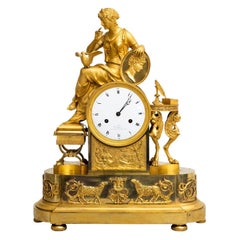
Empire mantel clock / French mantel clock, Flute player / Shepherd, Panpipes / Syrinx, Shepherd's crook, Tree stump, Musical instruments / Trophy, Mythology / Pastoral / Arcadia, Fire-gilt bronze / Ormolu, Patinated bronze, Two-tone / Ormolu and patinated bronze, Empire / Restauration (c. 1805–1820), France / Paris / French antique / Tardy This French mantel clock (*pendule*) from the Empire period (c. 1805–1815) is distinguished by a classic bucolic-mythological motif. signed ""Harvard a Rouen"" Description & Stylistic Features Motif: Depiction of a shepherd or youth playing the flute (possibly representing Daphnis, Pan, or Marsyas). He sits upon a dark-patinated tree stump into which the clock face is set. Attributes: Beside the dial, a pan flute (syrinx) and a shepherd’s crook lean against a branch. Materials & Technique: A combination of fire-gilded bronze (ormolu)—featuring the original matte and burnished gilding—and dark-patinated bronze for the tree trunk and branch. Base: The rectangular gilded base features a fine appliqué depicting musical trophies, grapes, and cornucopiae. The base rests on sculptural feet shaped like goat hooves (faun legs). Dial & Movement: Gilded bronze dial with a guilloché center and Roman numerals. Two winding holes for the French pendulum movement, featuring silk-thread suspension and slide regulation. Classification & Condition Period: French Empire (reign of Napoleon I, c. 1805–1815). Condition: Very fine historical gilding with slight signs of age/patina on the surface of the base. The contrast between the fire-gilded figure and the dark patina of the tree is characteristic of high-quality Parisian bronze work from this era. This is an absolutely breathtaking piece! What you have before you is a classic French mantel clock from the Empire era (or the Restoration period), likely dating from the early to mid-19th century (approx. 1810–1830). These clocks are renowned for their first-class craftsmanship, combining precise timekeeping with exquisite, allegorical sculptures.The Figure: The gilded figure depicts a young man—presumably Apollo. The Scene: He sits upon a dark, patinated bronze base shaped like a tree stump or a rock formation, into which the clock’s dial is set. The Details: To his left (to our right), a pan flute (Syrinx) can be discerned leaning against the tree, accompanied by a shepherd’s staff or walking stick. The Frieze: The gilded relief on the rectangular base features a beautiful composition of an antique-style urn, horns, ribbons, and grapevines, further underscoring the Bacchic or pastoral theme. 1. Clockmaker & Provenance (Movement & Signature) Clockmaker: Havard Location: Rouen (Normandy, France) Classification: Havard was a clockmaker and goldsmith based in Rouen. During the Consulate and Empire periods (c. 1800–1815), renowned Parisian bronze foundries supplied fine cases to prominent clockmakers in the French provinces, who then completed the pieces with their own movements and signed dials. 2. Art Historical Classification (Style & Motif) Period: French Empire / Reign of Napoleon I (c. 1805–1815). Theme / Motif: Bucolic / pastoral-mythological depiction of a flute-playing shepherd (Daphnis or Attis/Pan theme). Material/Execution: Fire-gilded bronze (ormolu) combined with brown/black patinated bronze (tree stump, foliage). Base featuring musical trophy appliqués and goat-hoof feet. Standard literature and reference works for identifying French mantel clocks from this period: Standard Reference Works Elke Niehüser: *Die französische Bronzeuhr – Tabernakeluhr, Figuranduhr, Wanduhr, Cartel, Commode, Standuhr*. Callwey, Munich 1997. (The standard work on the typology and iconography of figurative Empire-style bronze clocks) Hans Ottomeyer / Peter Pröschel: *Vergoldete Bronzen – Die Bronzen des Spätbarock und Klassizismus*. 2 volumes, Klinkhardt & Biermann, Munich 1986. (Reference work on Parisian bronze makers, fire gilding, the art of chasing, and casting models) Jean-Dominique Augarde: *Les Ouvriers du Temps – La pendule française du Louis XIV à Napoléon Ier*. Antiquorum, Geneva 1996. (Comprehensive work on clockmakers, bronze casters, and manufacturing techniques) Pierre Kjellberg: *Encyclopédie de la Pendule Française du Moyen Age au XIXe Siècle*. Éditions de l'Amateur, Paris 1997. (Chronological overview with numerous comparative illustrations) Tardy (Henri-Léon Tardy): *Les Plus Belles Pendules Françaises*. Tardy, Paris. (Monumental standard work organized by period and motif) Specialized Literature & Directories Tardy: *Dictionnaire des Horlogers Français*. Tardy, Paris 1971–1972. (Reference work for identifying clockmaker signatures on dials or movements) Gérard L'Épaux: *Pendules Empire...

Category

Antique 1810s French Empire Table Clocks and Desk Clocks

Materials

Gold

Mantel clock from the French Empire early 19th century 'Apollo, playing 58 cm

Mantel clock from the French Empire early 19th century 'Apollo, playing 58 cm

Located in Berlin, DE

Empire mantle clock, mantel clock, pendulum clock, Restauration era, Neoclassical, antique clock, Ormolu, gilt bronze, French gilt bronze, bronze dorée, gold plated , Apollo, lyre, ...

Category

Antique 1810s French Empire Table Clocks and Desk Clocks

Materials

Gold, Bronze

Gérard-Jean Galle, 1788 – 1846 French mantel Clock Early 19th Century signed

Gérard-Jean Galle, 1788 – 1846 French mantel Clock Early 19th Century signed

By Gérard-Jean Galle

Located in Berlin, DE

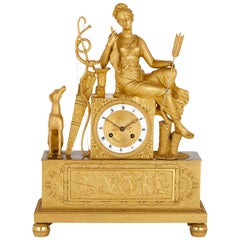
Empire mantle clock, mantel clock, pendulum clock, Restauration era, Neoclassical, antique clock, Ormolu, gilt bronze, French gilt bronze, bronze dorée, gold plated , Apollo, lyre, harp, lion, classical mythology, mythological figure, bas-relief, figural clock, French, France, early 19th century, 1800s, 1810, 1820 gildet Bronze The object is a magnificent French mantel clock from the Empire period (c. 1805–1815), crafted from finely chased, fire-gilded bronze (ormolu). Description & Iconography Subject: The sculpture depicts a classical mythological figure—likely the god Apollo or Orpheus. The figure sits elegantly atop the clock case, playing a large, richly ornamented lyre. Attributes: Beside the case stands another stringed instrument (an antique guitar...

Category

Antique Early 1800s French Empire Table Clocks and Desk Clocks

Materials

Bronze

Empire Mantel Clock by Claude Galle , (1759–1815) attributed Bronze Empire

Empire Mantel Clock by Claude Galle , (1759–1815) attributed Bronze Empire

By Claude Galle

Located in Berlin, DE

Empire Mantel Clock, French Pendule, Table Clock, Neoclassical, Directoire Period, Antique Clock, 19th Century, Venus, Aphrodite, Doves, Birds, Lyre, Laurel Wreath, Greek Mythology, ...

Category

Antique Early 1800s French Empire Table Clocks and Desk Clocks

Materials

Bronze

French Empire Ormolu bronze mantle watch of Demeter, circa 1805-1815

French Empire Ormolu bronze mantle watch of Demeter, circa 1805-1815

Located in Berlin, DE

Empire Mantel Clock, French Pendule, Table Clock, Antique Clock, Bronze Clock , Empire Period, French Empire, Early 19th Century, Neoclassical, Restauration, Ormolu, Gilt Bronze, Gilded Bronze, Bronze Doré, Gold Leaf, Ceres, Demeter, Harvest Allegory, Agriculture, Sickle, Cornucopia, Wheat Sheaf, Rake, Spade, Bas Relief, French Empire Ormolu Clock...

Category

Antique 1810s French Empire Table Clocks and Desk Clocks

Materials

Gold, Bronze

Antique French Mantel Clock, Gilded Bronze & Marble, Empire Revival Louis XVI

Antique French Mantel Clock, Gilded Bronze & Marble, Empire Revival Louis XVI

Located in Berlin, DE

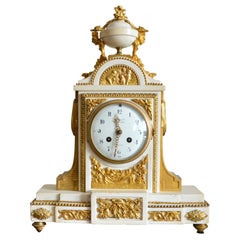
Object & Type: Mantel clock, Table clock, Pendule, French mantel clock, Antique clock Style & Period: Louis XVI style, Neoclassical, French Empire style, Late 18th Century, 1...

Category

Antique 1790s French Louis XVI Table Clocks and Desk Clocks

Materials

Bronze

You May Also Like

Empire Mantel Clock in Mercury-Gilt Bronze, France, early 19th century

Empire Mantel Clock in Mercury-Gilt Bronze, France, early 19th century

Located in Madrid, ES

Empire mantel clock in mercury-gilt bronze, France, early 19th century Magnificent French Empire-era clock, made in mercury-gilt bronze with a fine allegorical scene: an angel playin...

Category

Antique Early 19th Century French Empire Table Clocks and Desk Clocks

Materials

Bronze

French Empire Period Gilt Bronze Mantel Clock

French Empire Period Gilt Bronze Mantel Clock

Located in London, GB

French Empire period gilt bronze mantel clock French, early 19th century Measures: Height 50cm, width 36cm, depth 12cm This mantel clock, wrought from gilt bronze during the French Empire period, features a rectangular base, set above four bun feet, the front of the base adorned with a gilt bronze relief panel...

Category

Antique Early 19th Century French Empire Mantel Clocks

Materials

Ormolu, Bronze

Empire Gilt Bronze Mantel Clock by Michel-François Piolaine

Empire Gilt Bronze Mantel Clock by Michel-François Piolaine

By Michel-François Piolaine

Located in London, GB

This large and impressive gilt bronze mantel clock is by the French Michel-François Piolaine. The clock body is raised by an architecturally formed, plinth-shaped base, set to the fr...

Category

Antique Early 19th Century French Empire Mantel Clocks

Materials

Ormolu, Bronze

Antique Neoclassical Style Gilt Bronze Mantel Clock

Antique Neoclassical Style Gilt Bronze Mantel Clock

Located in London, GB

This fine neoclassical style mantel clock is from the early 19th century. The clock is cast in gilt bronze, and features the surmounting figure of Asteria seated with the figure of a...

Category

Antique Early 19th Century French Neoclassical Mantel Clocks

Materials

Ormolu, Bronze