


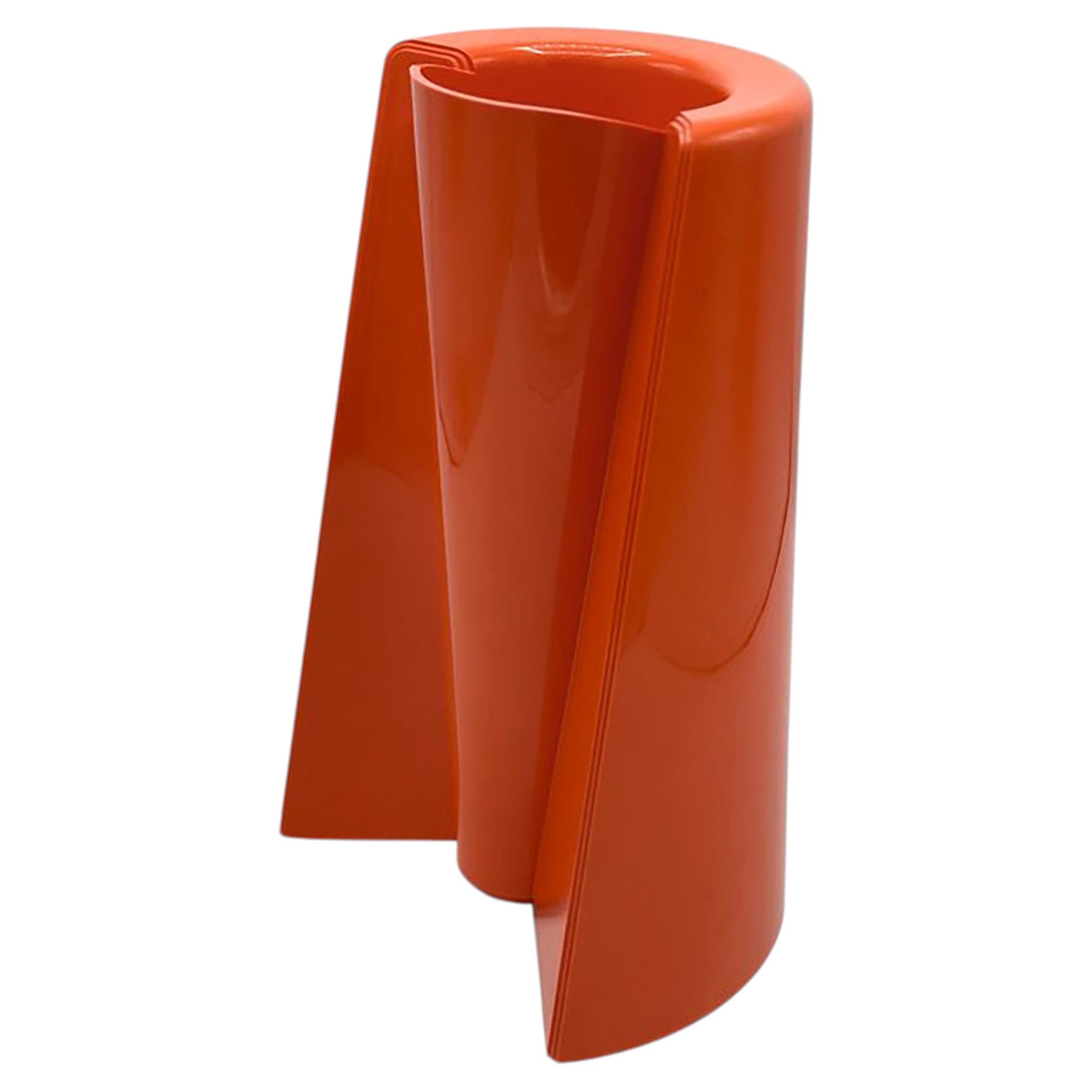

Set of Three Ceramic Pieces by Parravicini, Italy, 1970s
Located in Milan, IT
Set of three decorative ceramic centerpieces by Parravicini. The size refers to tallest piece.
Category
Vintage 1970s Italian Vases and Vessels
Materials
Ceramic
Enzo Mari was an influential industrial designer and a beloved curmudgeon who revered Marxism. His vintage mid-century modern designs are simple, functional and poetic. Widely known Mari-designed objects include desk accessories, such as the Formosa perpetual wall calendar, vases, cocktail tables and chandeliers.
Enzo Mari's work is embedded within the city of Milan, the Italian capital of all things design. In fact, the traffic bollards he devised are part of the city itself: Shaped like "panettone" cakes, they simultaneously direct traffic and provide seating for pedestrians.
In 1974, Mari published Autoprogettazione? (roughly translated as self-design), a Marx-inspired, anti-industrial, do-it-yourself handbook for the everyday person to use to build furniture without the assistance of a glitzy designer or knowledge of complex joinery. Mari’s intent with the publication was to remove the alienation of the creator and manufacturer from the end product by teaching anyone to develop a critical eye for production.
Artek relaunched kits based on the blueprints in the manual in an exhibition at Spazio Rossana Orlandi in 2010. The subsequent collectability of his work was reportedly irksome for Mari because he abhorred the industrial production for which he was becoming known.
Mari’s meager upbringing heavily influenced his politics, and even in childhood, he would come up with ingenious ways to support the family financially. As a designer, the desire to envision and build significant pieces was more important to Mari than devising new marketing and retail sales tactics. He optimistically believed objects could change the world. This view went against the rising consumer mania for every next trend that surfaced in the late 20th century. Not surprisingly, his ecological and economical stance led him to produce fewer objects.
Mari's philosophy did not stop people from desiring his creations, nor prevent other designers from wanting to collaborate with him. Following World War II, he worked for companies like Danese, Olivetti, Artemide, Driade and Alessi, who brought his prodigious designs to the public, and Mari’s work was widely celebrated.
The Golden Compass, Italy's highest honor for industrial design, was awarded to Mari four times before he died from COVID in 2020, and New York’s Museum of Modern Art has a permanent collection of his objects on display.
On 1stDibs, find a collection of Enzo Mari decorative objects, folk art and serveware.
Set of Three Ceramic Pieces by Parravicini, Italy, 1970s
Located in Milan, IT
Set of three decorative ceramic centerpieces by Parravicini. The size refers to tallest piece.
Ceramic

Set of Two Ceramic Vases by Studio O.P.I. for Gabbianelli, Italy, 1960s
By Studio O.P.I., Gabbianelli
Located in Milan, IT
Set of thwo ceramic vases by Studio O.P.I. for Gabbianelli. please note: currently available only one red piece and one white piece. Price refers to the set of two pieces.
Ceramic

Set of Two Ceramic Vases by Ambrogio Pozzi for Ceramiche Franco Pozzi, 1970s
By Ambrogio Pozzi
Located in Milan, IT
Remarkable set of two ceramic vases designed by Ambrogio Pozzi for Ceramiche Franco Pozzi. Flat rectangular shapes joined with soft curves that contrast with the asymmetrical groove ...
Ceramic

Set of Four Ceramic Vases by Roberto Arioli for Gabbianelli, Italy, 1960s
By Roberto Arioli, Gabbianelli
Located in Milan, IT
Set of four vases by Roberto Arioli for Gabbianelli. Three different sizes with black and white finish. Size refers to the biggest piece.
Ceramic

Set of Three Ceramic Pieces by Enzo Bioli for II Picchio, Italy, 1960s
By Enzo Bioli
Located in Milan, IT
Rare set of three ceramic centerpieces by Enzo Bioli for II Picchio. The pieces can be variously combined to get different visual compositions. The size refers to the biggest piece.
Ceramic

Set of Three Tubi/Tubi Ceramic Centerpieces by Ambrogio Pozzi, Italy, 1970s
By Ambrogio Pozzi
Located in Milan, IT
Three different Tubi/Tubi pieces by Ambrogio Pozzi for Ceramica Franco Pozzi. Glazed ceramic blocks to be used autonomously or all together.
Ceramic
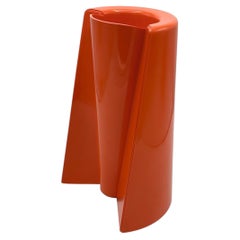
Enzo Mari, Pago Pago, Vase, Danese Milano, Italy, 1970s
By Danese Milano, Enzo Mari
Located in Paris, FR
Enzo Mari (1932-2020) Pago Pago vase (3087) An orange ABS vase, formed of two intricated cones, each troncated and serving as container. Signed with applied manufacturer’s mark to ...
Plastic

Pair of Pago-Pago vases by Enzo Mari for Danese Milano
By Enzo Mari, Danese Milano
Located in Milano, IT
Rare Pair of “Pago Pago” Vases by Enzo Mari for Danese Milano, First Edition, 1969** An exceptional and highly collectible pair of *Pago Pago* vases, designed in 1969 by **Enzo Mari...
Plastic

Set of Three Ceramic Vases, Made in Italy, 1980s, Colorful Design
Located in Milano, IT
1980s Amazing set of 3 vases in ceramic. Made in Italy. The shape and the colors of these vases are beautiful. Dimension: diameter 3,14" x 7,87" height inches diameter 8 cm x 20 h...
Ceramic

Angelo Mangiarotti Set of Three Ceramic Vases by Fratelli Brambilla 1960s
By Angelo Mangiarotti, Fratelli Brambilla
Located in Cascina, Pisa
A set of three vases in blue enameled ceramic, designed by Angelo Mangiarotti and produced by Fratelli Brambilla in the 1960s. The vases can be used singularly or as a beautiful com...
Ceramic

Set of 3 Small Ceramic Vases in the Style of Georges Jouve, 1950s
By Georges Jouve
Located in Marcq-en-Barœul, Hauts-de-France
This delightful set of three small cylindrical vases powerfully illustrates the sleekness and modernity of 1950s French studio ceramics. Strongly influenced by the formal research of...
Ceramic

Set of 3 Freccia Vases by Purho
Located in Geneve, CH
Set of 3 Freccia vases by Purho Dimensions: D 25 x W 21 x H 36 cm/ D 25 x W 21 x H 16 cm. Materials: Glass Other colors and dimensions are available. Purho is a new protagonist...
Glass