Royal House Antiques
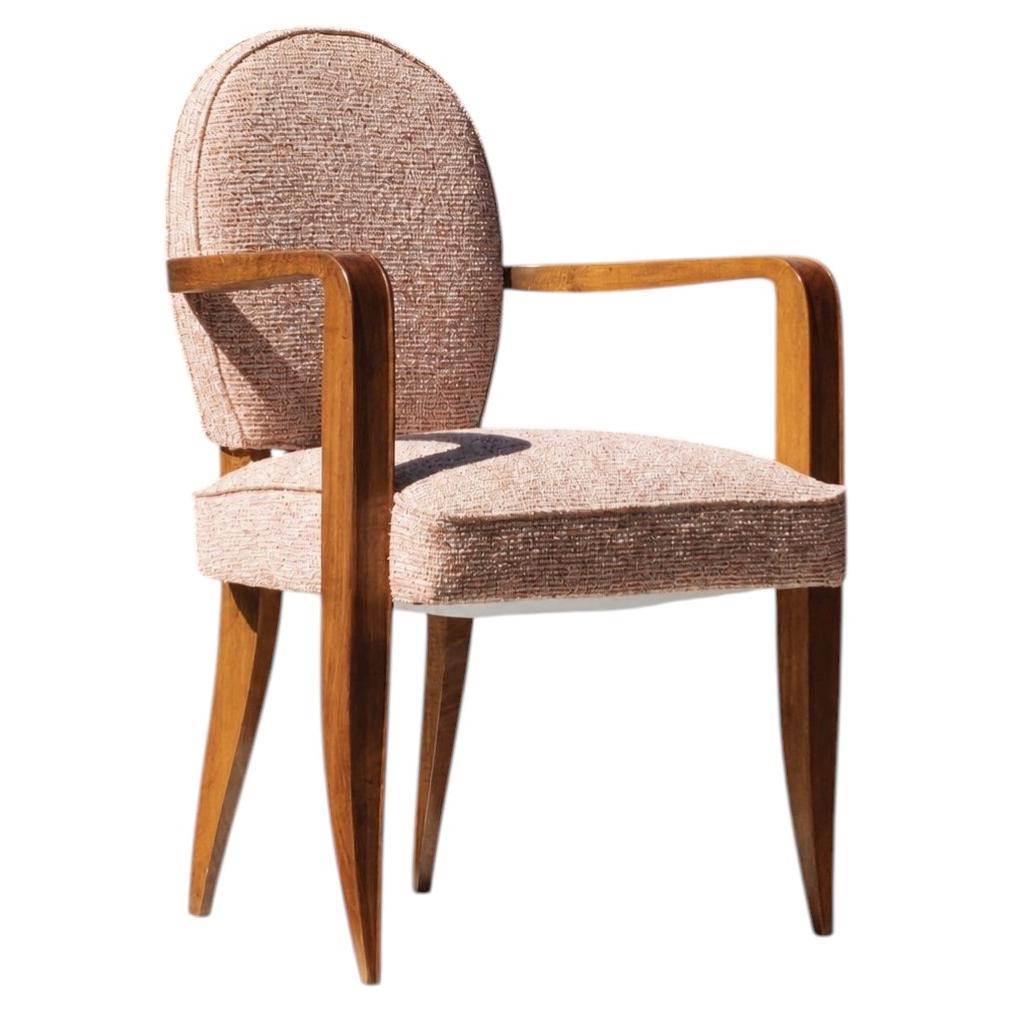
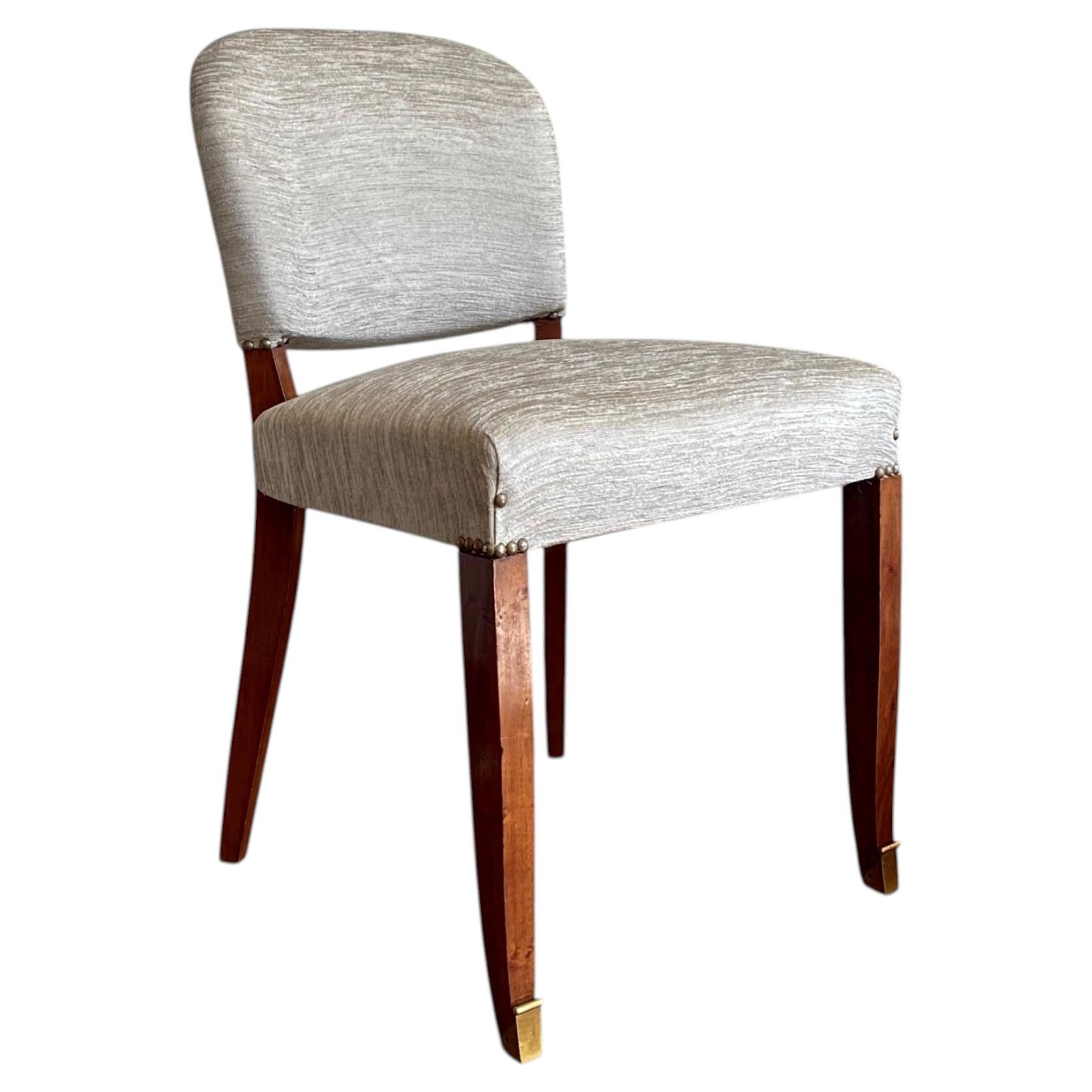
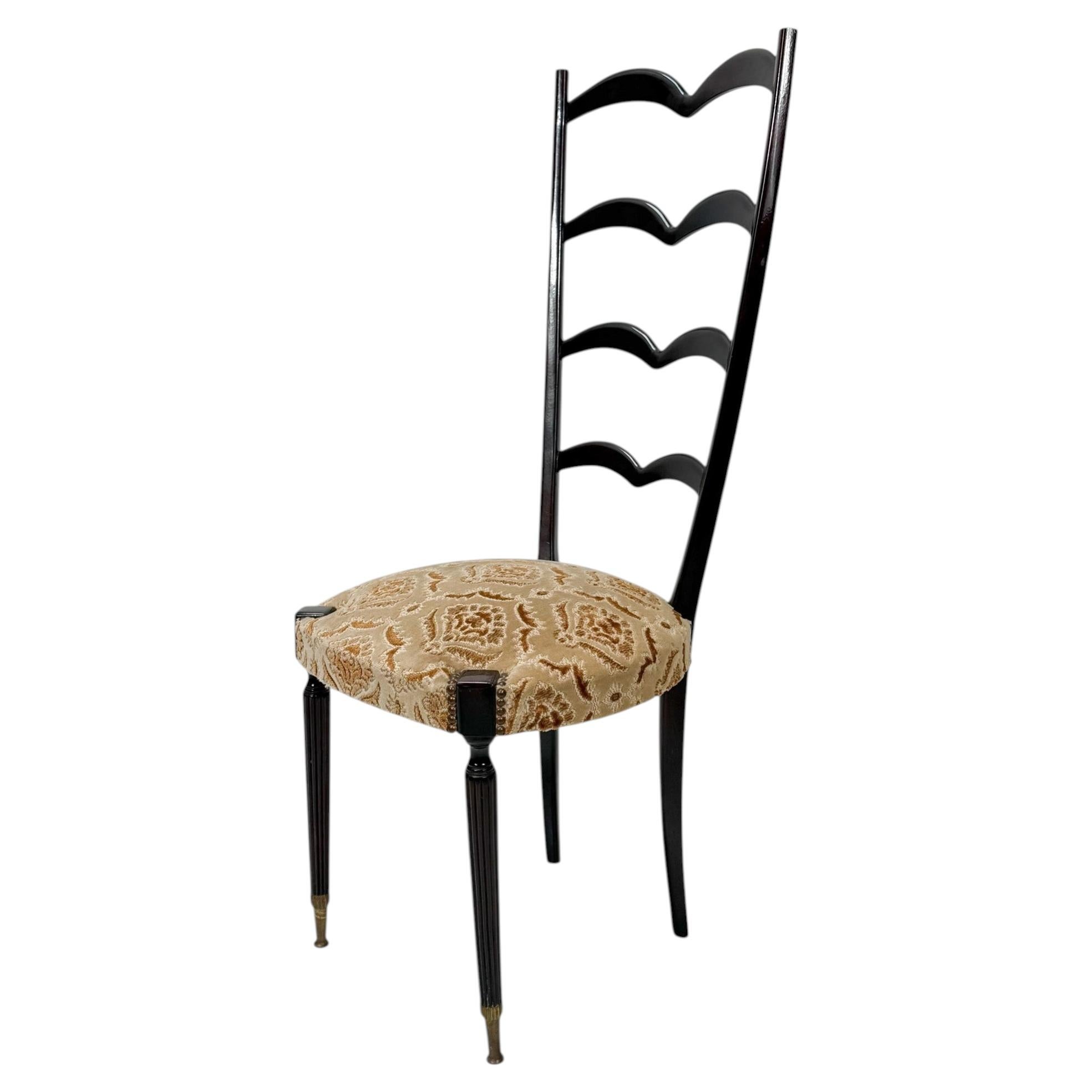
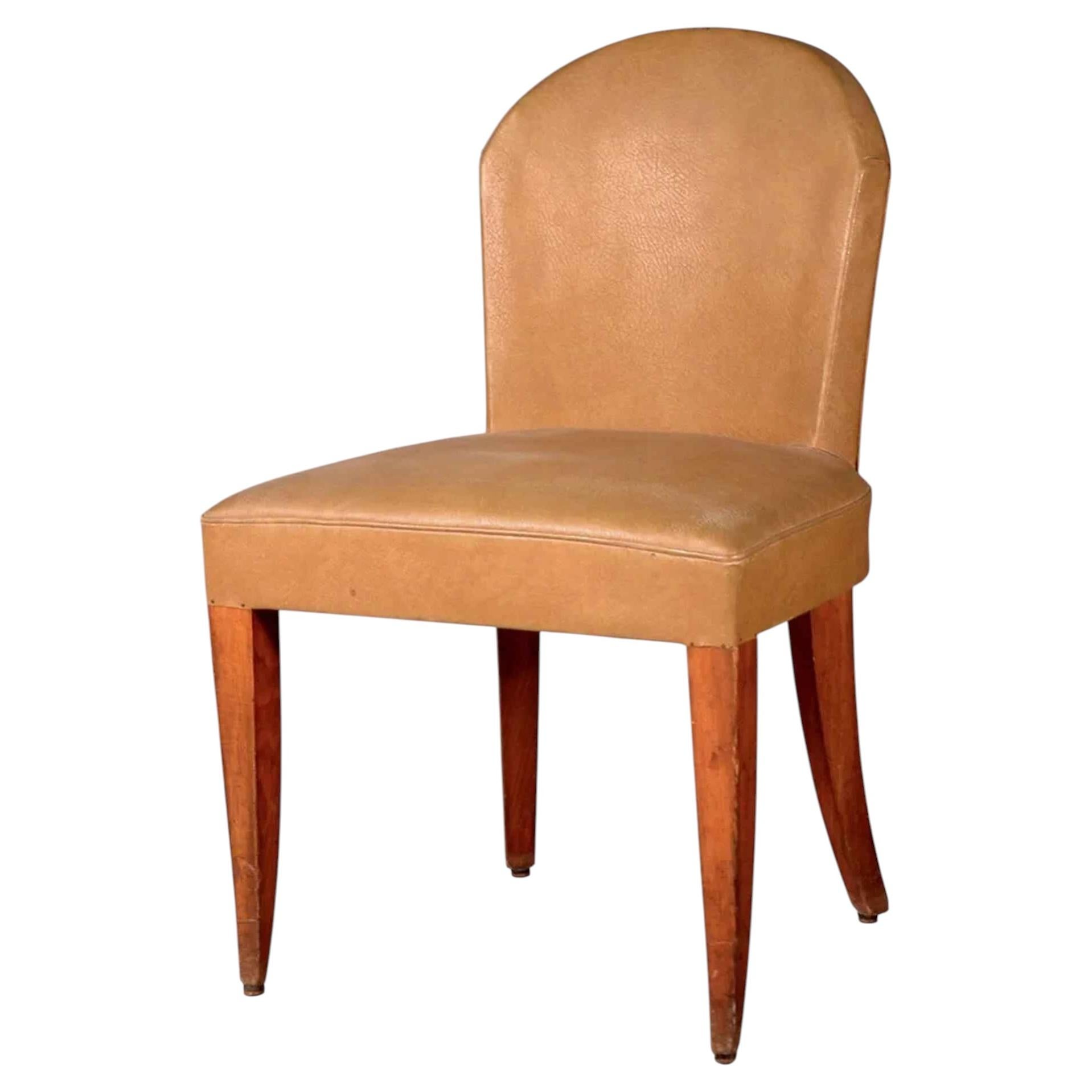
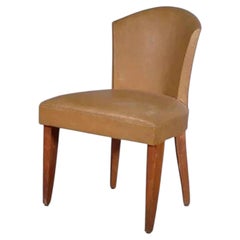
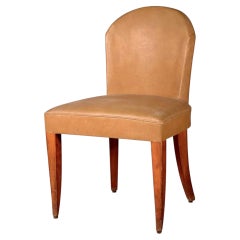
Royal House Antiques is delighted to offer for sale this absolutely stunning, highly collectable original circa 1940's Dorothy Draper Grosfeld House side chair with the original distressed upholstery
Please note the delivery fee listed is just a guide, it covers within the M25 only for the UK and local Europe only for international, if you would like an accurate quote please send me your postcode and I’ll provide you with the exact price
A very good looking period example, designed by Dorothy Draper, a short bio of the great lady can be found below
The chair has a "draped" affect to the back which is picked out in gold leaf, the frame is mahogany and there is a large brass stud in the middle of the seat with some kind of emblem on
The fabric is as mentioned original and heavily worn, I can have the seat upholstered in a fabric of choice for the cost price should the new owner wish
The timber has been restored to include a clean wax and polish, there may be normal use related marks here and there, mostly its in very fine order
Dimensions
Height:- 98cm
Width:- 50cm
Depth:- 47cm
Seat height:- 51cm
Please note all measurements are taken at the widest point, if you would like any additional or specific measurements please ask
Dorothy Draper (November 22, 1889 – March 11, 1969) was an American interior decorator. Stylistically very anti-minimalist, she used bright, exuberant colors and large prints that encompassed whole walls. She incorporated black and white tiles, rococo scrollwork, and baroque plasterwork, design elements now considered defining elements of the Hollywood Regency style of interior decoration
After Dorothy's 1912 marriage to George Draper, the couple bought and sold houses, which allowed her an opportunity to cultivate a flair for decorating. She redecorated her homes in such style that other high society friends began to do the same for their homes. Encouraged by her friends, Draper started Architectural Clearing House in 1925, "arguably the first official interior design business." After several successful apartment lobby renovations, Draper changed the firm's name to Dorothy Draper and Company in 1929
Draper's first big break came in the early 1930s when Douglas Elliman hired her to redecorate the Carlyle Hotel on Madison Avenue in Manhattan. This would be the first of many important hotel commissions. Draper was again hired by Elliman to redecorate a block of former tenement homes (today known as Sutton Place) because prospective buyers were not purchasing the homes. She painted all the buildings black with white trim and added colors to the doors.
Draper did a great deal of hotel design, including the Sherry-Netherland in New York, the Drake in Chicago, the Fairmont in San Francisco. At the height of the Depression, she spent $10 million designing the Palácio Quitandinha in Petrópolis, Rio de Janeiro. Also during the Depression, she wrote the Ask Dorothy Draper column which ran in 70 newspapers, and advised people to "take that red and paint your front door with it," and many people followed her advice. They also bought more than a million yards of her signature cabbage rose fabric
In 1937, Draper created a top-to-bottom decorative scheme for the exclusive Hampshire House apartment hotel, giving the lobby a bold black and white checkerboard floor, a thick glass Art Deco mantelpiece surround, Victorian-style wing chairs, and neo-Baroque plaster decorations. She found artisans in Brooklyn who could fashion enormous scroll-and-shell bas-reliefs, floral swags and multi-arm chandeliers. Her use of sliding glass doors rather than shower curtains at Hampshire House was considered innovative
In the early 1950s, Packard hired Draper to harmonize the colors and fabrics of their automobile interiors. Draper's 1954 concept for the cafeteria at New York's Metropolitan Museum of Art, dubbed the Dorotheum, featured birdcage chandeliers and a skylighted canopy. One of Draper's last projects was the 1957 International Hotel at Idlewild Airport (today John F. Kennedy Airport) in New York.
She retired in 1960, and after her death in 1969, Carlton Varney purchased Draper's company.
Any questions please feel free to ask before you bid
Condition
Please view the very detailed pictures as they form part of the description around condition
Please note vintage period and original items such as leather seating will always have natural patina in the form of cracking creasing and wear, we recommend regular waxing to ensure no moisture is lost, also hand dyed leather is not recommended to sit in direct sunlight for prolonged periods of time as it will dry out and fade.