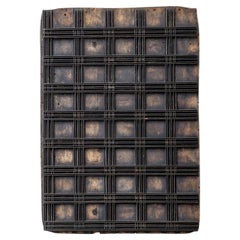
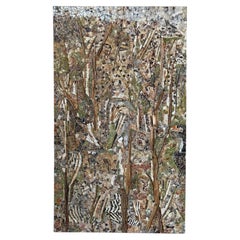
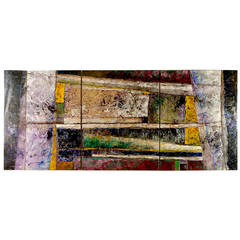
Exceptional Architectural Mixed-Media Triptych by Favrelle, Signed and Dated 1991
An exceptional mixed-media architectural triptych, signed Favrelle and dated 1991, representing a remarkable synthesis of painting, relief, and sculpture. Conceived as a sculptural wall object rather than a conventional painting, this sophisticated work exemplifies the refined material language of late twentieth-century European abstraction.
Composed of three hinged wooden panels framed in natural wood, the triptych is designed to be displayed either fully extended or partially folded, allowing its spatial composition to evolve according to its setting. This transformable structure establishes a dynamic dialogue with the surrounding architecture, giving the work a distinctly sculptural presence and making each installation unique.
The surface is richly articulated through layered mineral pigments, incised lines, textured reliefs, and subtle material variations that reveal exceptional craftsmanship. A restrained palette of weathered earth tones, muted greens, mineral greys, and soft ochres evokes ancient plaster walls, timeworn frescoes, and the quiet beauty of naturally aged surfaces. The resulting atmosphere is one of remarkable serenity, depth, and timeless elegance.
At the heart of the composition, an enigmatic form emerges—suggestive of an abstract instrument, an architectural drawing, or a symbolic still life—serving as the visual anchor of the work. The flanking panels are punctuated by delicately incised cross motifs that introduce rhythm and balance, while fine tensioned metal wires extend horizontally across the composition, reinforcing its architectural vocabulary and enhancing its subtle three-dimensionality.
Balancing geometric precision with organic sensitivity, the triptych reveals new nuances as light moves across its textured surface. Every detail reflects a sophisticated understanding of material, form, and space, inviting prolonged contemplation and rewarding close observation.
Situated at the crossroads of abstract painting, sculptural relief, and architectural art, this work embodies the quiet sophistication associated with European contemporary art of the late twentieth century. Its understated elegance and rich materiality make it exceptionally well suited to interiors inspired by Wabi-Sabi, Minimalism, Brutalism, and contemporary architectural design.
Rare and highly distinctive, this signed and dated triptych is a true collector's piece—an artwork of exceptional refinement whose sculptural presence, architectural sensibility, and timeless aesthetic make it a compelling statement in any carefully curated interior.