Want more images or videos?
Request additional images or videos from the seller.

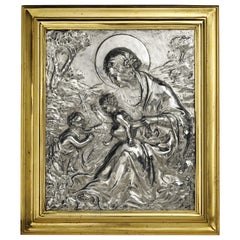
Baptism Scene, Silver Bas-Relief with Gilded Frame, Mid-17th Century

$6,742.86
£5,033.12
€5,900VAT Included
CA$9,424.16
A$9,592.93
CHF 5,555.05
MX$126,676.18
NOK 62,091.67
SEK 66,256.74
DKK 45,159.66

About the Item

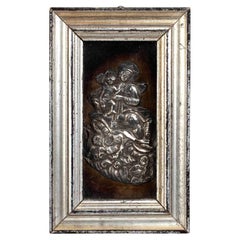
This silver bas-relief is an original decorative artwork realized in the mid-17th century. The work is an original relief realized in silver. A golden frame is included (cm 28 x 31.5). Mint conditions. Interesting silver bas-relief with depicting a typical Baptism scene. In the center of the scene stands the figure of Christ with his head bowed, to his left St. John the Baptist pours water on him. In the background we can see a rocky landscape and, on the upper part, descending from the sky, the presence of rays indicates the descent of the Holy Spirit. On the right side we see animals drinking at the river and on the left, two angels watching the scene. The relief is extremely refined and has punching and stiacciato sculpture technique that give a sense of movement and perspective. This object is shipped from Italy. Under existing legislation, any object in Italy created over 70 years ago by an artist, designer or craftsman who has died requires a license for export regardless of the work’s market price. The shipping may require additional handling days to require the license according to the final destination of the object.
  • Dimensions:
    Height: 6.3 in (16 cm)Width: 7.49 in (19 cm)Depth: 0.4 in (1 cm)
  • Materials and Techniques:
  • Place of Origin:
  • Period:
    Mid-17th Century
  • Date of Manufacture:
    Mid-17th Century
  • Condition:
    Insurance may be requested by customers as additional service, contact us for more information.
  • Seller Location:
    Roma, IT
  • Reference Number:
    Seller: M-951681stDibs: LU2698317822742

More From This Seller

View All
Italian solid silver plaque depicting the Virgin and the Child, 1850s

Italian solid silver plaque depicting the Virgin and the Child, 1850s

Located in Roma, IT

The scene seems reminiscent of the Ascension of the Virgin as she rises into the clouds with the adoration of the figures below. However, in the upper part the Virgin is present with...

Category

Antique 1850s Italian Modern Decorative Art

Materials

Silver

Wood Base with Brass Relief Sculpture, Italian, Early 20th Century

Wood Base with Brass Relief Sculpture, Italian, Early 20th Century

Located in Roma, IT

Wood base with brass relief is an original decorative object realized in the early 20th century. Made in Italy. The base has been realized entirely ...

Category

Early 20th Century Italian Wall-mounted Sculptures

Materials

Brass

1970s Spring Figurative Sculpture by Euroesse in Silver & Gold Leaf

1970s Spring Figurative Sculpture by Euroesse in Silver & Gold Leaf

Located in Roma, IT

Spring is an original modern artwork realized in 1970s. Realized by Euroesse (label on the back) The artwork is realized on silver plate and gold leaf. Includes frame.

Category

Vintage 1970s Italian Figurative Sculptures

Materials

Metal, Sterling Silver

1970s Autumn Figurative Sculpture by Euroesse in Silver & Gold Leaf

1970s Autumn Figurative Sculpture by Euroesse in Silver & Gold Leaf

Located in Roma, IT

Autumn is an original modern artwork realized in the 1970s. Realized by Euroesse (label on the back) The artwork is realized on silver plate and gold leaf. Includes frame.

Category

Vintage 1970s Italian Figurative Sculptures

Materials

Metal, Sterling Silver

Winter Figurative Sculpture by Euroesse in Sterling Silver & Gold Leaf

Winter Figurative Sculpture by Euroesse in Sterling Silver & Gold Leaf

Located in Roma, IT

Winter is an original modern artwork realized in the 1970s. Realized by Euroesse (label on the back) The artwork is realized on silver plate and gold leaf. Includes frame.

Category

Vintage 1970s Italian Figurative Sculptures

Materials

Metal, Sterling Silver

Italian Carved and Gilt Wooden Frame, Early 20th Century

Italian Carved and Gilt Wooden Frame, Early 20th Century

Located in Roma, IT

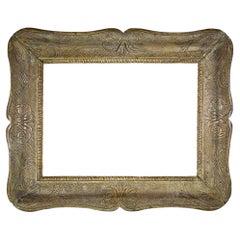
Elegant Italian hand-carved wooden frame of rectangular horizontal format, finely decorated with an overall punched ground enriched by stylized foliate and floral motifs carved in re...

Category

Early 20th Century Italian Picture Frames

Materials

Wood

You May Also Like

Spanish Antique Religious Scene of Last Supper Silverplate Framed

Spanish Antique Religious Scene of Last Supper Silverplate Framed

Located in Boca Raton, FL

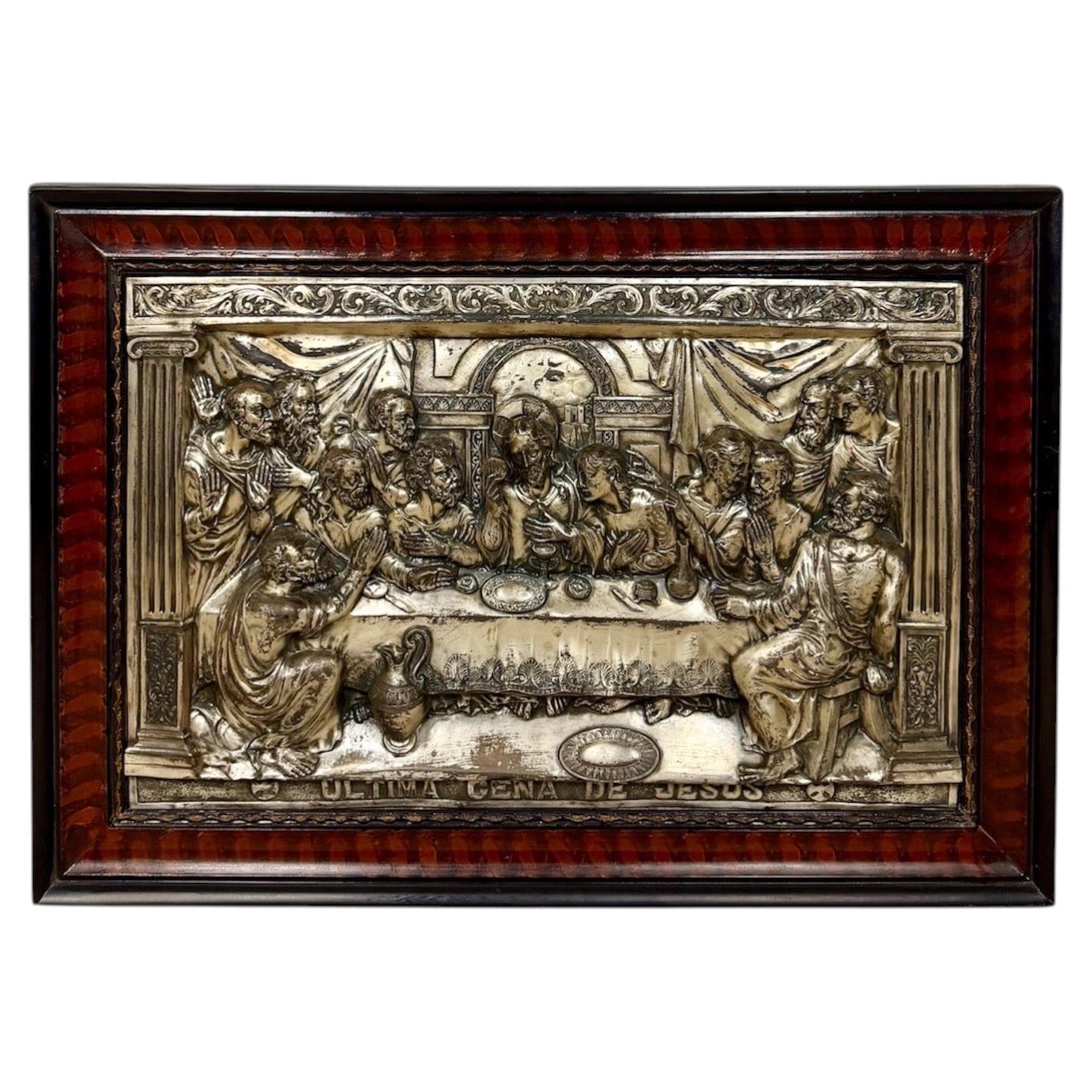
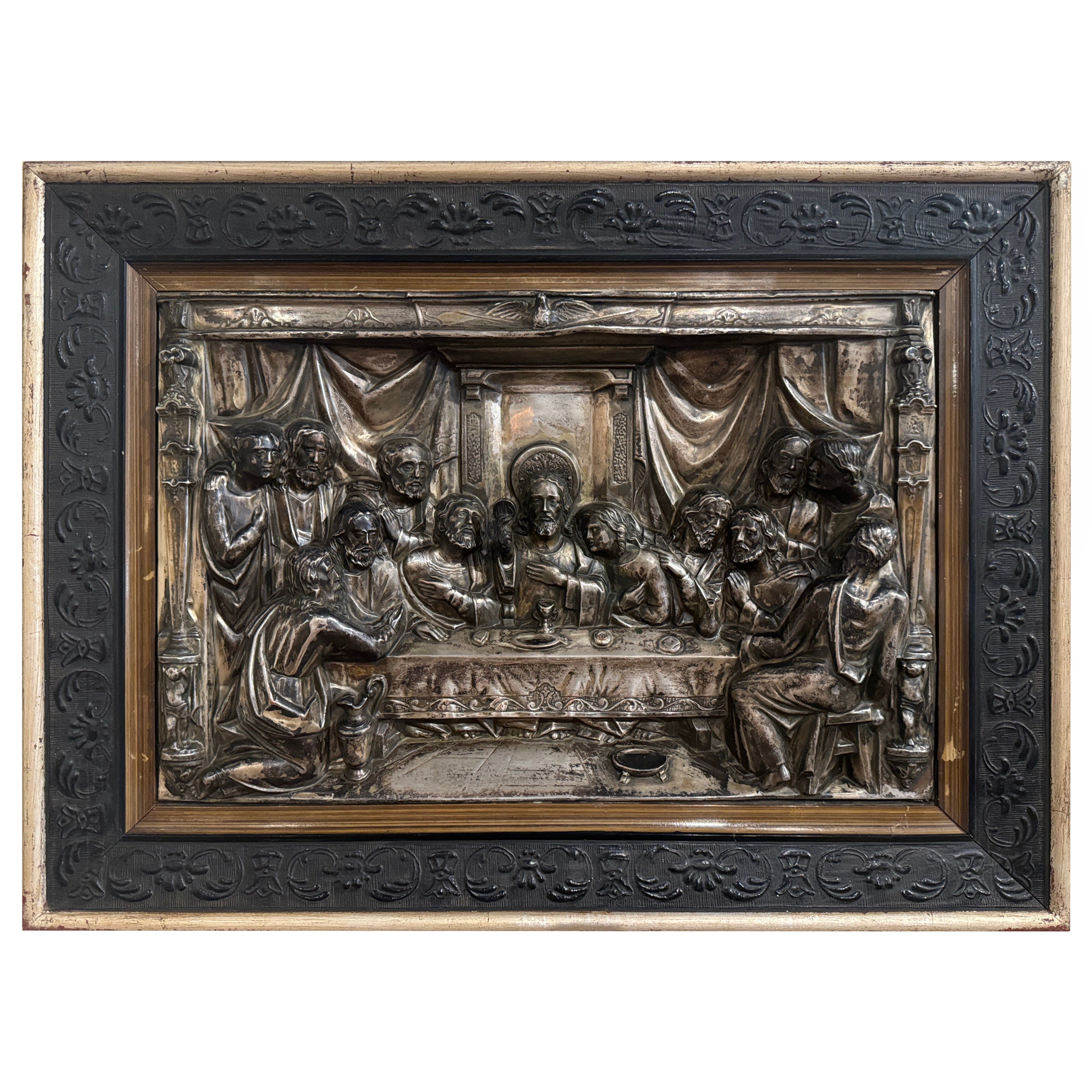
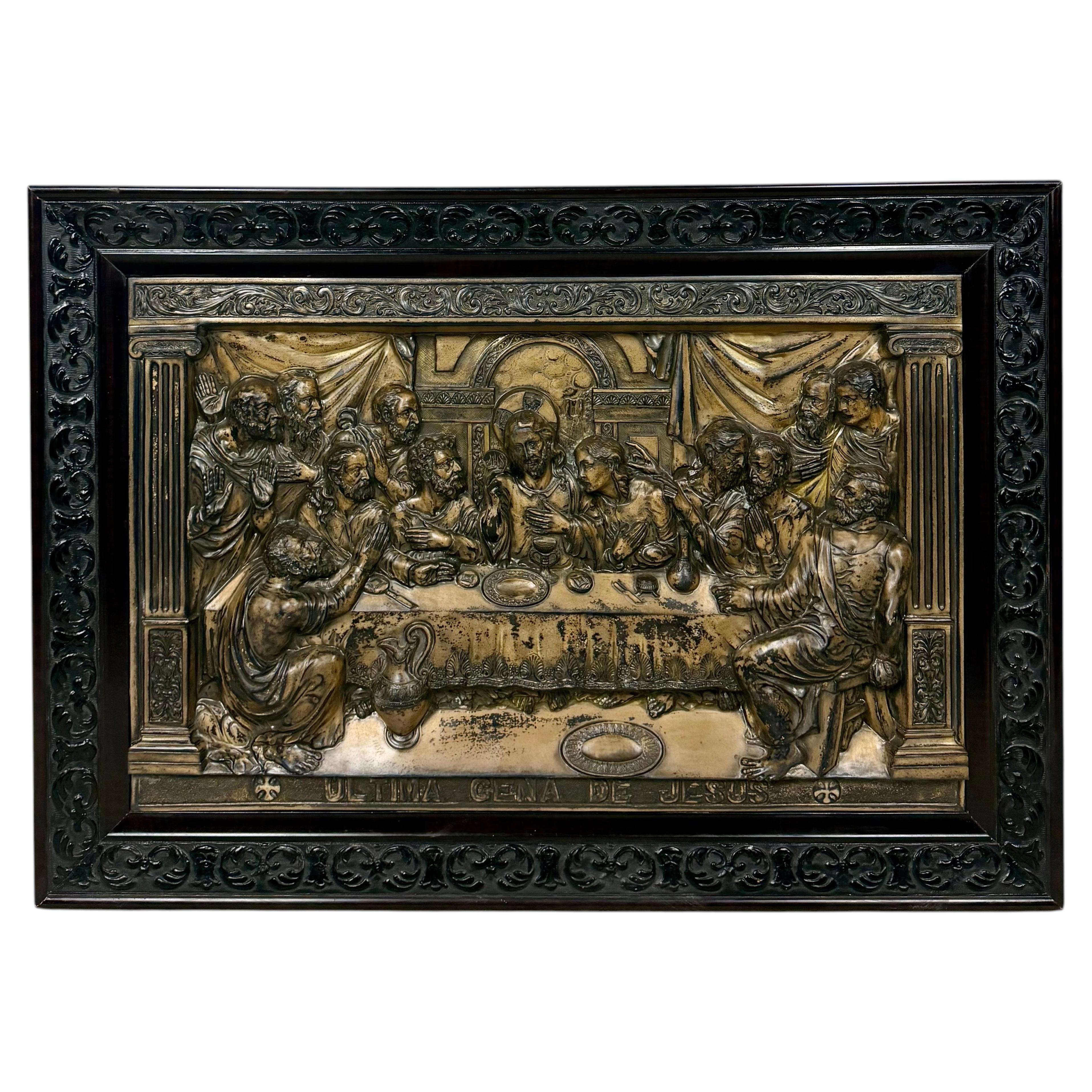
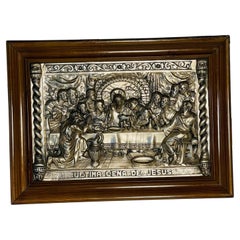
Spanish antique religious scene of Ladt Supper- silverplate embossed metal framed.

Category

Antique Early 1900s American Baroque Revival Paintings

Materials

Silver Plate

Antique The Descent from the Cross Bas-relief in pipe clay, E. Cassier, Belgium

Antique The Descent from the Cross Bas-relief in pipe clay, E. Cassier, Belgium

Located in Meulebeke, BE

This evocative 19th‑century Belgian bas-relief in pipe clay with gilt frame by E. Cassier pays homage to one of the most powerful themes in Christian art: the Descent from the Cross,...

Category

Antique 19th Century Belgian Romantic Religious Items

Materials

Clay, Glass, Wood

Vintage Framed Religious Crucifixion Relief in Embossed Metal Sheet

Vintage Framed Religious Crucifixion Relief in Embossed Metal Sheet

Located in BÉTERA, ES

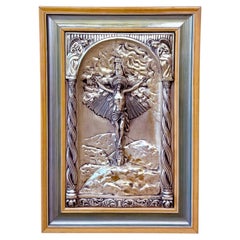
Beautiful vintage religious wall plaque depicting the Crucifixion of Jesus Christ, crafted from lightweight embossed metal sheet with an elegant silver-toned finish. The central com...

Category

20th Century Spanish Baroque Figurative Sculptures

Materials

Metal

Silver Portapaz, Gilded Relief, Renaissance Style, 16th Century Spain

Silver Portapaz, Gilded Relief, Renaissance Style, 16th Century Spain

Located in Madrid, ES

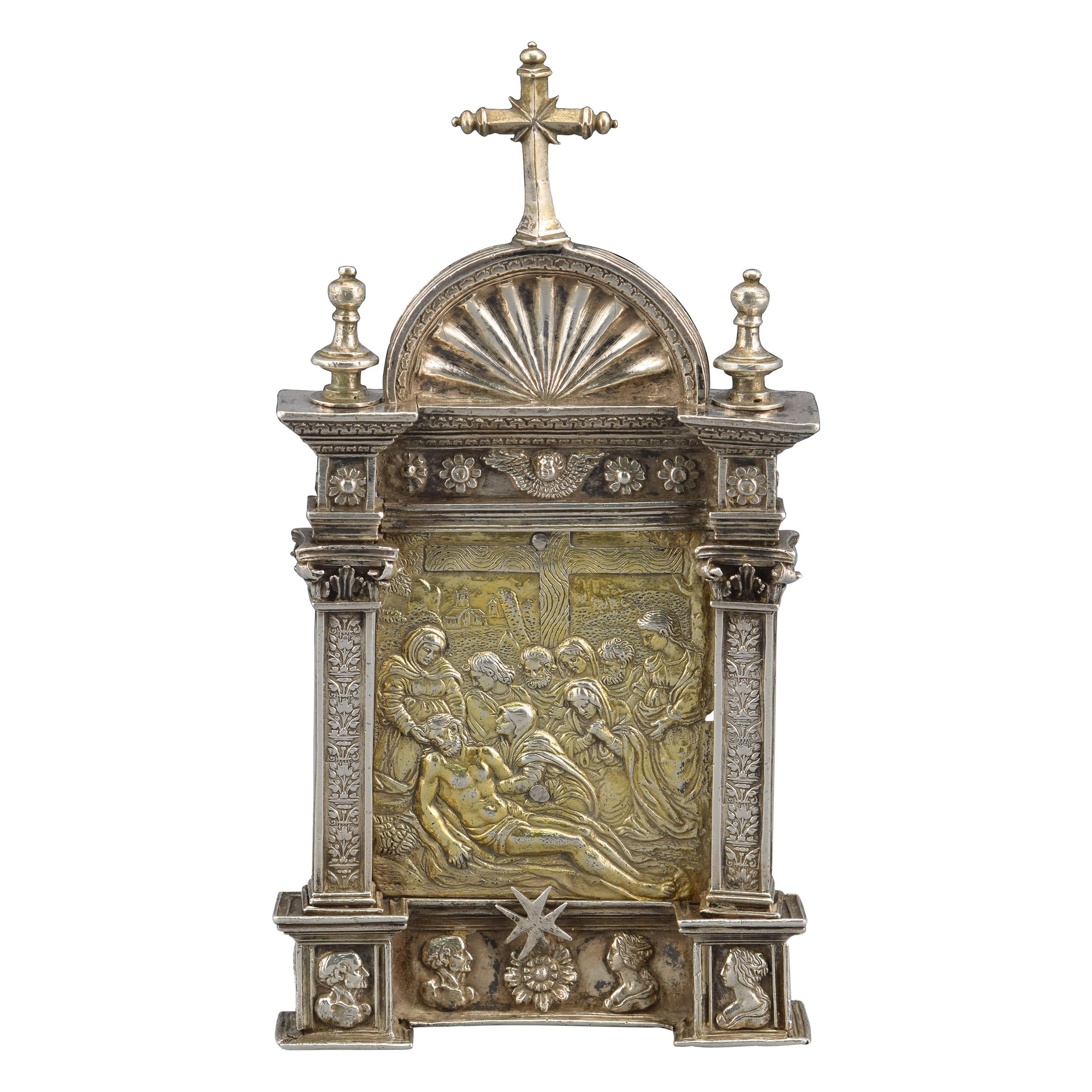
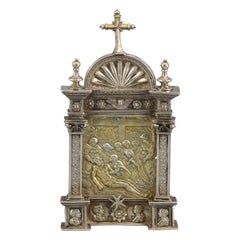
Portapaz. Silver in its color and gilded. Century XVI. Portapaz made of silver that has a handle (decorated with delicate plant motifs similar to those of the pilasters) and a female and a male bust at the bottom, as well as other architectural elements on the back, and, on the front, an architectural composition classicist basement (with busts flanking a flower and a cross), two pilasters (vegetal decoration and capital recalling the composite order) with entablature (flowers flanking an angel's head; moldings), and a semicircular arch finish with elements veined in relief under cross and flanked by two architectural motifs in the upper part. This composition frames and enhances a gilt silver relief where you can see the Lament or Cry over the Body of Christ, with the Virgin holding the head of Jesus, Saint John at her side, the Magdalene and other characters, a cross following the group and a landscape background with houses and plant elements. This architectural structure mentioned is similar to the one present in other 16th century portapaces, such as that of the Magdalena de Dos Hermanas parish (Hernando de Ballesteros el Mozo, around 1575); or that of the Galaroza parish (same author and date); or that of the portapaz of San Miguel de Jerez de los Caballeros (in some details); etc. As for the relief, it is possible to clearly see a strong Italian influence, and the similarity between it and important pieces such as the Portapaz known as “de Cisneros by Juan de Burgos (1493-1497; MuseoCatedralicio de Alcalá de Henares), as well as in paintings and reliefs. Also noteworthy are both the male and female busts in the lower area and the Maltese cross (or Saint John's) that appears in this area. This symbol was used since the 12th century as an insignia by the Knights Hospitallers of the Order of Saint John of Jerusalem, also known as the Order of Malta...

Category

Antique 16th Century Spanish Renaissance Religious Items

Materials

Silver

Embossed Silver Plaque of Madonna del Lago, Brass Frame, Circa 1830

Embossed Silver Plaque of Madonna del Lago, Brass Frame, Circa 1830

Located in Milano, IT

Embossed and engraved silver plaque La Madonna del lago (The Madonna of the Lake) Probably Milan, post 1824 Brass frame It measures 16.14 in x 13.85 in (41 x 35.2 cm) and it weighs 10.357 pounds (4.698 g): silver 1.31 pounds (598 g) + brass 9.03 pounds (4.100 g) State of conservation: some abrasions on the bottom. The frame is old, but not original. The plaque is made up of a sheet of embossed and engraved silver, and held in a solid brass frame. It depicts the “Madonna del lago” – “Madonna of the Lake” - (the Madonna with Child and San Giovannino) by Marco d'Oggiono (Oggiono, 1474 circa - Milan, 1524 circa), while changing only the background landscape. Almost certainly the subject reproduced in the plaque was taken from a famous engraving by Giuseppe Longhi (Monza, 1766 - Milan, 1831), one of the greatest engravers of his era. The silver is unmarked, probably because originally the Madonna was due to be exposed in a church: sometimes precious metals destined for worship and liturgical use would be exempted from payment and were, therefore, not marked. It is very likely that the plaque was made in Milan because in this city in 1824 the engraving by Giuseppe Longhi was made and printed. In addition, in Milan, the alleged lost painting by Leonardo da Vinci in his Milanese period (1482-1500) would be produced; this is the painting from which Marco d'Oggiono took his version. The painting Marco d?Oggiono was one of Leonardo da Vinci's most brilliant students and collaborators (D. Sedini, Marco d’Oggiono, tradizione e rinnovamento in Lombardia tra Quattrocento e Cinquecento, Roma 1989, pp. 151-153, n. 56; p. 225, n. 124, with previous bibliography). His style reflects in every way that of the Tuscan Maestro, so much so that he was the one who executed some copies of da Vinci's paintings. The execution of the “Madonna del Lago” probably draws inspiration from a lost painting by the Maestro, created while he was living in Milan (1482-1500). There are many similarities with other works by Leonardo such as the “Vergine delle rocce” or the “Vergine con il Bambino e San Giovannino, Sant’Anna e l’Agnello”. The painting, from which the drawing and then the famous engraving were taken, is found today at the M&G Museum of Bob Jones University in Greenville, South Carolina, where it came to rest after the sale of the Harrington Collection in London in 1917. The work appears in the inventories of the collection of Napoleon and Joséphine Bonaparte at the castle of Malmaison, before 1809. The Malmaison building was born and developed in the 17th and 18th centuries. In the 18th century it belonged to Jacques-Jean Le Coulteux du Molay, a wealthy banker. Later, during the Directory, Joséphine Bonaparte de Beauharnais bought it on April 21st, 1799, but settled at the castle definitively only after her husband separated from her in 1809. She remained there until 1814, the year of her death. When Joséphine died, the estate passed to her son Eugène de Beauharnais, who moved to Munich with his whole family in 1815, bringing with him the collection of paintings he inherited from his mother. Eugène died in 1824 and his wife Augusta of Bavaria (von Bayern), unable to keep it, in 1828 sold the Malmaison to the Swedish banker Jonas-Philip Hagerman. It is likely that in this period Augusta also sold part of the paintings inherited from her husband, including the “Madonna del Lago”. This painting then came into the possession of Leicester Stanhope, fifth Earl of Harrington (1784 - 1862) and then was passed down to his descendants. In 1917, at the death of Charles, eighth Earl of Harrington, his brother Dudley inherited the title and properties and he put up a part of his collections for sale. Among these, precisely, the painting by Marco d'Oggiono was to be found. On the occasion of that auction the painting was presented as a work by Cesare da Sesto, by virtue of a handwritten note by the Countess of Harrington on the back of the table. However, already in 1857, the German critic Gustav Waagen had identified Marco d'Oggiono as the author of the painting, then exhibited in the dining room of Harrington House in London (Treasures of Art in Great Britain, in 4 volumes, London, 1854 and 1857). The engraving Giuseppe Longhi was one of the most renowned engravers in Italy between the end of the 18th century and the first quarter of the 19th century. In 1824 Giuseppe Longhi, based on a design by Paolo Caronni, made a famous engraving of the painting of Marco d?Oggiono. The activity of Longhi was then at the peak of his notoriety, enough to earn him very substantial commissions; it is not risky to suppose that some of his successful engravings were also reproduced using other means: in our case in silver. (A. Crespi, a cura di, Giuseppe Longhi 1766–1831 e Raffaello Morghen...

Category

Antique 1820s Italian Neoclassical Wall-mounted Sculptures

Materials

Sterling Silver, Brass