Eugene Galien-Laloue
He was born on December 11, 1854 in Montmartre, the oldest of eventually nine children. He exhibited for the first time in 1876 at the Museum of Reims, showing Le quai aux fleurs par la neige (Flower Market Along the Seine Under the Snow). The following year he exhibited for the first time at the annual Parisian Salon, showing En Normandie (In Normandy) as well as two gouaches. He preferred executing gouaches since they were less time consuming as his oils and brought comparable prices. At this time his teacher was listed as being M.C. Laloue, Claude Laloue, perhaps his late father who would have taught him a more academic approach or an uncle.
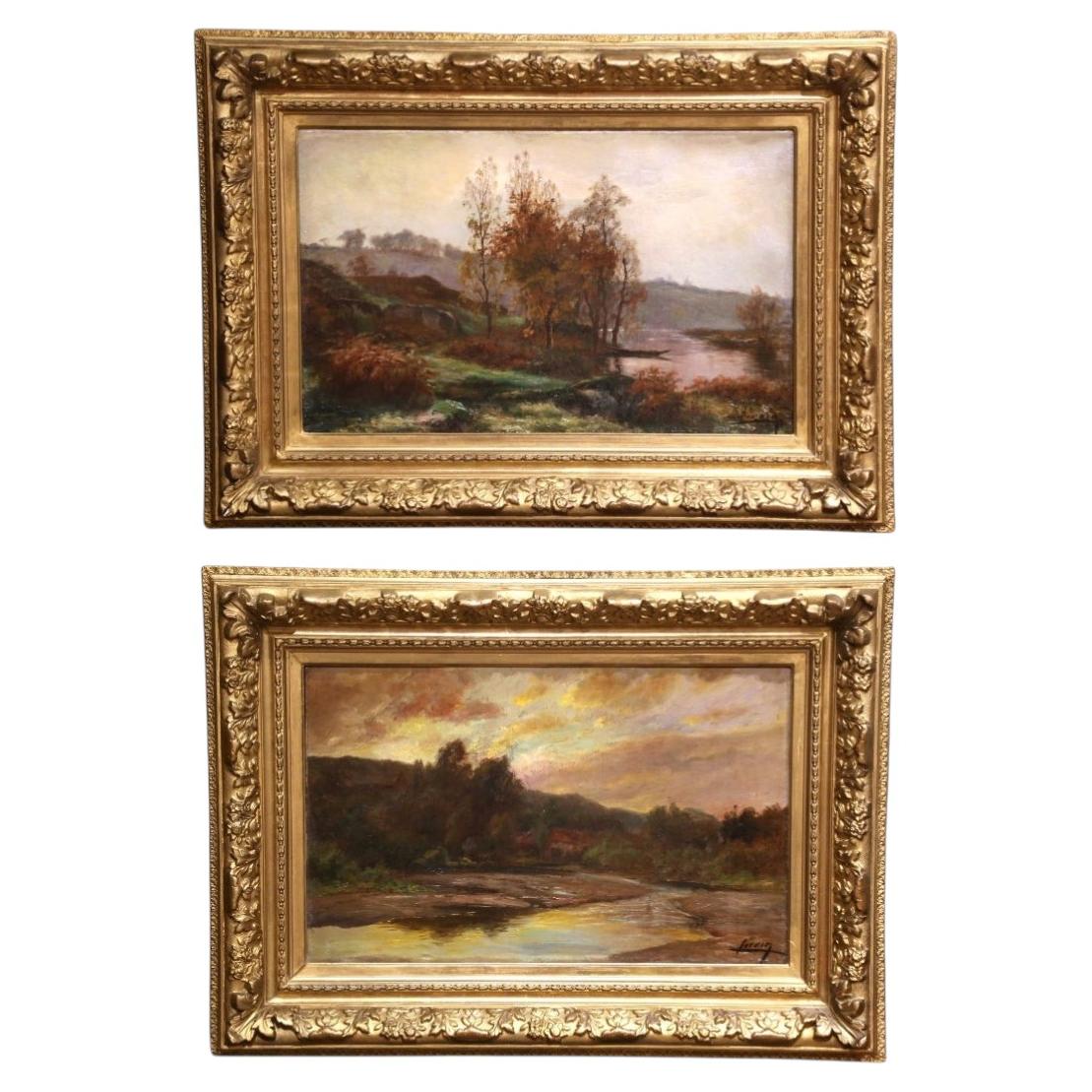
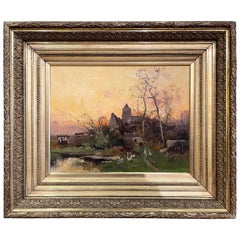
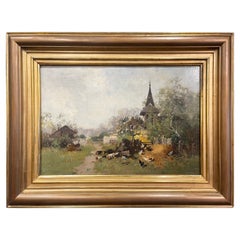
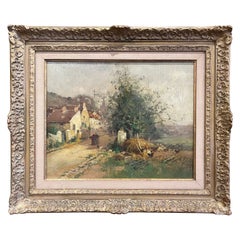
From the beginning of his career and perhaps spurred by his travels along the railway lines, Galien Laloue became interested in showing the natural environment. While not uncommon, it was perhaps an interesting theme for an artist who did not necessarily seek to connect with nature and while painting en plein-air.
He had a reclusive personality, which also may explain the reasons behind his numerous pseudonyms. He preferred the solitariness of his studio and thus did not paint his works entirely on-site. Unlike many other artists as well, he did not like to travel and many of his views of other cities or countries were inspired by postcards and photographs, an increasing tendency with many artists as photography became a more established method of use. Noë Willer further elaborates upon the unique personality of this artist (pg. 16):
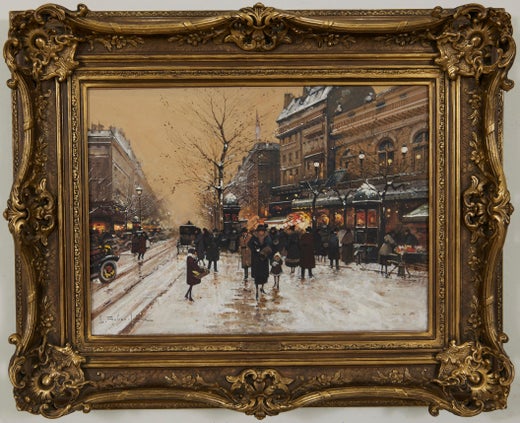
Once again we mention Mr. Eugène Galien Laloue for his lovely gouaches, as full as oils, which show most picturesquely the popular quarters of Paris.
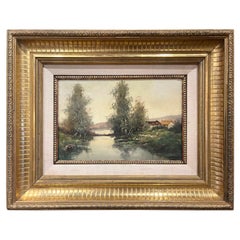
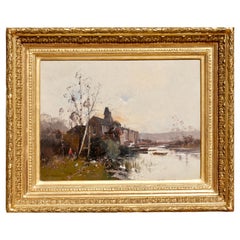
During the first two decades of the twentieth century he also exhibited at Dijon, Orléans, Versailles, Roubaix, Saint Etienne, Bordeaux, Monte Carlo, Hautecoeur, among several other cities. Galien Laloue continued to paint until 1940, when he broke the arm with which he held his brush. Despite his reluctance to integrate himself with others, his paintings offer a record of late nineteenth and early twentieth century Paris, focusing not so much on the relationship between its citizens, but more so on the architectural aspects of the city. He moved out of Paris many times to depict the landscapes of Normandy and the surroundings of Barbizon, making his home for a short time in Fontainebleau. While his Parisian scenes were often of the fall and winter, he preferred to document the landscape during the brighter months of spring and summer. He also documented life along the canals and banks of the sea and rivers, showing an interest in maritime exploits. He had become very popular with both French and especially American artists and continued to paint the same scenes of Paris throughout his career. He died in his daughter’s house in Chérence, where they had taken refuge at the beginning of the Second World War, on April 18th, 1941.