November 15, 2026“I forgot how hungry people are for this sort of exhibition,” says Paul Donzella, whose latest show in his New York gallery has been drawing crowds. The subject is Gio Ponti (1891–1979), known as the father of modern Italian design not only for the range of furniture and products he created but also for the generations of designers he mentored and the publications he founded, including the design magazine Domus, which he edited for half a century.
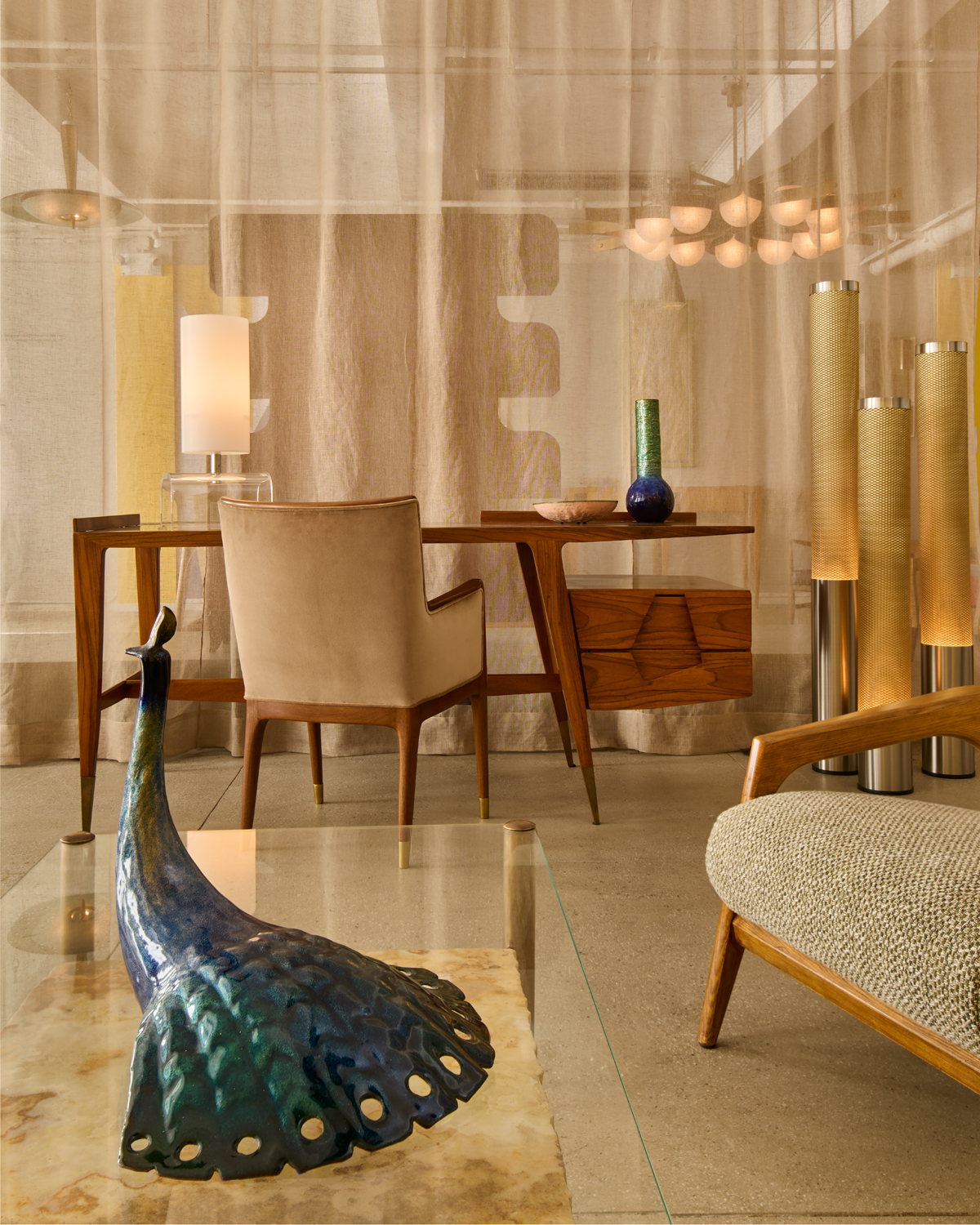
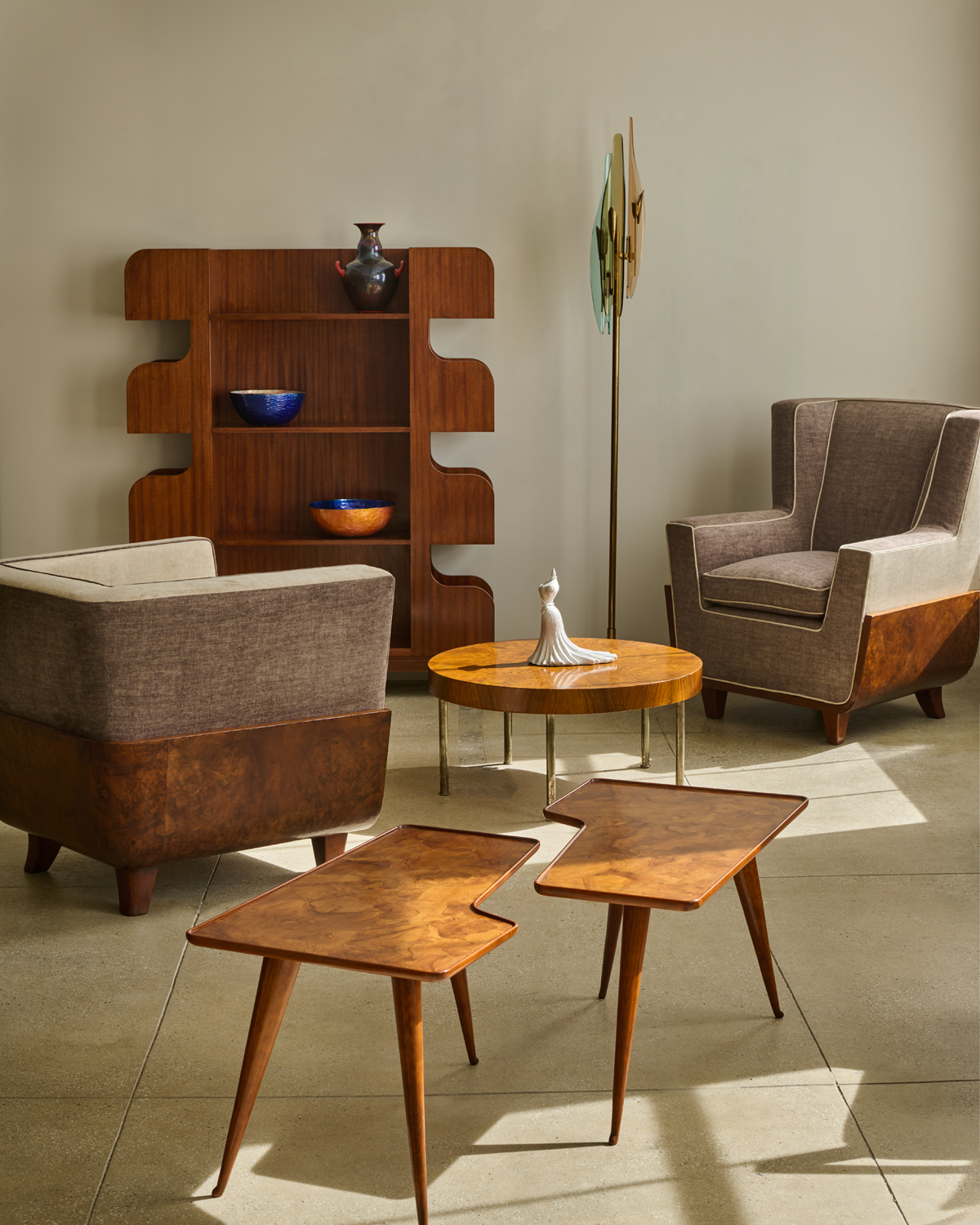
Donzella, a veteran dealer specializing in Italian furniture and lighting, had thought about doing a Ponti show for years. His fear was that no gallery exhibition could do the maestro justice. “I couldn’t help but think about the pieces we wouldn’t have room for, about the disappointment of not being able to show what a polymath he was,” he says. “But I have a buying partner I’ve been working with for almost twenty years, Salvatore Ferrante, who’s a native Italian. He had been pushing me. Whenever we found some great Ponti piece, he’d say, ‘We’ve got to do a show.’ Eventually, I came around to the idea, and I knew I could involve my close friend Brian Kish.” Kish is both a Ponti expert (he curated the 2001 Queens Museum show “Gio Ponti: A Metaphysical World”) and a collector.
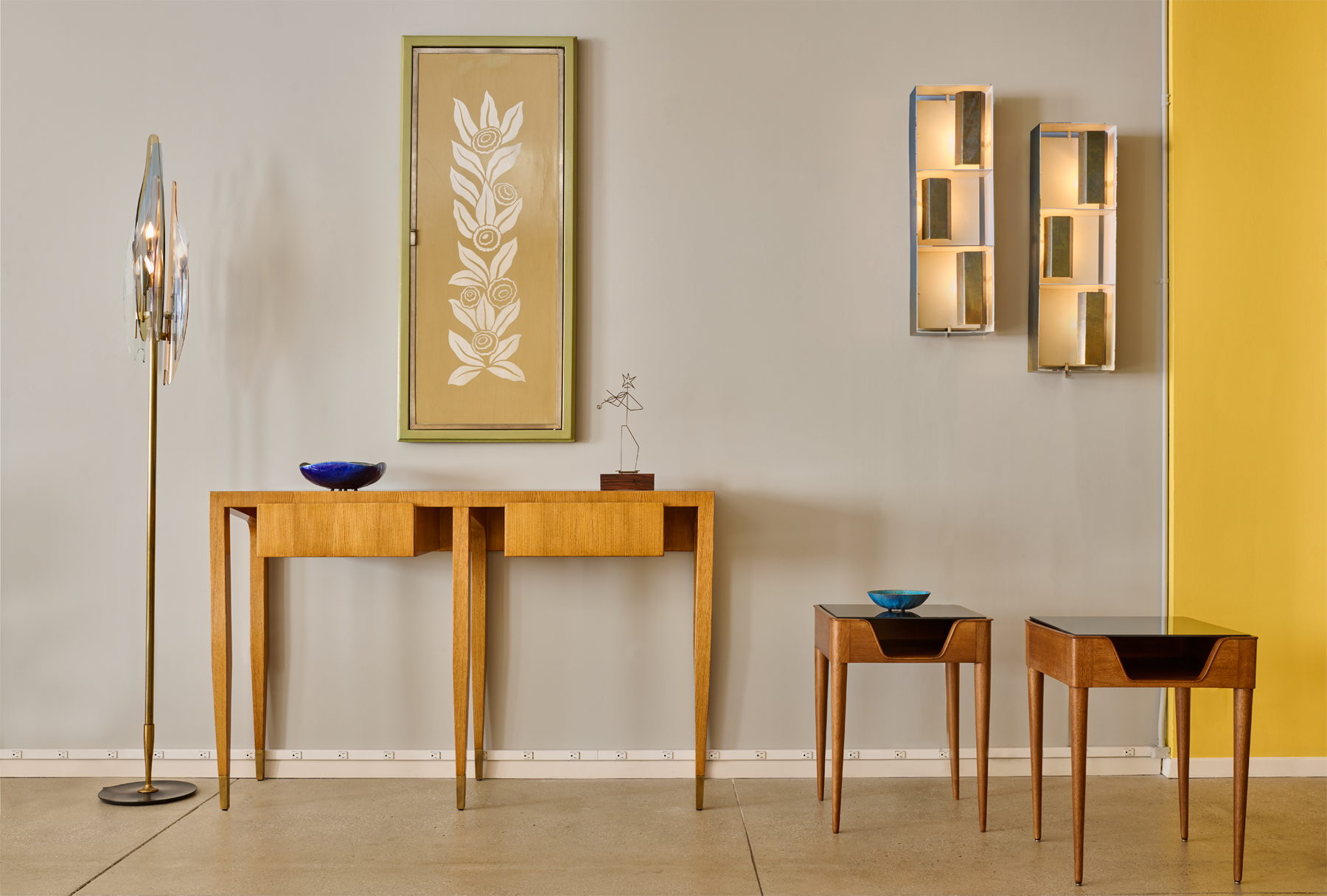
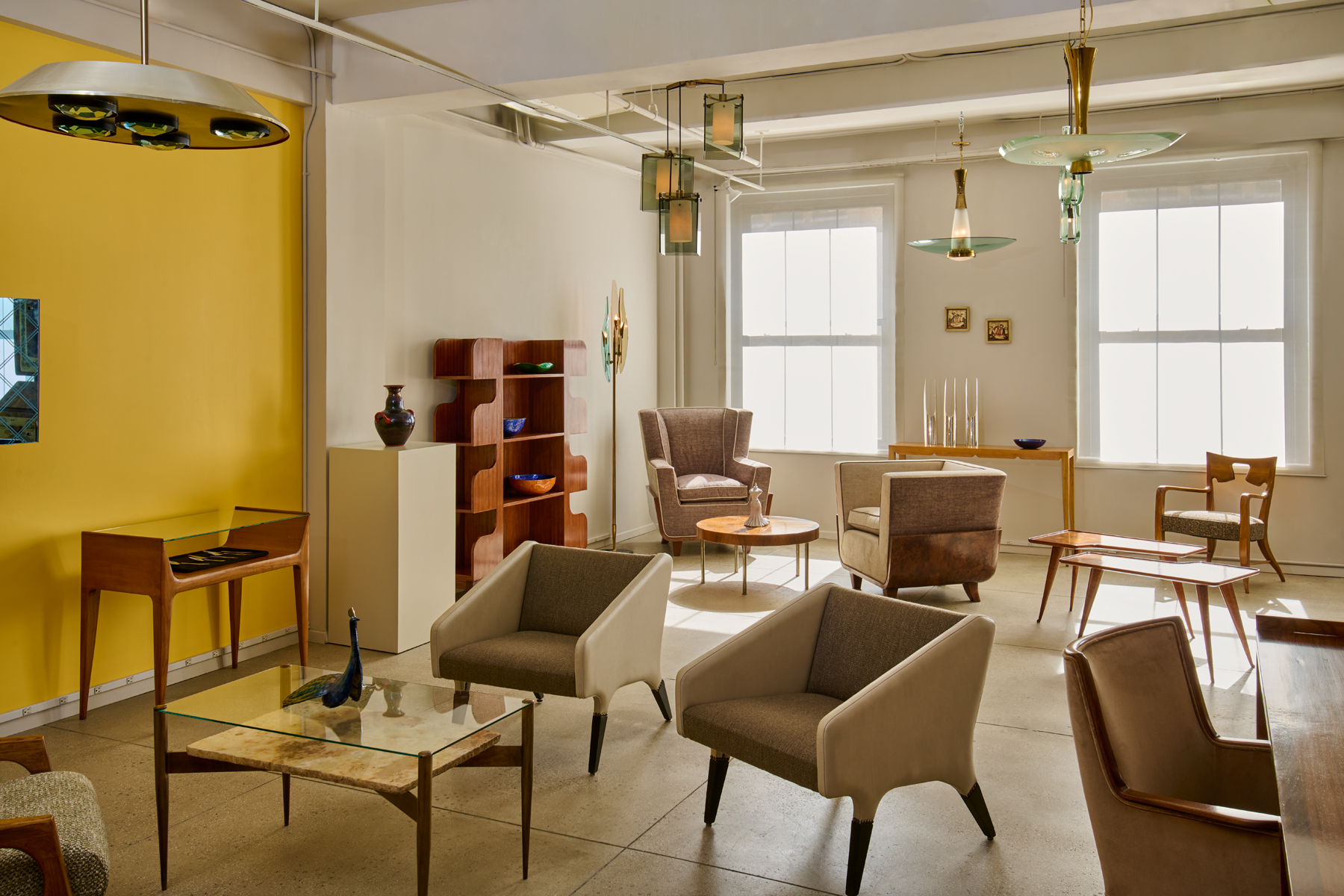
As they began preparing for the current exhibition, Donzella and Kish went through Kish’s storage spaces, finding pieces even he didn’t know he had. The result is the exhibition “Gio Ponti: Designing Optimism,” which reflects Ponti’s belief that good design can improve people’s lives. On view through December 22, it contains more than 80 works, all for sale, both in the gallery and on Donzella’s 1stDibs storefront.
Ponti designed for seemingly every important Italian manufacturer, including the ceramics company Richard Ginori, where he served as artistic director beginning in 1923. Among the Ginori pieces in the show is a pair of tiles from the mid-1920s depicting mysterious young men in imaginary landscapes. “The imagery,” Kish says, “is poetic, esoteric and unmistakably Art Deco.” Ponti created the original drawings, which artisans transferred to the ceramic surfaces.
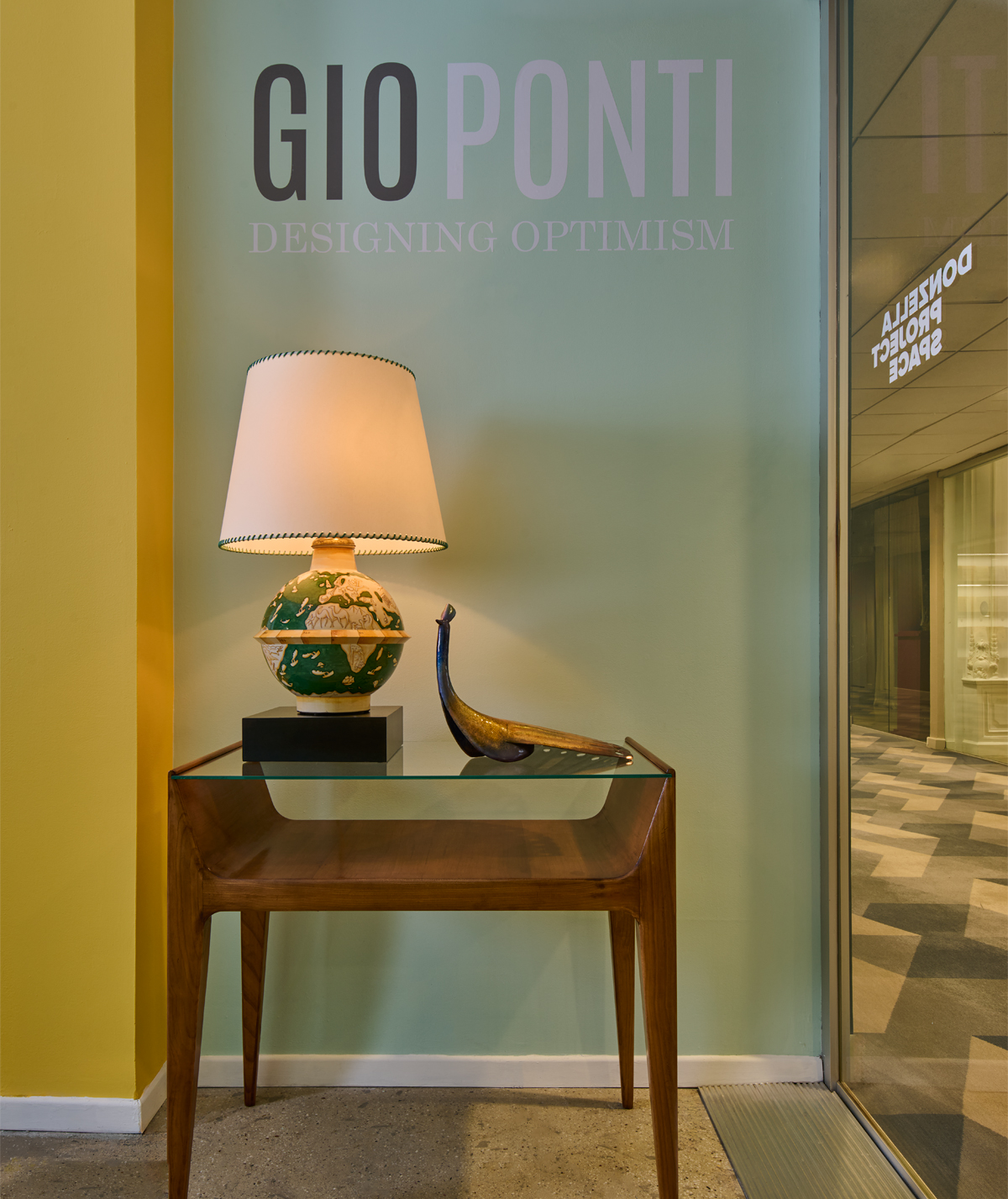
A few years later, Ponti designed what may be the rarest piece in the show: a Ginori lamp in the form of a globe adorned with a hand-drawn map of the world and sketches of animals appropriate to each location. Ginori later produced versions of the globe without the embellishments. Kish, who had never seen this iteration of the lamp, determined from a partial label that it was sold in a New York department store called Stewart’s between 1928 and 1930.
In addition to designing pieces for production by such important firms as Ginori, Venini (glass) and Christofle (silver) — and serving as creative director of Fontana Art, the lighting company he founded with Luigi Fontana — Ponti was a prolific interior designer who commissioned custom furnishings and fixtures for each of his projects.
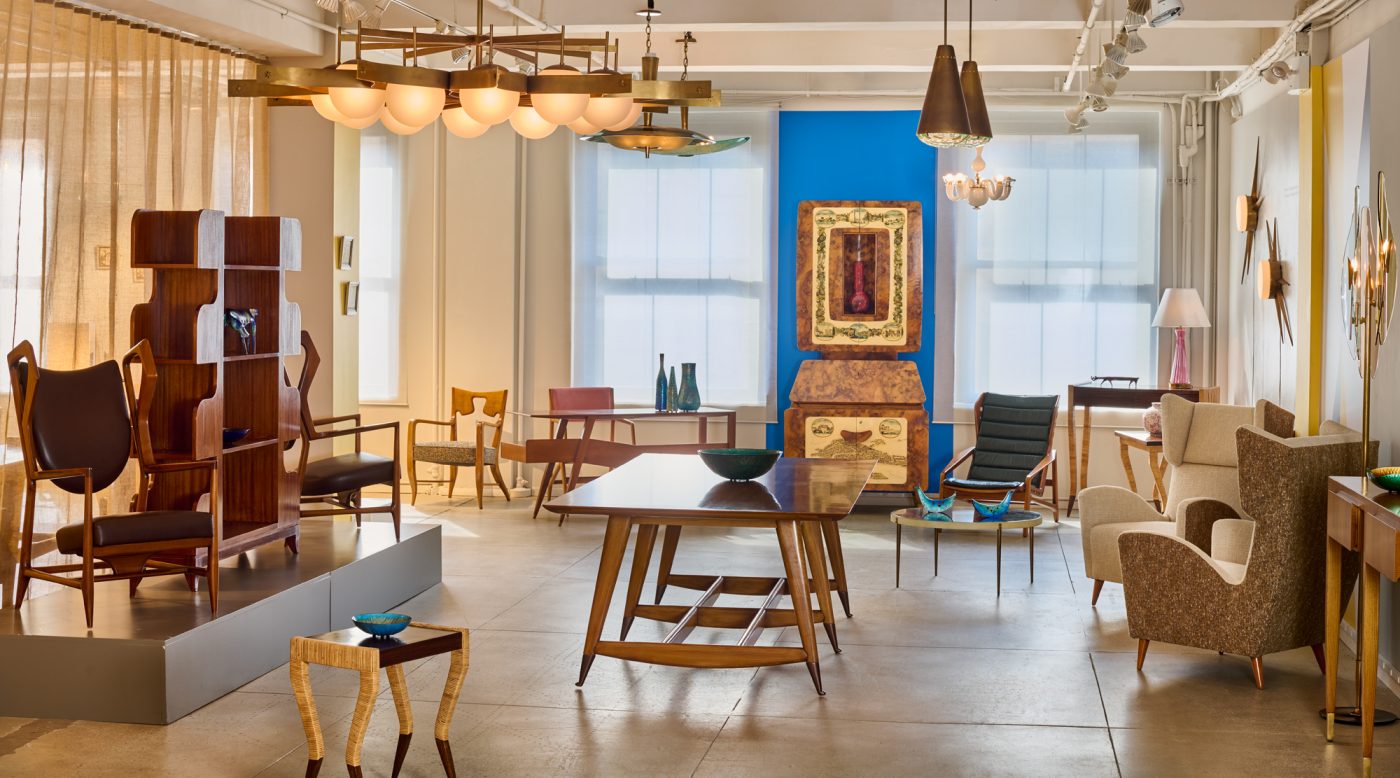
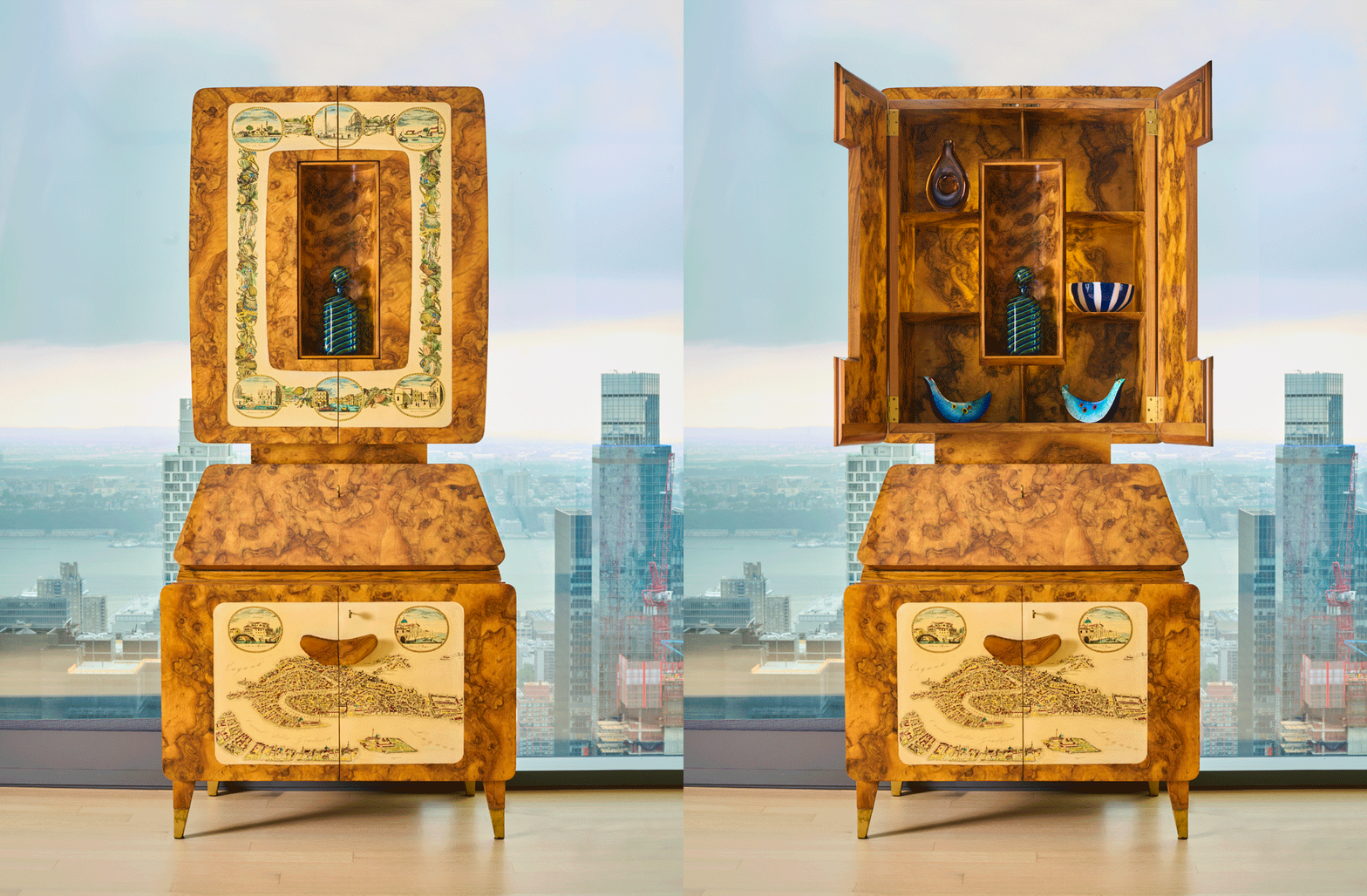
One of the show’s best examples is a burled-walnut trumeau, or tall cabinet, made around 1950 for the Ceccato family apartment in Milan. The well-known artist Piero Fornasetti created laminated panels depicting scenes of Venice for the cabinet’s doors. It was one of Ponti’s many collaborations with Fornasetti, which included interiors for the Andrea Doria, the Italian ocean liner that sank off Massachusetts in 1956.
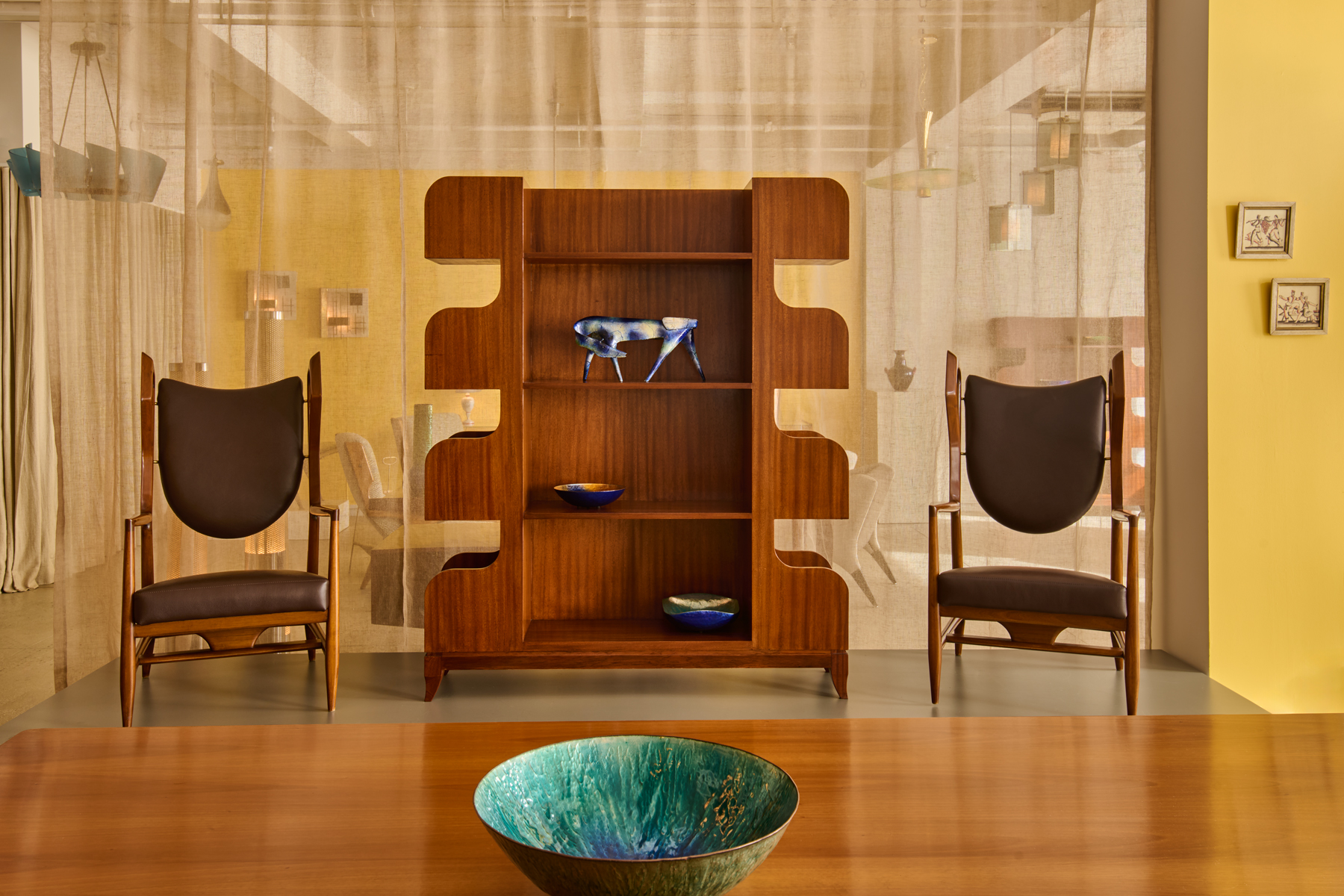
One could probably furnish a whole house with the pieces in the show. A rare pair of Triennale lounge chairs, with retouched wooden frames and new leather upholstery, were made by ISA Bergamo in the early 1950s and published in Domus in 1953. A circa 1944 wooden sofa with three back cushions, also a rarity, was designed by Ponti as part of an effort to help Italian industry recover after World War II. Another standout is an eight-foot-long walnut dining table made around 1952. Donzella says he especially loves its “beautifully detailed undercarriage:” six wooden legs with brass sabots (feet) linked by horizontal stretchers.

Another of Donzella’s favorites is a diminutive four-legged telephone table, the only piece in the show that actually belonged to Ponti. “It stood in his home,” says the gallerist, who calls that “a pretty killer thing.” Translation: That’s some provenance!