Grant Wood Art

American, 1891-1942
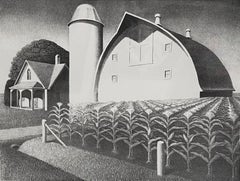
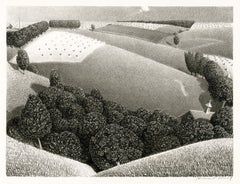
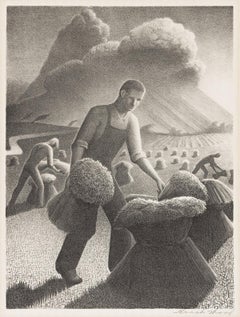
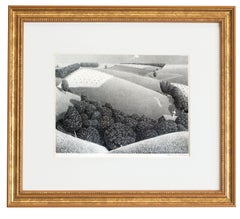
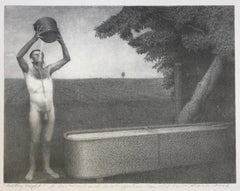
One of the major American Regionalist painters along with Thomas Hart Benton and John Steuart Curry, Grant Wood was born in Anamosa, Iowa, and spent his childhood in Cedar Rapids. Unlike Curry and Benton, he never moved East but remained in the Middle West where he found inspiration for his paintings of prosperous farms and people reflecting idealized American values. However, his work was set apart from many regionalists in that provoked both laughter and social indignation. A good example Daughters of Revolution, 1932, depicting the aloof smugness of women who regarded themselves as emblematic of the country's founding values This painting was a retaliation by Wood against DAR members who had criticized him for completing their window in Germany instead of America. Much of his satire was good natured and humorous. For two summers, Wood attended the Minneapolis School of Design and Handicraft and Normal Art as a student of Ernest Batchelder, and he had brief times of study at Iowa State University and the Art Institute of Chicago from 1913 to 1916. After World War I, he taught high school art in Cedar Rapids. Asserting that he "had to go to France to appreciate Iowa," he had several trips abroad, and in 1923 enrolled in the Academie Julian in Paris, but he determined to make his life in Iowa because "all the really good ideas I'd ever had came to me while I was milking a cow." In 1932, he was co-founder of the Stone City Art Colony and Art School and he became director of the Public Works Art Project in Iowa. He was also an Associate Professor of Fine Arts at the University of Iowa. His work can be divided into two periods, the first being views of Cedar Rapids, other landscapes including scenes of Europe, and a few portraits. However, in 1928, his work changed when he traveled to Munich to oversee the making of a stained-glass window for the Cedar Rapids Veterans Memorial Building commissioned by the Daughters of the American Revolution. Seeing the severe, austere new style of painting in Germany combined with work from the late Gothic period, he developed a unique new style of his own that treated mid-western subjects with Gothic overtones, satire, and caricature. In 1930, he produced his first major landscape painting, Stone City, that had exaggerated perspective and unique naive treatment. From that time, his paintings had a simple innocence and fantasy that transported the viewer into another world, often that of a child. He also did many murals and a few lithographs, completing nineteen between 1937 and 1942, the year he died of cancer at age 50 in Iowa City. Sources include: Matthew Baigell, Dictionary of American Art Michael David Zellman, 300 Years of American Art
to
2
1
Overall Width
to
Overall Height
to
3
1
1
1
1
1
1
1
1
1
1
1
1
1
1
1
1
1
2
1

Use search to find more

3
11,946
2,896
2,541
1,647

Use search to find more

Artist: Grant Wood
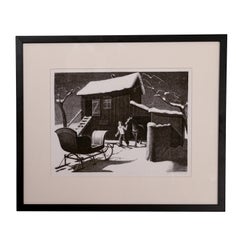
January
January

January

By Grant Wood

Located in New York, NY

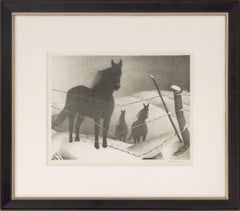
Lithograph on wove paper, 1936. Full Margins. From an edition of 250. Signed by the artist in pencil, lower right. Published by Associated American Artists, New York. Framed Sigh...

Category

1930s American Realist Grant Wood Art

Materials

Lithograph

Grant Wood Original Pencil Signed Lithograph, 1940 - February

Grant Wood Original Pencil Signed Lithograph, 1940 - February

By Grant Wood

Located in Phoenix, AZ

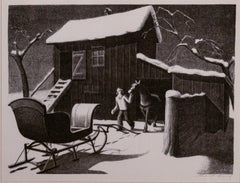
Original pencil signed Grant Wood lithograph, "February," created 1940. A fine impression and one of the most important of the 19 lithographs created by the painter of "American Goth...

Category

1940s Grant Wood Art

Materials

Paper, Lithograph

Related Items
The Golden Gate
The Golden Gate

The Golden Gate

By Adolf Arthur Dehn

Located in Fairlawn, OH

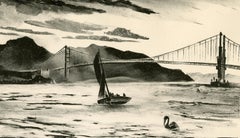
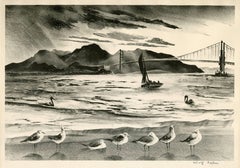
The Golden Gate Lithograph on wove paper watermarked GC, 1940 Signed in pencil by the artist (see photo) Publisher: Associated American Artists Edition: 189, unnumbered The image depicts The Golden Gate Bridge which connects San Francisco and Marin County, California References And Exhibitions: Illustrated: Adams, The Sensuous Life of Adolf Dehn, Fig. 13.17, page 324 Reference: L & O 325 AAA Index 391 Adolf Dehn, American Watercolorist and Printmaker, 1895-1968 Adolf Dehn was an artist who achieved extraordinary artistic heights, but in a very particular artistic sphere—not so much in oil painting as in watercolor and lithography. Long recognized as a master by serious print collectors, he is gradually gaining recognition as a notable and influential figure in the overall history of American art. In the 19th century, with the invention of the rotary press, which made possible enormous print runs, and the development of the popular, mass-market magazines, newspaper and magazine illustration developed into an artistic realm of its own, often surprisingly divorced from the world of museums and art exhibitions, and today remains surprisingly overlooked by most art historians. Dehn in many regards was an outgrowth of this world, although in an unusual way, since as a young man he produced most of his illustrative work not for popular magazines, such as The Saturday Evening Post, but rather for radical journals, such as The Masses or The Liberator, or artistic “little magazines” such as The Dial. This background established the foundation of his outlook, and led later to his unique and distinctive contribution to American graphic art. If there’s a distinctive quality to his work, it was his skill in introducing unusual tonal and textural effects into his work, particularly in printmaking but also in watercolor. Jackson Pollock seems to have been one of many notable artists who were influenced by his techniques. Early Years, 1895-1922 For an artist largely remembered for scenes of Vienna and Paris, Adolf Dehn’s background was a surprising one. Born in Waterville, Minnesota, on November 22, 1895, Dehn was the descendent of farmers who had emigrated from Germany and homesteaded in the region, initially in a one-room log cabin with a dirt floor. Adolf’s father, Arthur Clark Dehn, was a hunter and trapper who took pride that he had no boss but himself, and who had little use for art. Indeed, during Adolf’s boyhood the walls of his bedroom and the space under his bed were filled with the pelts of mink, muskrats and skunks that his father had killed, skinned and stretched on drying boards. It was Adolf’s mother, Emilie Haas Dehn, a faithful member of the German Lutheran Evangelical Church, who encouraged his interest in art, which became apparent early in childhood. Both parents were ardent socialists, and supporters of Eugene Debs. In many ways Dehn’s later artistic achievement was clearly a reaction against the grinding rural poverty of his childhood. After graduating from high school in 1914 at the age of 19—an age not unusual in farming communities at the time, where school attendance was often irregular—Dehn attended the Minneapolis School of Art from 1914 to 1917, whose character followed strongly reflected that of its director, Munich-trained Robert Kohler, an artistic conservative but a social radical. There Dehn joined a group of students who went on to nationally significant careers, including Wanda Gag (later author of best-selling children’s books); John Flanagan (a sculptor notable for his use of direct carving) Harry Gottlieb (a notable social realist and member of the Woodstock Art Colony), Elizabeth Olds (a printmaker and administrator for the WPA), Arnold Blanch (landscape, still-life and figure painter, and member of the Woodstock group), Lucille Lunquist, later Lucille Blanch (also a gifted painter and founder of the Woodstock art colony), and Johan Egilrud (who stayed in Minneapolis and became a journalist and poet). Adolf became particularly close to Wanda Gag (1893-1946), with whom he established an intense but platonic relationship. Two years older than he, Gag was the daughter of a Bohemian artist and decorator, Anton Gag, who had died in 1908. After her husband died, Wanda’s mother, Lizzi Gag, became a helpless invalid, so Wanda was entrusted with the task of raising and financially supporting her six younger siblings. This endowed her with toughness and an independent streak, but nonetheless, when she met Dehn, Wanda was Victorian and conventional in her artistic taste and social values. Dehn was more socially radical, and introduced her to radical ideas about politics and free love, as well as to socialist publications such as The Masses and The Appeal to Reason. Never very interested in oil painting, in Minneapolis Dehn focused on caricature and illustration--often of a humorous or politically radical character. In 1917 both Dehn and Wanda won scholarships to attend the Art Students League, and consequently, in the fall of that year both moved to New York. Dehn’s art education, however, ended in the summer of 1918, shortly after the United States entered World War I, when he was drafted to serve in the U. S. Army. Unwilling to fight, he applied for status as a conscientious objector, but was first imprisoned, then segregated in semi-imprisonment with other Pacifists, until the war ended. The abuse he suffered at this time may well explain his later withdrawal from taking political stands or making art of an overtly political nature. After his release from the army, Dehn returned to New York where he fell under the spell of the radical cartoonist Boardman Robinson and produced his first lithographs. He also finally consummated his sexual relationship with Wanda Gag. The Years in Europe: 1922-1929 In September of 1921, however, he abruptly departed for Europe, arriving in Paris and then moving on to Vienna. There in the winter of 1922 he fell in love with a Russian dancer, Mura Zipperovitch, ending his seven-year relationship with Wanda Gag. He and Mura were married in 1926. It was also in Vienna that he produced his first notable artistic work. Influenced by European artists such as Jules Pascin and Georg Grosz, Dehn began producing drawings of people in cafes, streets, and parks, which while mostly executed in his studio, were based on spontaneous life studies and have an expressive, sometimes almost childishly wandering quality of line. The mixture of sophistication and naiveté in these drawings was new to American audiences, as was the raciness of their subject matter, which often featured pleasure-seekers, prostitutes or scenes of sexual dalliance, presented with a strong element of caricature. Some of these drawings contain an element of social criticism, reminiscent of that found in the work of George Grosz, although Dehn’s work tended to focus on humorous commentary rather than savagely attacking his subjects or making a partisan political statement. Many Americans, including some who had originally been supporters of Dehn such as Boardman Robinson, were shocked by these European drawings, although George Grocz (who became a friend of the artist in this period) admired them, and recognized that Dehn could also bring a new vision to America subject matter. As he told Dehn: “You will do things in America which haven’t been done, which need to be done, which only you can do—as far at least as I know America.” A key factor in Dehn’s artistic evolution at this time was his association with Scofield Thayer...

Category

1940s American Realist Grant Wood Art
Materials

Lithograph

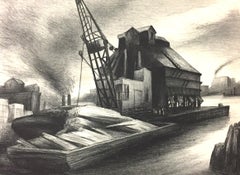
Ann Nooney, (Loading the Lumber Barge, NYC)

Ann Nooney, (Loading the Lumber Barge, NYC)

By Ann Nooney

Located in New York, NY

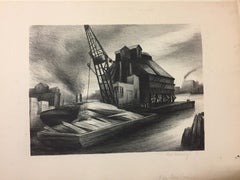
The dimensions are for the image. There are large margins. Signed in pencil. A native New Yorker, Ann Nooney (1900-1970), recorded the urban scene while on the Works Progress Admini...

Category

1930s American Realist Grant Wood Art

Materials

Lithograph

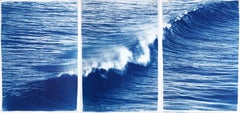
Los Angeles Crashing Waves, Handmade Cyanotype on Paper, Nautical Seascape, Blue

Los Angeles Crashing Waves, Handmade Cyanotype on Paper, Nautical Seascape, Blue

By Kind of Cyan

Located in Barcelona, ES

This series of cyanotype triptychs showcases the beauty of nature scenes, including stunning beaches and oceans, as well as the intricate textures of water, forests, and skies. These...

Category

2010s American Realist Grant Wood Art

Materials

Lithograph, Paper

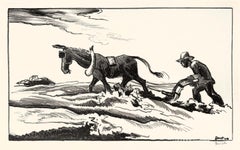
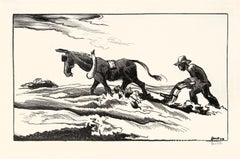
'Plowing It Under' — WPA Era American Regionalism, Signed Lithograph

'Plowing It Under' — WPA Era American Regionalism, Signed Lithograph

By Thomas Hart Benton

Located in Myrtle Beach, SC

Thomas Hart Benton, 'Goin' Home', lithograph, 1937, edition 250, Fath 14. Signed in pencil. Signed in the stone, lower right. A fine, richly-inked impression, on off-white, wove pape...

Category

1930s American Realist Grant Wood Art

Materials

Lithograph

Basted Waves
Basted Waves

Fanny BrennanBasted Waves, 1992

$495

H 14.5 in W 15.75 in

Basted Waves

By Fanny Brennan

Located in Greenwich, CT

Basted Waves is a lithograph on paper with an image size of 2 x 3 inches, initialed 'FMB' lower right and annotated lower left, framed in a contemporary silver and dark gray frame. N...

Category

20th Century Surrealist Grant Wood Art

Materials

Paper, Lithograph

Original "Food Will Win The War" vintage World War 1 poster

Original "Food Will Win The War" vintage World War 1 poster

By Charles E. Chambers

Located in Spokane, WA

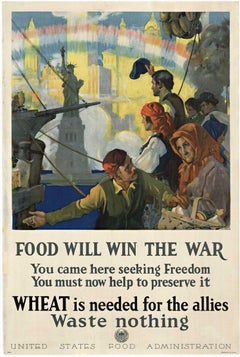
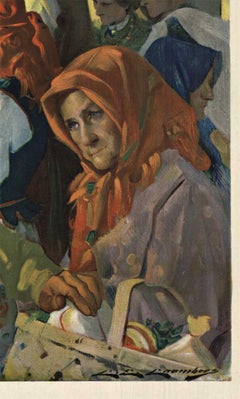
Original World War 1 vintage poster: Food Will Wn the War. Arhival linen backed. PRINTER: Rusling Wood Litho., New York Bright and in good condition. There is some marks down the left side of the poster, possible ink from when the poster was printed. This poster calls on immigrants to do their part in the war effort. It depicts recent immigrants standing near a sailing ship with the Statue of Liberty and a rainbow stretched across the New York City skyline in the background. The text reads: You came here seeking Freedom. You must now help preserve it. Wheat is needed by the allies. Waste nothing. The generosity and compassion of the American people and the great agricultural resources of the North American continent would be called upon... Twenty million Americans signed pledges of membership in the Food Administration...

Category

1910s American Realist Grant Wood Art

Materials

Lithograph

George Barris, "6D" from The Last Photos, photograph from original negative

George Barris, "6D" from The Last Photos, photograph from original negative

By George Barris

Located in Chatsworth, CA

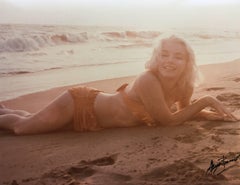
This photograph of Marilyn Monroe was shot by photographer, George Barris, in 1962 on Santa Monica Beach in California. This photograph is from a collection entitled "The Last Photos...

Category

1960s Modern Grant Wood Art

Materials

Photographic Paper

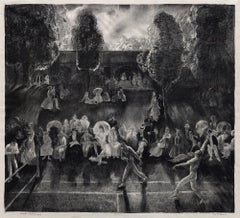
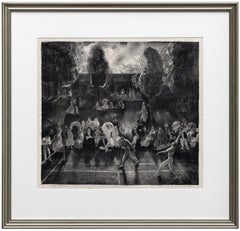
Tennis (Tennis Tournament)

Tennis (Tennis Tournament)

By George Wesley Bellows

Located in Palm Desert, CA

A lithograph by George Bellows. “Tennis (Tennis Tournament)” is a realistic lithograph on paper in black and white by American Realist, George Bellows. Bellows’ depictions of sportin...

Category

1920s American Realist Grant Wood Art

Materials

Lithograph

Chapel of the Convent of St Catherine

Chapel of the Convent of St Catherine

By David Roberts

Located in London, GB

David Roberts RA Chapel of the Convent of St. Catherine 1796 - 1864 First Edition lithograph Full plate: 112 Presented in a acid free mount

Category

1840s Realist Grant Wood Art

Materials

Laid Paper, Lithograph

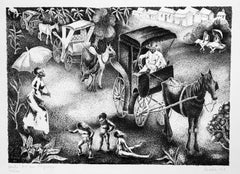
Hombre! Que Sin Vergeunza!

Hombre! Que Sin Vergeunza!

By George Biddle

Located in New York, NY

George Biddle (1885-1973), Hombre! Que Sin Vergeunza!, 1928, lithograph, signed and dated in pencil lower right, titled and numbered lower left [also signed in plate lower left ”Biddle/1928/44]. References: Pennigar 78, Trotter 44. Edition 100. In excellent condition (never framed, without light or time staining), with wide margins, the full sheet, 9 3/4 x 13 3/4, the sheet 15 1/2 x 20 1/2 inches. Printed by George C. Miller. On cream wove paper with the FRANCE watermark. Archival mounting (mylar unattached mounting between acid-free board). A fine, fresh impression, in pristine condition. According to Pennigar the title translates roughly to “Buddy! Aren’t you ashamed of yourself!” The title refers to the composition: the well-groomed man with his foot up in the carriage passes a group of naked little boys...

Category

1920s American Realist Grant Wood Art

Materials

Lithograph

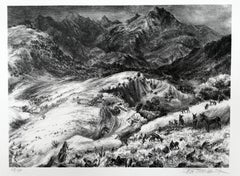
Mountain Scene

Mountain Scene

By Ira Moskowitz

Located in New York, NY

Ira Moskowitz (1912-1985), [Mountain Scene], 1943, lithograph, signed in pencil lower right, numbered lower left (27/50) [also signed and dated 1943 in ...

Category

1940s American Realist Grant Wood Art
Materials

Lithograph

Germany by SAS, Scandinavian Airlines System original vintage travel poster

Germany by SAS, Scandinavian Airlines System original vintage travel poster

By Otto Nielsen 1

Located in Spokane, WA

Original vintage travel poster: Germany by SAS (Scandinavian Airline System). Artist: Otto Nielsen. Size: 25 x 39.5" Archival linen backed original vintage travel poster; ex...

Category

1960s American Realist Grant Wood Art

Materials

Lithograph

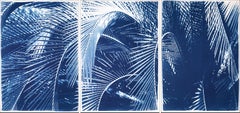
Botanical Triptych Cyanotype Print of Shady Majesty Palm Leaves Garden in Blue

Botanical Triptych Cyanotype Print of Shady Majesty Palm Leaves Garden in Blue

By Kind of Cyan

Located in Barcelona, ES

This series of cyanotype triptychs showcases the beauty of nature scenes, including stunning beaches and oceans, as well as the intricate textures of water, forests, and skies. These...

Category

2010s Academic Grant Wood Art

Materials

Lithograph, Monotype, Paper

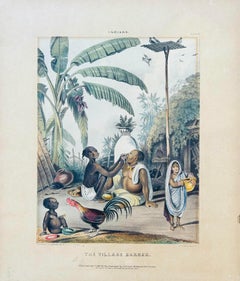
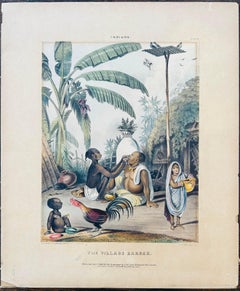
India Listed artist 19th Century Hand Coloured Lithograph Village scene palms

India Listed artist 19th Century Hand Coloured Lithograph Village scene palms

Located in Norfolk, GB

A 19th century, hand coloured lithograph, the colours fresh and in good condition for its age. Artist: Captain Philip Meadows Medium: Hand coloured lithograph Plate 6 Created: 1842 Paper Size: 39 x 32.5 cm Plate Size: 27.5 x 21.2 cm With the description sheet on verso TAYLOR, Captain Philip Meadows (1808-1876). Plate from Sketches in the Deccan. London: published by J McLean 1842 Plate 6 From a series of views of the Deccan, at this time the state of Hyderabad. The suite of plates includes views, scenes and settings of places and buildings at Goa, Arungabad, Tooljapoor, Golcondag, Hyderabad, Ellors, Rozah, and the Tandoor hills, among others. Meadows Taylor arrived in India as a young man to work with a Bombay merchant, but quickly accepted a military commission...

Category

1840s Other Art Style Grant Wood Art

Materials

Paper, Lithograph

Previously Available Items
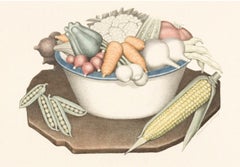
Vegetables
Vegetables

Grant WoodVegetables, 1939

Sold

H 7 in W 9.63 in

Vegetables

By Grant Wood

Located in New York, NY

Lithograph with hand coloring in watercolor, 1939. Edition of 250. Signed by the artist in pencil, lower right margin. The sheet with full margins. Published by Associated Ameri...

Category

1930s Gothic Grant Wood Art

Materials

Watercolor, Lithograph

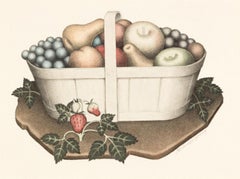
Fruits
Fruits

Grant WoodFruits, 1939

Sold

H 7.5 in W 10 in

Fruits

By Grant Wood

Located in New York, NY

Lithograph with hand coloring in watercolor, 1939. Edition of 250. Signed by the artist in pencil, lower right margin. The sheet with full margins. Published by Associated Ameri...

Category

1930s American Modern Grant Wood Art

Materials

Watercolor, Lithograph

Grant Wood "February" Lithograph, 1941

Grant Wood "February" Lithograph, 1941

By Grant Wood

Located in Astoria, NY

Grant Wood (American, 1891-1942), "February", Lithograph on Rives BFK Paper, 1941, signed in pencil lower right, from an edition of 250, published by Associated American Artists, ebo...

Category

1940s American Modern Grant Wood Art

Materials

Paper, Lithograph

July Fifteenth
July Fifteenth

Grant WoodJuly Fifteenth, 1938

Sold

H 9.75 in W 12.5 in

July Fifteenth

By Grant Wood

Located in Palm Desert, CA

"July Fifteenth" is a lithograph from 1938 by Grant Wood. The artwork size is 9 3/4 x 12 1/2 inches. The framed size is 17 x 19 1/2 x 5/8 inches. The piece is signed in pencil, lower...

Category

Early 20th Century American Realist Grant Wood Art

Materials

Lithograph

Fertility
Fertility

Grant WoodFertility, 1939

Sold

H 12.625 in W 19.125 in

Fertility

By Grant Wood

Located in Rancho Santa Fe, CA

Lithograph on wove paper 9 x 12 in. (image size) 12 5/8 x 19 1/8 in. (sheet size) Signed lower right Edition of 250 Published by Associated American Artists (AAA), New York This ite...

Category

1930s American Modern Grant Wood Art

Materials

Lithograph

'July Fifteenth, 1938' — American Regionalism, 1930s

'July Fifteenth, 1938' — American Regionalism, 1930s

By Grant Wood

Located in Myrtle Beach, SC

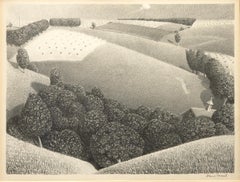
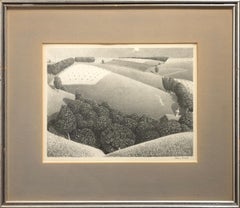
Grant Wood, 'July Fifteenth, 1938', lithograph, edition 250, 1938, Cole 5. Signed in pencil. A superb impression on off-white wove paper, with full margins (1 3/16 to 2 inches), in excellent condition. Image size 9 x 11 7/8 inches; sheet size 11 3/4 x 15 7/8 inches. Matted to museum standards, unframed. Printed by master lithographer George C. Miller. Published by Associated American Artists, New York, in 1938. Reproduced and Exhibited: 'American Master Prints from the Betty and Douglas Duffy Collection', the trust for museum exhibitions Washington, D.C., 1987; 'Pressed In Time: American Prints 1905-1950', Henry E. Huntington Library and Art Gallery, San Marino, 2007. Impressions of this work are in the following museum collections: Amon Carter Museum of American Art, Art Institute of Chicago, Cedar Rapids Museum of Art, Des Moines Art Center, Detroit Institute of Arts, Harvard Art Museums, Huntington Library Art Museum, Los Angeles County Museum of Art, Fine Arts Museums of San Francisco, Milwaukee Art Museum, Museum of Fine Arts Boston, National Gallery of Art, Philadelphia Museum of Art, Rhode Island School of Design Museum, Smithsonian America Art Museum, Sioux City Art Center, Whitney Museum of American Art. ABOUT THE ARTIST Grant Wood (1892- 1942) was born in Anamona, Iowa, and lived for ten years on a farm in that area. When his father died in 1901, his mother sold the farm and moved to Cedar Rapids, which was to remain the center of Wood’s world. Principally self-taught, Wood received his art education in a summer class at the Minneapolis School of Design, Handicraft and Normal Art; two years at the University of Iowa; and night school at the Art Institute of Chicago. He made several trips to Europe and studied briefly at the Académie Julien in Paris. Wood was cofounder of the Stone City Art Colony and Art School and was director of the Public Works of Art Project in Iowa from 1933-1934. On a trip to Munich in 1928 to supervise the execution of a stained glass window for the Cedar Rapids Veterans Memorial Building, he studied the northern Renaissance masters, whose crystalline realism and work with layered oil glazes influenced his highly-crafted style of painting. Wood’s other sources of inspiration were American folk paintings and nineteenth-century townscapes. The turning point in Wood’s career came in 1930 when he won a bronze medal at the Art Institute of Chicago for his painting American Gothic. The image received national recognition, and Wood became famous overnight. In 1937, Wood began making lithographs for the Associated American Artists. These works, imbued with the same humorous satire and meticulous craftsmanship that Wood employed in his paintings, are celebrated as iconic images of American Regionalism...

Category

1930s American Modern Grant Wood Art

Materials

Lithograph

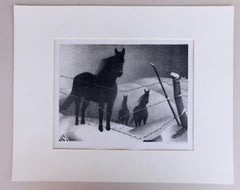
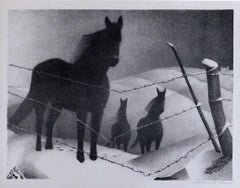
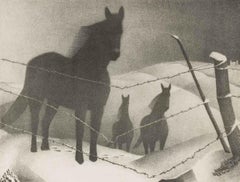
Approaching Storm

Grant WoodApproaching Storm, 1940

Sold

H 11.75 in W 8.75 in

Approaching Storm

By Grant Wood

Located in New York, NY

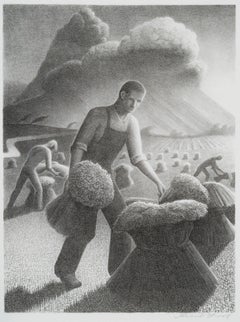
A very good impression of this lithograph. Edition of 250. Signed in pencil, lower right. Published by Associated American Artists, New York.

Category

1940s American Realist Grant Wood Art
Materials

Lithograph

Tree Planting Group — 1930s American Regionalism

Tree Planting Group — 1930s American Regionalism

By Grant Wood

Located in Myrtle Beach, SC

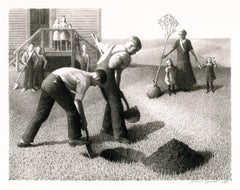
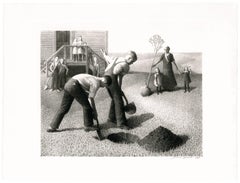
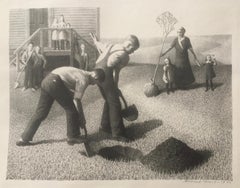
Grant Wood, 'Tree Planting Group', lithograph, 1937, edition 250, Cole 1. Signed and dated in pencil. A fine, richly-inked impression, on off-white wove pap...

Category

1930s American Realist Grant Wood Art
Materials

Lithograph

Approaching Storm

Approaching Storm

By Grant Wood

Located in Portland, ME

Wood, Grant. APPROACHING STORM. Lithograph, 1940. Cole 19. 11 7/8 x 9 inches (304 x 230 mm). Published by Associated American Artists in an edition o...

Category

Mid-20th Century American Realist Grant Wood Art
Materials

Lithograph

TREE PLANTING GROUP - Woods First Print

TREE PLANTING GROUP - Woods First Print

By Grant Wood

Located in Santa Monica, CA

GRANT WOOD (1891 - 1942) TREE PLANTING GROUP. 1937 (Cole 1) Lithograph as published by Associated American Artists. Signed and dated in pencil. Edition 2...

Category

1930s American Modern Grant Wood Art

Materials

Lithograph

Original Grant Wood Lithograph 1938 Framed American Investment Quality Rare

Original Grant Wood Lithograph 1938 Framed American Investment Quality Rare

By Grant Wood

Located in Buffalo, NY

July Fifteenth, 1938 Lithograph on paper under glass; Associated American Artists, New York, pub. Edition of 250, hand signed lower right: Grant Wood Image: 9" H x 12" W Literature:...

Category

1930s American Modern Grant Wood Art

Materials

Lithograph

Sultry Night - Banned by the Post Office in 1939 - Provenance: Nan Wood

Sultry Night - Banned by the Post Office in 1939 - Provenance: Nan Wood

By Grant Wood

Located in Santa Monica, CA

GRANT WOOD ( 1891 - 1942) SULTRY NIGHT, 1939 (Cole 6) Lithograph, signed in pencil. Edition 100. In very good condition, Image 9 x 11 3/4 inches, sheet slightly trimmed being 11 1/2...

Category

1930s American Modern Grant Wood Art

Materials

Lithograph

July 15th
July 15th

Grant WoodJuly 15th, 1938

Sold

H 19 in W 24 in

July 15th

By Grant Wood

Located in Washington, DC

Artist: Grant Wood Medium: Lithograph on paper Title: July 15th Year: 1938 Edition Size: 250 Sheet Size: 11 7/8" x 16" Reference: Cole 5 Signed: Signed in pencil Published by Associa...

Category

1930s Grant Wood Art

Materials

Lithograph

Cover for “The Pulse” Magazine, February 1907

Cover for “The Pulse” Magazine, February 1907

By Grant Wood

Located in New York, NY

Grant Wood (American, 1891 – 1942) Cover for “The Pulse” Magazine, February 1907 Signed with monogram, GDV, and graduation year ’10, center right Pen and ink on paper, laid down 18 ¾ x 12 ⅜ inches (47.6 x 31.4 cm) Provenance: The artist; from whom acquired by: Mr. and Mrs. Gordon Fennell, Cedar Rapids, Iowa (1898-1985); his estate sale, Leslie Hindman, Chicago, 11 May 1986; where acquired by: Private Collection, Chicago; by whom consigned to: Thomas French Fine Arts, Akron, Ohio; from whom acquired in 2006 by: John C. Fitzpatrick, Iowa City, Iowa, and Eastport, Maine, 2006-2020 Sold for the benefit of the Tides Institute and Museum of Art, Eastport, Maine Long before there was American Gothic, before Paul Revere, Daughters of Revolution and Parson Weems’ Fable, before the rhythmic landscapes, witty and frightening character studies, and evocative lithographs of the Midwest, the precocious talent of Grant Wood was already in evidence. Wood was essentially self-taught, but precious little of his earliest works survive. The beginnings of his artistic career are to be found at Washington High School in Cedar Rapids. There he and Marvin Cone...

Category

20th Century American Modern Grant Wood Art

Materials

Ink, Laid Paper, Pen

Grant Wood art for sale on 1stDibs.

Find a wide variety of authentic Grant Wood art available for sale on 1stDibs. You can also browse by medium to find art by Grant Wood in lithograph and more. Not every interior allows for large Grant Wood art, so small editions measuring 11 inches across are available. Customers who are interested in this artist might also find the work of Reginald Marsh, Armin Landeck, and Cecil Crosley Bell. Grant Wood art prices can differ depending upon medium, time period and other attributes. On 1stDibs, the price for these items starts at $11,800 and tops out at $11,800, while the average work can sell for $11,800.

Artists Similar to Grant Wood

Questions About Grant Wood Art
  • 1stDibs ExpertSeptember 9, 2024
    How much a Grant Wood painting is worth varies based on its size, historical significance, condition and other factors. In 2005, his piece Spring Plowing fetched more than $6.9 million at a New York auction. The American artist developed a unique style of his own that treated Midwestern subjects with Gothic overtones, satire and caricature. His paintings have a simple innocence and fantasy that transport the viewer into another world, often that of a child. To learn the estimated value of a particular Wood piece, consult a certified appraiser or knowledgeable art dealer. Find a range of Grant Wood art on 1stDibs.
  • 1stDibs ExpertFebruary 13, 2024
    Grant Wood is from Iowa. The American artist was born in Anamosa, Iowa, in 1891 and grew up in nearby Cedar Rapids. Unlike other American regionalist painters like John Steuart Curry and Thomas Hart Benton, Wood never moved East but remained in the Middle West, where he found inspiration for his paintings of prosperous farms and people reflecting idealized American values. He died in Iowa City, Iowa, in 1942, at the age of 51. Find an extraordinary collection of art for sale on 1stDibs.