Jim Jonson Art

to
6
Overall Width
to
Overall Height
to
6
2
4
2
1
6
4
3
2
2
2
1
1
1
1
1
1
1
1
6

Use search to find more

6
12,062
2,898
2,541
1,651

Use search to find more

Artist: Jim Jonson
Tennis Match, Expressionist Lithograph by Jim Jonson

Tennis Match, Expressionist Lithograph by Jim Jonson

By Jim Jonson

Located in Long Island City, NY

Jim Jonson, American (1928 - 1999) - Tennis Match, Year: circa 1980, Medium: Lithograph, signed and numbered in pencil, Edition: 300, AP, Size: 28 in. x 21 in. (71.12 cm x 53.34 ...

Category

1980s Expressionist Jim Jonson Art

Materials

Lithograph

Tennis Serve, Expressionist Lithograph by Jim Jonson

Tennis Serve, Expressionist Lithograph by Jim Jonson

By Jim Jonson

Located in Long Island City, NY

Jim Jonson, American (1928 - 1999) - Tennis Serve, Year: circa 1980, Medium: Lithograph, signed and numbered in pencil, Edition: 300; AP, Size: 28 in. x 21 in. (71.12 cm x 53.34 ...

Category

1980s Expressionist Jim Jonson Art

Materials

Lithograph

Major Indoor Soccer League, Pop Art Lithograph by Jim Jonson

Major Indoor Soccer League, Pop Art Lithograph by Jim Jonson

By Jim Jonson

Located in Long Island City, NY

Jim Jonson, American (1928 - 1999) - Major Indoor Soccer League, Year: circa 1980, Medium: Lithograph, signed and numbered in pencil, Edition: 60/300, Image Size: 24 x 18 inches,...

Category

1980s Pop Art Jim Jonson Art

Materials

Lithograph

Skiing, World Cup, Lithograph by Jim Jonson

Skiing, World Cup, Lithograph by Jim Jonson

By Jim Jonson

Located in Long Island City, NY

US World Cup Skiing Jim Jonson, American (1928–1999) Date: 1977 Lithograph, signed and numbered in pencil Edition of 300, AP Image Size: 18 x 25 inches Size: 22 in. x 30 in. (55.88 c...

Category

1970s American Realist Jim Jonson Art

Materials

Lithograph

Hockey, Contemporary Lithograph by Jim Jonson

Hockey, Contemporary Lithograph by Jim Jonson

By Jim Jonson

Located in Long Island City, NY

Hockey Jim Jonson, American (1928–1999) Date: circa 1980 Lithograph, signed and numbered in pencil Edition of 300, AP 40 Image Size: 22 x 28 inches Size: 22 in. x 30.5 in. (55.88 cm ...

Category

1980s Jim Jonson Art

Materials

Lithograph

Roller Rocket, Pop Art Lithograph by Jim Jonson

Roller Rocket, Pop Art Lithograph by Jim Jonson

By Jim Jonson

Located in Long Island City, NY

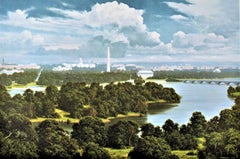
Jim Johnson’s dynamic portrait of a roller skater reflects the skater’s speed and prowess. Roller Rocket Jim Jonson, American (1928–1999) Date: 1979 Lithograph, signed and numbered ...

Category

1970s Jim Jonson Art

Materials

Lithograph

Related Items
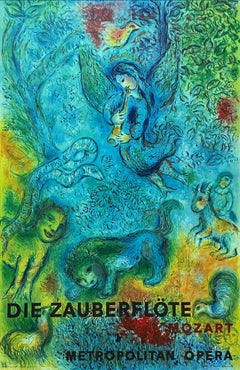
Chagall, Die Zauberflöte (Mourlot CS. 38), The Metropolitan Opera (after)

Chagall, Die Zauberflöte (Mourlot CS. 38), The Metropolitan Opera (after)

By Marc Chagall

Located in Fairfield, CT

Title: Die Zauberflöte (Mourlot CS. 38), The Metropolitan Opera Year: 1973 Medium: Lithograph on wove paper Size: 39.5 x 25.75 inches Notes: From the opening of Mozart's 'The Magic F...

Category

1970s Expressionist Jim Jonson Art

Materials

Lithograph

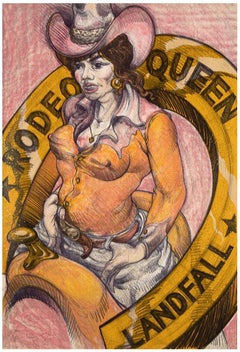
Rodeo Queen by Luis Jimenez

Rodeo Queen by Luis Jimenez

By Luis Alfonso Jimenez

Located in Phoenix, AZ

Rodeo Queen, 1981 Edition 36/50 Signed lower left, Inscribed: for the "Rose" 82. Provenance: Print was a gift to Rozanne Charington, companion and model for "Rodeo Queen", "Rose Tattoo" and "Jimenez at Adeliza's Candy Store". Lithograph on paper 42 ½ × 29 in. (107.3 × 73.7 cm) Luis Alfonso Jimenez Born, 1940, El Paso, Texas, died 2006, Hondo, New Mexico. Statement: Luis Jimenez, in his work, celebrates the vitality of life. . . . Jimenez es un hijo de la frontera; he knows its people and the landscape. It is the transformation of these people into art that is his most important contribution to the art of this vast region which stretches between Mexico and the United States. His subject matter utilizes the popular images of the cultura del norte, and a large part of it is depicted and transformed in the rough and tumble world of la frontera. He is also a son of el norte, and so he uses its materials and explores its emerging, popular myths. The tension and attraction of Jimnez’s work is that he always creates within the space of his two worlds, the Mexicano and the Americano. He constantly shows us the irony of the two forces which repel, while showing us glimpses of the synthesis he seeks. What a gift it has been to us for this talented artist to reflect on the soul of our region. He gives meaning to our existence and history. Rudolfo Anaya (passage chosen by the artist), A View from La Frontera, Man on Fire: Luis Jimenez, pp. 1, 3, 6Biography: Luis Jimenez was born in Texas to parents who had emigrated from Mexico to the United States; he would later dedicate his 1989 sculpture Border Crossing to his father, who had entered the country illegally. The elder Jimenez was a neon sign designer in El Paso, and Luis worked with him as a youth. His experience working in the neon shop and his fascination with U.S. car culture would both become major influences on his art career. Jimenez studied architecture at the University of Texas, Austin (UTA), and also took art courses in which he first created sculptures with wood, steel, and fiberglass, choosing the latter because of its association with U.S. popular culture. He subsequently became one of the artists who made fiberglass an acceptable medium in the 1960s. In 1964 Jimenez received his B.S. in art from UTA, and he continued his studies at the Universidad Nacional Autonoma de Mexico in Mexico City. In 1966 he moved to New York City and worked as an assistant to sculptor Seymour Lipton. Jimenez began to exhibit his art while in New York and in 1972 moved to New Mexico to focus on creating public sculptures, even as he maintained his diverse output of drawings, prints, and lithographs. Drawing on his early experiences, Jimenez creates works that come from a border perspective, one that draws upon the hybridity bred by culture clashes. Often socially and politically informed, his works speak not only in regional terms, those germane to the southwestern United States, but to broader, more global issues as well. They exhibit a profoundly Chicano aesthetic and sensibility, one that is informed by Mexican and Mexican American traditions, North American popular culture, Chicano cultural icons, and images and themes unique to the Southwest. Death, sexuality, and the struggle of the common people are frequent themes. Inspired by authors who write in an autobiographical style, Jimenez creates works that function as personal narrative yet are also able to make statements about culture in more global terms. His use of bold colors and lines, a legacy from his fathers work as a neon sign maker, lends a dynamic sensuality to his work, one that is particularly evident in his monumental fiberglass and acrylic urethane sculptural works Many of Jimenez's works correspond to scholar Toms Ybarra-Fraustos definition of the Chicano aesthetic of rasquachismo, a lowbrow sensibility that appeals to the working class in that it applies to objects that subvert expressions of the mainstream or dominant culture. Creating art that speaks to the people, Jimenez is able to transform regional and culturally specific myths and symbols into globally recognized and relevant icons. Exhibitions: In addition to his personal work, Jimenez has been commissioned for numerous public art projects. In 1999 his sculpture Southwest Piet was designated a National Treasure by First Lady Hillary Clinton. The many exhibitions featuring his work have included Human Concern/Personal Torment (Whitney Museum of American Art, New York, 1969). The First International Motorcycle Art Show (Phoenix Art Museum, Phoenix, AZ, 1973). Three Texas Artists (Centre Cultural Americaine, USIS, Paris, 1977), Recent Trends in Collecting (Smithsonian Institution, Washington, DC, 1982). Committed to Print (Museum of Modern Art, New York, 1989) Printmaking in Texas: The 1980s (Modern Art Museum, Fort Worth, TX. Laguna Gloria Art Museum, Austin, 1990. The Whitney Biennial (Whitney Museum of American Art, New York, 1991) Man On Fire: Luis Jimnez (Albuquerque Museum of Art, NM, 1994-95). 47th Annual Purchase Exhibition (American Academy of Arts and Letters, New York, 1995). Traveling solo exhibition, Working Class Heroes: Images from the Popular Culture (1997-2000). Jiménez Collier Gallery has been in continuous operation for over 40 years. Originally located just off Main Street in downtown Scottsdale, Arizona, we have moved to Phoenix to accommodate and showcase our large inventory including: • Original works by Maynard Dixon, Lon Megargee, Ed Mell, Fritz Scholder, Bill Schenck, Bill Lesch, Luis Jimenez, Greg Singley, Dan Budnik, and other 20th century Western, WPA and Contemporary Southwestern artists. • The Fine Art Estate of Lon Megargee • Vintage rodeo...

Category

1980s Contemporary Jim Jonson Art

Materials

Lithograph

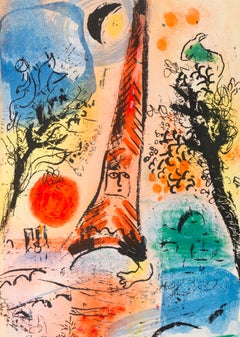
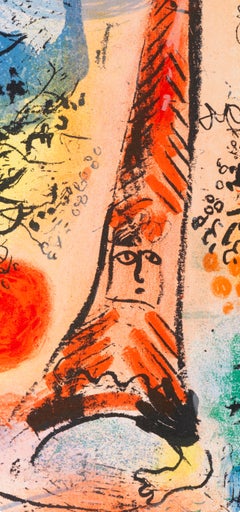
Marc Chagall, Vision of Paris, from Chagall Lithographer I, 1960

Marc Chagall, Vision of Paris, from Chagall Lithographer I, 1960

By Marc Chagall

Located in Fairfield, CT

Artist: Marc Chagall (1887–1985) Title: Vision of Paris (Vision de Paris) Year: October 1960 Medium: Lithograph on velin paper Paper Size: 12.5 x 9.625 inches (31.75 x 24.45 cm) Cond...

Category

1960s Expressionist Jim Jonson Art

Materials

Lithograph

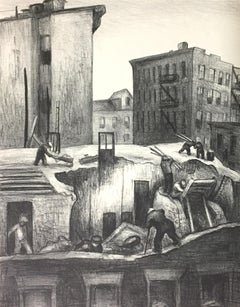
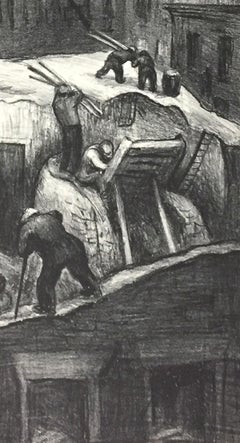
Ann Nooney, (Demolition with Windows, NYC)

Ann Nooney, (Demolition with Windows, NYC)

By Ann Nooney

Located in New York, NY

The dimensions are for the image; there are large margins. This lithograph is signed in pencil. A native New Yorker, Ann Nooney (1900-1970) recorded the urban scene while on the Wo...

Category

1930s American Realist Jim Jonson Art
Materials

Lithograph

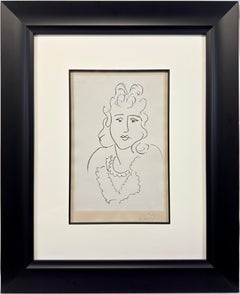
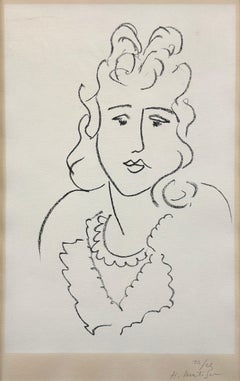
"Buste de Femme" 1942-43 by Henri Matisse Signed Lithograph /25 French Modernist

"Buste de Femme" 1942-43 by Henri Matisse Signed Lithograph /25 French Modernist

By Henri Matisse

Located in Yardley, PA

About this work: Created in 1942-43, this work belongs to one of the most fertile periods of Matisse’s career as a printmaker and draftsman. By this time, Matisse had long since mast...

Category

1940s Modern Jim Jonson Art
Materials

Lithograph, Chine Colle

America! America!
America! America!

James FetherolfAmerica! America!, 1973

$400

H 22 in W 29.8 in D 0.01 in

America! America!

Located in San Francisco, CA

This artwork titled "America! America" is a color lithograph after noted American artist James Fetherolf, 1925-1994. It is hand signed at the lower rig...

Category

Late 20th Century American Realist Jim Jonson Art
Materials

Lithograph

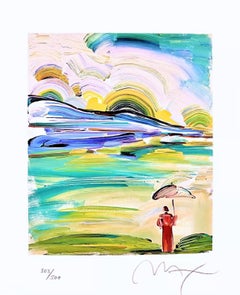
Umbrella Man at Sunrise, Peter Max

Peter MaxUmbrella Man at Sunrise, Peter Max, 2001

$1,104Sale Price|20% Off

H 9 in W 11 in

Umbrella Man at Sunrise, Peter Max

By Peter Max

Located in Fairfield, CT

Artist: Peter Max (1937) Title: Umbrella Man at Sunrise Year: 2001 Edition: 303/500, plus proofs Medium: Lithograph on Lustro Saxony paper Size: 9 x 11 inches Condition: Excellent In...

Category

Early 2000s Pop Art Jim Jonson Art

Materials

Lithograph

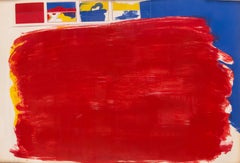
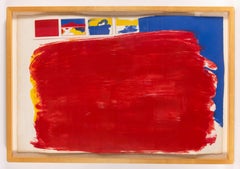
Large Bus by Allen Jones classic British 1960s pop art in bright primary colors

Large Bus by Allen Jones classic British 1960s pop art in bright primary colors

By Allen Jones

Located in New York, NY

This large Allen Jones lithograph is printed exuberantly in primary colors. A swath of bright red brushstrokes represents the side of a bus. In the upper left, small windows reveal the passengers: a woman’s face is cut off above her vampy red lips, and a blue-haired man’s face is hidden. Royal blue fills the upper right corner of the composition, giving the impression of looking up at a passing bus against the cloudless sky. One can imagine Jones was thinking of the iconic red double decker bus the AEC Routemaster, first introduced in London in 1954. In the 1960s buses were a living symbol of familiar and new technology coexisting: as David Bucken put it, “In and around London a midpoint change on a journey might involve alighting from an RT bus, of which production had started just prior to World War II, and getting on one of the sexy new Routemasters.” In the artist’s words: “The whole problem as a figurative artist was that it was going against the main march of modernism, which was towards abstraction. But here was a way of making the subject you were painting the same as the object you were painting on. By making the canvas a rhomboid, and putting little wheels on it, you have a schematic version of a vehicle, in this case a London bus.” Jones plays with the space between abstraction and figuration: windowed passengers, elaborated with just a few lines and placed adjacent to a weighty red ground of brushstrokes, easily convey the form of a bus, yet the print also conveys Jones’ visceral, painterly delight in color play. Four color lithograph on wove paper Paper 28.5 x 42.5 / 72.4 X 108 cm Wood frame 31 x 46 x 2 in. / 78.75 x 117 x 5 cm with 1 in. moulding Signed by the artist lower right in pencil, labeled Trial Proof lower left in pencil. Edition 20. Printed at Tamarind Los Angeles with Clifford Smith...

Category

1960s Pop Art Jim Jonson Art
Materials

Lithograph

Sailboat with Sun & Moon, Peter Max

Peter MaxSailboat with Sun & Moon, Peter Max, 2003

$571Sale Price|20% Off

H 3.5 in W 3 in

Sailboat with Sun & Moon, Peter Max

By Peter Max

Located in Fairfield, CT

Artist: Peter Max (1937) Title: Sailboat with Sun & Moon Year: 2003 Edition: 455/500, plus proofs Medium: Lithograph on Lustro Saxony paper Size: 3.5 x 3 inches Condition: Excell...

Category

Early 2000s Pop Art Jim Jonson Art
Materials

Lithograph

Sailboat IV, Peter Max

Peter MaxSailboat IV, Peter Max, 2000

$381Sale Price|20% Off

H 2.75 in W 3.125 in

Sailboat IV, Peter Max

By Peter Max

Located in Fairfield, CT

Artist: Peter Max (1937) Title: Sailboat IV Year: 2000 Edition: 500/500, plus proofs Medium: Lithograph on Lustro Saxony paper Size: 2.75 x 3.125 inches Condition: Excellent Inscript...

Category

Early 2000s Pop Art Jim Jonson Art
Materials

Lithograph

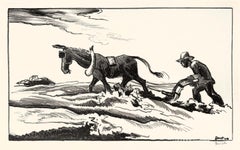
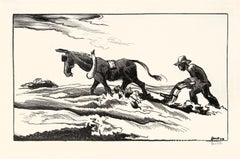
'Plowing It Under' — WPA Era American Regionalism, Signed Lithograph

'Plowing It Under' — WPA Era American Regionalism, Signed Lithograph

By Thomas Hart Benton

Located in Myrtle Beach, SC

Thomas Hart Benton, 'Goin' Home', lithograph, 1937, edition 250, Fath 14. Signed in pencil. Signed in the stone, lower right. A fine, richly-inked impression, on off-white, wove pape...

Category

1930s American Realist Jim Jonson Art
Materials

Lithograph

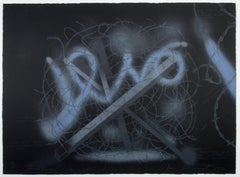
Tumbleweed, James Rosenquist neon blue barbed wire sculptural lithograph drawing

Tumbleweed, James Rosenquist neon blue barbed wire sculptural lithograph drawing

By James Rosenquist

Located in New York, NY

This print depicts the tangle of barbed wire encircling curling and twisting neon, with lengths of wood at the center. The dark paper sets off the electric blue, and captures the ori...

Category

Late 20th Century Pop Art Jim Jonson Art
Materials

Lithograph

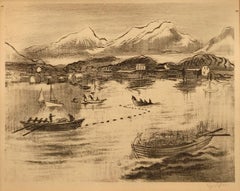
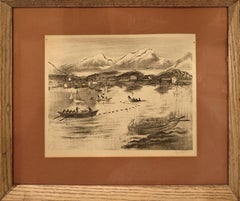
"Fishing Village" Joe Jones, Mid-Century, American Life, Small Town Scene

"Fishing Village" Joe Jones, Mid-Century, American Life, Small Town Scene

By Joe Jones

Located in New York, NY

Joe Jones Fishing Village, 1949 Signed in pencil lower right margin Lithograph on wove paper Image 9 5/16 x 12 9/16 inches Sheet 12 x 15 15/16 inches From the edition of 250 The initial details of Jones' career are sparse, and this is intentional. The young artist was engaged in a process of self-reinvention, crafting a persona. When he submitted a work to the Sixteen Cities Exhibition at New York City's Museum of Modern Art in 1933, he briefly characterized himself: "Born St. Louis, 1909, self-taught. " Jones intentionally portrayed himself to the art community as an authentic working-class figure, backed by a compelling history. He was the youngest of five children in a family led by a one-armed house painter from St. Louis, a Welsh immigrant, and his German American spouse. At the age of ten, Jones found himself in a Missouri reformatory due to authorities' concerns over his graffiti activities. After completing elementary school, he traveled by freight car to California and back, even being arrested for vagrancy in Pueblo, Colorado. Returning to St. Louis, he attempted to settle down by working alongside his father. Yet, Jones felt a profound restlessness and was drawn toward a more elevated artistic pursuit in his late teenage years. He discovered a local collective of budding artists that formed St. Louis’s "Little Bohemia," sharing a studio and providing mutual support until he managed to secure his own modest workspace in a vacant garage. Jones’s initial creations comprised still lifes, landscapes, and poignant portraits of those close to him. These subjects were not only accessible but also budget-friendly, as hiring models was beyond his means. He depicted himself, his father, mother, and eventually, his wife. In December 1930, at the age of 21, Jones wed Freda Sies, a modern dancer and political activist who was four years older than him. By 1933, Jones had started gaining noteworthy local recognition through a solo exhibition at the Artists’ Guild of Saint Louis. Of the twenty-five paintings on display, one, titled River Front (private collection, previously with Hirschl and Adler Galleries), was selected to illustrate a feature article about his show in The Art Digest (February 15, 1933, p. 9). Shortly before this exhibition, a young surgeon named Dr. Robert Elman took an interest in Jones’s art, purchasing several pieces and forming a group of potential patrons committed to providing the emerging artist with a monthly stipend in exchange for art. This group was officially known as the "Co-operative Art Society," but it was informally dubbed the "Joe Jones Club. " Jones became an active participant in the St. Louis artistic scene, particularly within its bohemian segments. He embraced modernism and was a founding member of the "New Hat" movement in 1931, a playful rebellion against the conservative and traditional mainstream art establishment. The summer of 1933 marked a significant shift in Jones’s journey. Sponsored by a dedicated ally, Mrs. Elizabeth Green, Jones, along with Freda and Green, embarked on an eastward road trip. In Washington, D. C., they explored the Corcoran Gallery of Art, the Freer Gallery (part of the Smithsonian Institution), the Library of Congress, and Mount Vernon. Following this whirlwind of art and American culture, they made their way to New York, where they visited various museums and galleries, including a stop at The New School for Social Research, which featured notable contemporary murals by fellow Missourian Thomas Hart Benton and the politically active Mexican artist, José Clemente Orozco. From June through August, Jones and Freda resided in the artist colony of Provincetown, Massachusetts, later returning home via Detroit to see Diego Rivera’s Detroit Industry mural housed at the Detroit Institute of Fine Arts. While Elizabeth Green allegedly hoped that Jones would refine his artistic skills under the guidance of Charles Hawthorne or Richard Miller in Provincetown, Jones followed a different path. Rather than pursuing conservative mentors, he connected with an engaging network of leftist intellectuals, writers, and artists who dedicated their time to reading Marx and applying his theories to the American landscape. Jones's reaction to the traditional culture of New England was captured in his statement to a reporter from the St. Louis Post Dispatch: “Class consciousness . . . that’s what I got of my trip to New England. Those people [New Englanders] are like the Chinese—ancestor worshipers. They made me realize where I belong” (September 21, 1933). The stark social divisions he witnessed there prompted him to embrace his working-class identity even more fervently. Upon returning to St. Louis, he prominently identified himself as a Communist. This newfound political stance created friction with some of his local supporters. Many of his middle-class advocates withdrew their backing, likely influenced not only by Jones’s politics but also by his flamboyant and confrontational demeanor. In December 1933, Jones initiated a complimentary art class for unemployed individuals in the Old Courthouse of St. Louis, the same location where the Dred Scott case was deliberated and where slave auctions formerly took place. Concurrently, the St. Louis Art League was offering paid courses. Emphasizing the theme of social activism, with a studio adorned with Soviet artwork, Jones’s institution operated for just over a year before being removed from the courthouse by local officials. The school’s political focus and unconventional teaching practices, along with its inclusion of a significant number of African American students during a period marked by rigid racial segregation, certainly contributed to its challenges. Under Jones’s guidance, the class created a large chalk pastel mural on board, measuring 16 by 37 feet, titled Social Unrest in St. Louis. Mural painting posed no challenge for the former housepainter, who was adept at handling large wall surfaces. His first significant commission in St. Louis in late 1931 was a mural that celebrated the city’s industrial and commercial fortitude for the local radio station, KMOX. This mural, aimed at conveying optimism amid severe economic hardship, showcased St. Louis's strengths in a modernist approach. When Jones resumed mural work in late 1933, his worldview had evolved considerably. The mural produced for the school in the courthouse, conceived by Jones, featured scenes of modern St. Louis selected to highlight political messages. Jones had observed the technique of utilizing self-contained scenes to craft visual narratives in the murals he encountered in the East. More locally, this compositional strategy was commonly employed by the renowned Missouri artist...
Category

1940s American Realist Jim Jonson Art

Materials

Paper, Lithograph

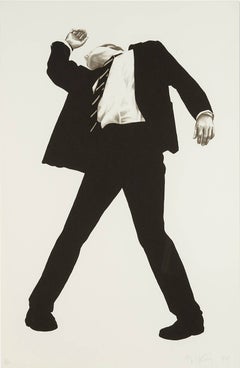
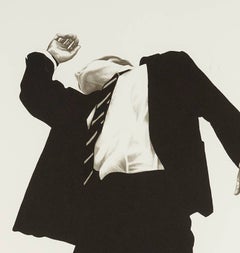
Rick, from: Men in the Cities - American Pop Art

Rick, from: Men in the Cities - American Pop Art

By Robert Longo

Located in London, GB

This original lithograph is hand signed in pencil by the artist “Robert Longo” at the lower right corner. It is also dated “94” [1994] next to the signature. It is hand numbered 1 i...

Category

1990s Pop Art Jim Jonson Art

Materials

Wove Paper, Lithograph

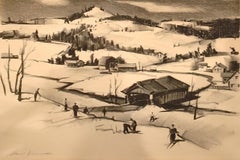
"The Slope Near the Bridge" Paul Sample, Mid-Century, American Snowy Landscape

"The Slope Near the Bridge" Paul Sample, Mid-Century, American Snowy Landscape

By Paul Sample

Located in New York, NY

Paul Sample The Slope Near the Bridge, 1950 Signed in pencil lower left Lithograph on wove paper Image 8 15/16 x 12 15/16 inches Sheet 11 5/16 x 15 1/16 inches From the edition of 25...

Category

1950s American Realist Jim Jonson Art

Materials

Paper, Lithograph

Jim Jonson art for sale on 1stDibs.

Find a wide variety of authentic Jim Jonson art available for sale on 1stDibs. You can also browse by medium to find art by Jim Jonson in lithograph and more. Not every interior allows for large Jim Jonson art, so small editions measuring 23 inches across are available. Customers who are interested in this artist might also find the work of Peter Moran, Popo and Ruby Lee, and Winslow Homer. Jim Jonson art prices can differ depending upon medium, time period and other attributes. On 1stDibs, the price for these items starts at $400 and tops out at $550, while the average work can sell for $450.