Edo Furniture

1,034 Results
EDO STYLE

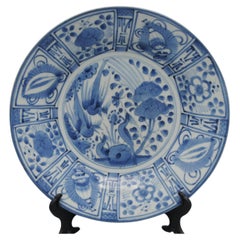
Edo furniture was created during a flourishing time for the decorative arts owing to the stability of the Tokugawa shogunate rule in Japan. Spanning from 1603 to 1867, this era of peace and economic growth supported artistic advancements in lacquer, woodblock printing, porcelain and other artisanal trades. Because the country was largely isolated, there was little outside influence, leading to centuries of exceptional attention to the design of its furnishings and the quality of its traditional arts.
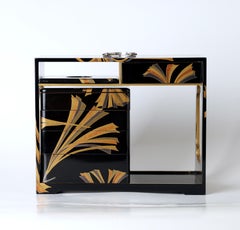
Unlike during the Meiji period that followed, with an increase in domestic and international markets, furniture during the Edo period was predominately commissioned by the ruling class, although people from across social groups benefited from the burgeoning metropolitan hubs for artisanal trades. For instance, Kyoto became a major center for lacquer art. Most furniture pieces were made from wood such as cedar or ash, including the era’s sashimono cabinets, which involved fine joinery and were rooted in the Heian period.

Sashimono cabinets, which were built by master craftsmen in a range of different wood types owing to the various trees that populate Japan, occasionally featured a stack of slender drawers as well as sliding doors. They were popular with everyone from samurai to kabuki actors. Tansu storage chests crafted from wood with metal fittings were also common in Edo-period homes. Some were designed to be easily portable while others were made to double as staircases.

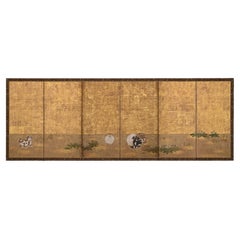
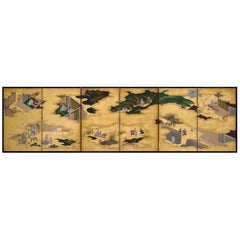
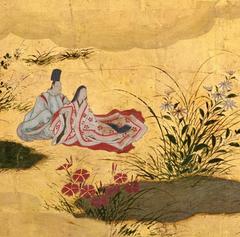
Painted folding screens, called byōbu, were also fashionable, with Japanese artists inspired by nature, literature and scenes of history and daily life to create vivid works. In Buddhist temples and the palatial homes of the aristocratic class, fusuma, or large sliding panels, would sometimes be adorned with gold or silver leaf. These dividers allowed interiors to change throughout the day, closing in small spaces for personal use or reflecting candlelight to illuminate communal spaces after dark.

Find a collection of Edo tables, lighting, decorative objects, wall decorations and more furniture on 1stDibs.

to
110
1,020
14
2
415
369

Use search to find more

204,691
120,170
47,316
35,739
17,306
13,291
11,933
11,180
10,320
9,025
7,818
7,308
7,078
6,845
6,836
6,110
4,920
3,785
393
526
101
16
44
25
7
2
2
5
4
2
2
1
352
327
279
230
228

Use search to find more

10
9
4
3
3

Use search to find more

Style: Edo
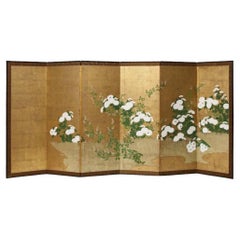
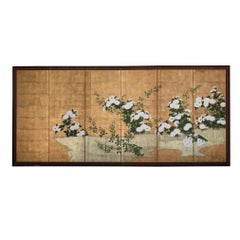
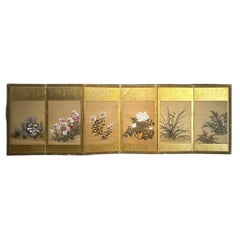
Kiku to Hagi Byobu, Rinpa School Style, Edo Period.

Kiku to Hagi Byobu, Rinpa School Style, Edo Period.

Located in Point Richmond, CA

A Chrysanthemum and Bush Clover painting on gold leaf six-panel folding screen, painted with clusters of leafy green chrysanthemum plants with white blossoms having moriage relief petals of gofun growing amidst pink blossoming bush clover within a bunched bush clover garden fence rendered in lighter gold relief, all on a background entirely of rich gold leaf. These two flowers are symbolic of Japan and the autumn season. The classic patterned paper verso with a Naga Antiques...

Category

Early 1800s Japanese Antique Edo Furniture

Materials

Gold Leaf

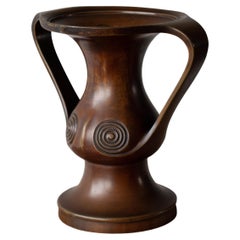
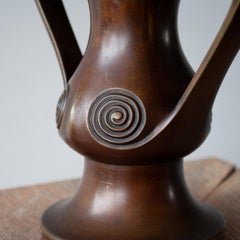
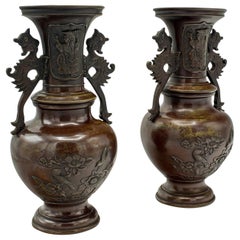
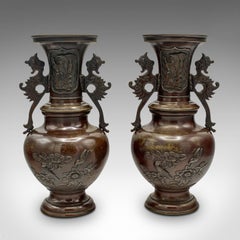
Japanese Bronze Vase, Edo Period

Japanese Bronze Vase, Edo Period

Located in London, GB

A Japanese solid bronze Mimikuchi handled vase with crisply detailed spiral design on a beautifully rounded body. This rare piece dates from the early to mid 1800's. A very fine example of Japanese Edo period...

Category

Early 19th Century Japanese Antique Edo Furniture

Materials

Bronze

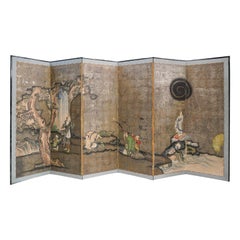
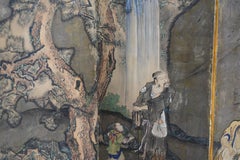
Japanese Chinese Asian Large Six-Panel Folding Byobu Screen Mythical Landscape

Japanese Chinese Asian Large Six-Panel Folding Byobu Screen Mythical Landscape

Located in Studio City, CA

A gorgeous, strangely beautiful, unusually engaging, and alluring hand-painted large six-panel Japanese/Asian Byobu folding screen depicting an almost magical/ mythical nature scene ...

Category

18th Century Japanese Antique Edo Furniture

Materials

Gold Leaf

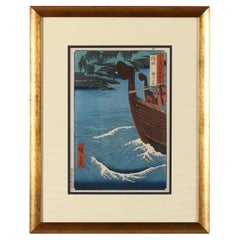
Japanese Woodblock Print Famous Views of the Sixty-Odd Provinces by Hiroshige

Japanese Woodblock Print Famous Views of the Sixty-Odd Provinces by Hiroshige

By Utagawa Hiroshige (Ando Hiroshige)

Located in Atlanta, GA

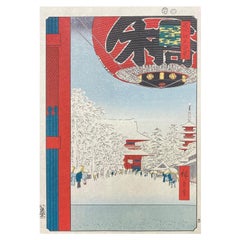
Artist: Utagawa Hiroshige (1797 - 1858) Series: Pictures of Famous Places in the Sixty-odd Provinces Number: 44 Oki Province: Takuhi Shrine Medium: Woodblock Print Date: 1853 (Kaei 6), 12th month Number of Prints: 70/70 (inc. Title Page) Format: Vertical Oban Size (H x W): 14" x 9.25" print only. Publisher: Koshimuraya Heisuke (Koshihei) Blockcutter's mark: Hori Ko-Sen Signature: Hiroshige hitsu Additional marks: Censor's seals: aratame, Ox 12 Displayed with mat and gilt wood frame. Reference: For an identical print, see the collection of MIA (Minneapolis Institute of Art) Accession Number P.75.51.398; MFA...

Category

1850s Japanese Antique Edo Furniture

Materials

Paper

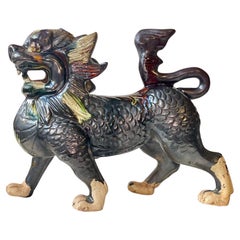
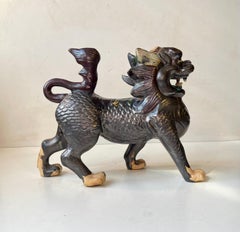
Edo Style Old Foo Dog in Glazed Ceramic

Edo Style Old Foo Dog in Glazed Ceramic

Located in Esbjerg, DK

Old - possibly antique Japanese Edo style Foo or Lion dog. It is executed in glazed ceramic or Oribe. Unfortunately we have not been able to date this more precise but it definitely ...

Category

20th Century Asian Edo Furniture

Materials

Ceramic

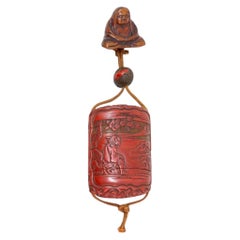
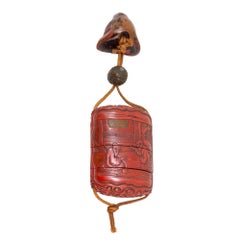
Japanese Tsuishu Lacquer Inro by Zonsei

Japanese Tsuishu Lacquer Inro by Zonsei

Located in Newark, England

This Japanese tsuishu lacquer inro by Zonsei dates to the late Edo period, circa 1850. Of traditional four-case form, the inro is carved throughout in deep cinnabar lacquer (tsuishu), with each side centred by a finely detailed figural scene surrounded by deeply carved scrolling foliage. One side depicts the Daoist immortal Tekkai Sennin, known in China as Tie Guai Li or Iron-Crutch Li. He is shown as a bearded figure exhaling a plume of smoke or mist containing a miniature image of his own spirit, referring to the legend of his ability to project his soul beyond the physical body.. The opposing side shows two seated figures engaged in a game of go (碁) also known as igo 囲碁, the traditional Japanese board game long associated with scholarship and strategy. The borders and edges are richly carved with continuous scrolling foliage, creating a dense decorative surface that extends across the entire body of the inro. It is signed 村靖 (Zonsei) with kao, identifying the work of the recognised tsuishu and tsuikoku lacquer artist. The inro retains its original carved ojime bead decorated with rabbits and is complete with a finely carved seated Daruma netsuke displaying...

Category

1850s Japanese Antique Edo Furniture

Materials

Rope, Lacquer

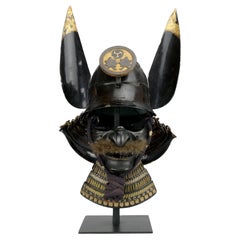
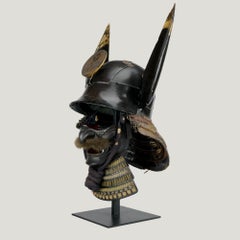
Samurai Helmet "Zunari Kabuto" - Early Edo (circa 1610)

Samurai Helmet "Zunari Kabuto" - Early Edo (circa 1610)

Located in Paris, FR

Samurai Helmet "Zunari kabuto" with 3 black lacquered iron plates. Japan, early EDO period, circa 1610. Neck protector (shikoro), 5-strip hineno, laced brown, beige and green. Central ornament (maedate) in gold and silver lacquered wood. Triple tomo with 2 maple leaves. 2 rounded horn-shaped side ornaments (wakidate) in black and gold lacquered wood. Black-lacquered iron mask...

Category

Early 17th Century Japanese Antique Edo Furniture

Materials

Iron

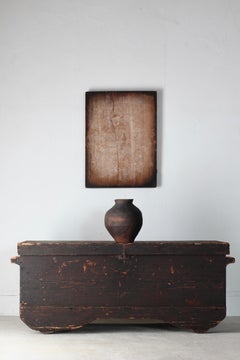
Japanese Antique Large Black Wheeled Storage Chest / 1800-1868s / Wabi-sabi

Japanese Antique Large Black Wheeled Storage Chest / 1800-1868s / Wabi-sabi

Located in Shizukuishi-cho, Iwate-gun, Iwate Prefecture

This is a piece of storage furniture called a "kurumanagamochi," a traditional Japanese piece of furniture. Crafted from pine and cedar, it was originally used in the Tohoku region....

Category

Mid-19th Century Japanese Antique Edo Furniture

Materials

Iron

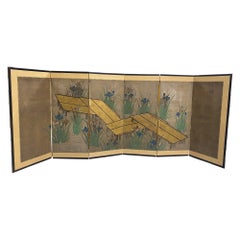
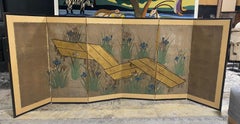
Japanese Asian Six-Panel Folding Byobu Screen Landcape Bridge with Iris Flowers

Japanese Asian Six-Panel Folding Byobu Screen Landcape Bridge with Iris Flowers

Located in Studio City, CA

A gorgeous six-panel Japanese Byobu folding screen depicting a nature lake/landscape scene with a water walkway/angular bridge and blossoming iris flowers - perhaps an homage to the famed Irises screens...

Category

19th Century Japanese Antique Edo Furniture

Materials

Gold Leaf

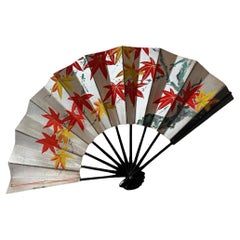
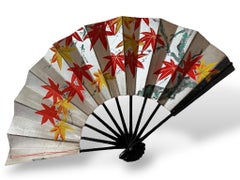
Double-Sided Japanese Fan — Edo Period, Hand-Painted on Silver Leaf Paper

Double-Sided Japanese Fan — Edo Period, Hand-Painted on Silver Leaf Paper

Located in Fukuoka, JP

Japan, Edo period (1603–1868) Size: 49 × 30 cm A magnificent double-sided Japanese folding fan (ōgi), hand-painted on paper richly decorated with gold and silver leaf. One side depi...

Category

19th Century Japanese Antique Edo Furniture

Materials

Wood, Paper

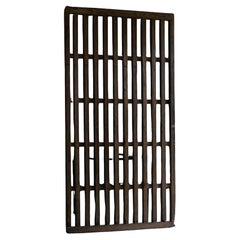
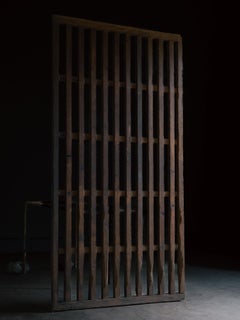
1860s-90s Wabi-Sabi Japanese thick black sliding lattice door, exterior door

1860s-90s Wabi-Sabi Japanese thick black sliding lattice door, exterior door

Located in 常陸大宮市, JP

New finds from the old-established family house in Ibaraki pref, Kanto area, Japan. Had been kept with care at the 2nd floor to avoid the humidity , even it was used as the exterior ...

Category

Late 19th Century Japanese Antique Edo Furniture

Materials

Wood

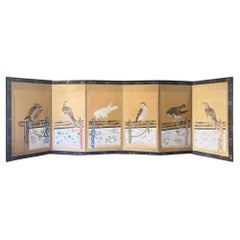
Late Edo Hawk Screen, Hand-Painted Wood and Paper, Japan, 18th Century

Late Edo Hawk Screen, Hand-Painted Wood and Paper, Japan, 18th Century

Located in Fukuoka, JP

Late 18th to Early 19th Century Hawk Screen Period: Late Edo Size: 372 x 125 cm (146.4 x 49.2 inches) Behold the grandeur of the late Edo period encaps...

Category

18th Century Japanese Antique Edo Furniture

Materials

Wood, Paper

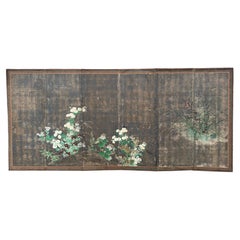
Edo Period 6-Panel Screen: Chrysanthemums and Butterfly on Silver Leaf

Edo Period 6-Panel Screen: Chrysanthemums and Butterfly on Silver Leaf

Located in Fukuoka, JP

A refined six-panel byōbu from the late Edo to early Meiji period, set against a softly aged silver leaf ground that has developed a deep, atmospheric patina over time. Clusters of ...

Category

Early 19th Century Japanese Antique Edo Furniture

Materials

Silver Leaf

A very rare 17C Edo period Kakiemon Dish Porcelain Fuku Mark Dish Blue and White

A very rare 17C Edo period Kakiemon Dish Porcelain Fuku Mark Dish Blue and White

Located in Amsterdam, Noord Holland

A great dish dating to most probably the second half of the 17th century, delicate painting and shape. Very interesting. With landscape scene with trees, birds, rocks and flowers. W...

Category

17th Century Antique Edo Furniture

Materials

Porcelain

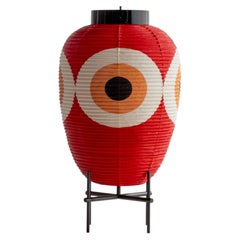
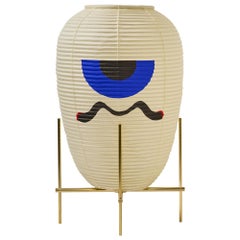
Contemporary Japanese Chochin Floor Lamp Limited Edition #1 Zen Pop art

Contemporary Japanese Chochin Floor Lamp Limited Edition #1 Zen Pop art

By Ryosuke Harashima

Located in Shibuya-ku, Tokyo

Name: Akke Contemporary style Japanese Washi Japanese traditional paper shade floor lamp. Washi shade is famous as Isamu Noguchi Akari lightings. Base is made of black painted steel...

Category

2010s Japanese Edo Furniture

Materials

Steel

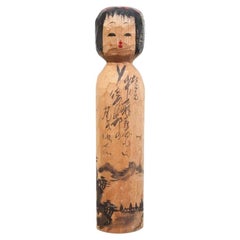
Hand Painted Wood Japanese Traditional Kokeshi Doll

Hand Painted Wood Japanese Traditional Kokeshi Doll

Located in Barcelona, Barcelona

Japanese doll called Kokeshi of the early 20th century. Provenance from the northern Japan. Dolls shapes and patterns are particular to a certain area and are classified under elev...

Category

Early 20th Century Japanese Edo Furniture

Materials

Wood

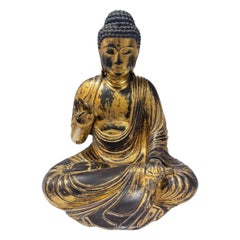
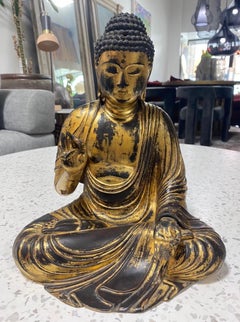
Carved Gilt Wood Seated Japanese Asian Edo Buddha Amida Nyorai Sculpture Statue

Carved Gilt Wood Seated Japanese Asian Edo Buddha Amida Nyorai Sculpture Statue

Located in Studio City, CA

A truly beautiful and supremely serene Japanese Amida Nyorai Buddha. A magnificent work. Meticulously hand carved in such fine and amazing detail (see hands and flowing robes). Gilded throughout. Seated with narrowed eyes in deep meditation and hands in Buddhist Abhaya Mudra position offering a blessing of protection, reassurance, peace, and benevolence. This hand position, also known as the "fear not" gesture, was achieved by Buddha immediately following his enlightenment. This work is from the late Edo period, (1603-1868)/ early Meiji period (1868-1912). From a California collection. Would be a fantastic addition to any Japanese or Asian artifacts/buddha collection or eye-catching stand-alone accent work in about any setting. One of the best Japanese Buddha sculptures...

Category

19th Century Japanese Antique Edo Furniture

Materials

Wood, Giltwood, Lacquer

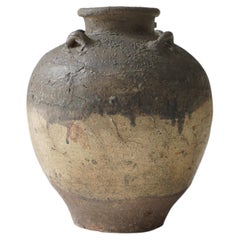
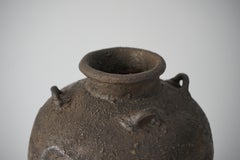
Japanese Antique Edo Large Echizen Wabi-Sabi Art Pottery Jar Tsubo Ikebana Vase

Japanese Antique Edo Large Echizen Wabi-Sabi Art Pottery Jar Tsubo Ikebana Vase

Located in Studio City, CA

A gorgeous, quite large, beautifully shaped and textured antique Japanese Echizen ware pottery tsubo jar/vase/pot - made sometime during the Edo Period (1603-1868). Echizen ware is...

Category

18th Century Japanese Antique Edo Furniture

Materials

Pottery, Stoneware

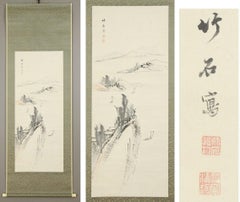
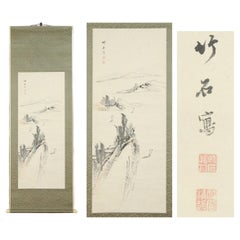
Japanese Painting 18c Edo Scroll Chikuseki Nagamachi Nihonga Landscape Painting

Japanese Painting 18c Edo Scroll Chikuseki Nagamachi Nihonga Landscape Painting

Located in Amsterdam, Noord Holland

[Authentic Artwork] ◆ Nagamachi Chikuseki ◆ Landscape ◆ Edo Period ◆ Mitsuishi Origin ◆ Kagawa Prefecture ◆ Handwritten ◆ Paperback ◆ Hanging Scroll ◆ k891 ◆ Nagamachi Chikuseki Explore the artistry of Chikuseki Nagamachi...

Category

18th Century Antique Edo Furniture

Materials

Silk

Late 17th Century Japanese Screen. Puppy and Kittens on Gold Leaf.

Late 17th Century Japanese Screen. Puppy and Kittens on Gold Leaf.

Located in Kyoto, JP

Anonymous Late 17th century Puppy & Kittens A six-panel Japanese screen. Ink, color, gofun, gold-leaf and gold-fleck on paper. A medium sized late 17th century Japanese screen fe...

Category

Late 17th Century Japanese Antique Edo Furniture

Materials

Gold Leaf

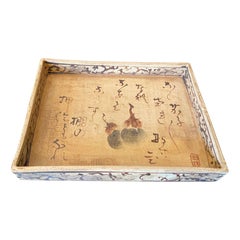
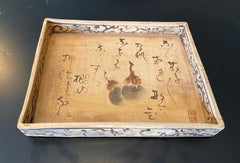
Ogata Kenzan Signed Japanese Edo Pottery Hand Painted Tea Plate Tray With Box

Ogata Kenzan Signed Japanese Edo Pottery Hand Painted Tea Plate Tray With Box

Located in Studio City, CA

A wonderfully designed and beautifully hand painted tea ceremony tray/plate by esteemed Japanese artist and master potter Ogata Kenzan (1663-1743). Kenzan is widely considered to be...

Category

18th Century Japanese Antique Edo Furniture

Materials

Pottery, Paint

Japanese Edo Six Panel Table Screen After Maruyama Okyo

Japanese Edo Six Panel Table Screen After Maruyama Okyo

Located in Rio Vista, CA

Fantastic diminutive Japanese Edo period table top screen depicting a lively water landscape with flora and fauna. The screen is beautifully painted o...

Category

19th Century Japanese Antique Edo Furniture

Materials

Brass, Gold Leaf

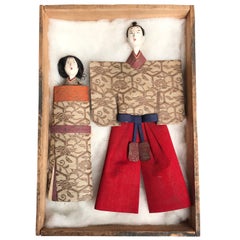
Antique A Kyoho-Bina Doll #053 , 18 Century Edo Period

Antique A Kyoho-Bina Doll #053 , 18 Century Edo Period

Located in Norton, MA

18th Century Japanese Edo Period pair of Kyoho-Bina Ningyo (1716~1736), an exceedingly rare early 18th century. An exceptional example of this early style. The finest quality in all ...

Category

1720s Japanese Antique Edo Furniture

Materials

Brass

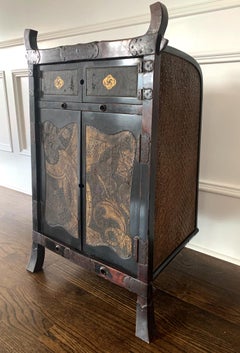
Rare Japanese Traveling Cabinet Oi Edo Period

Rare Japanese Traveling Cabinet Oi Edo Period

Located in Atlanta, GA

Served as a traveling cabinet as well as a shrine and carried like a backpack for the Buddhist priests and monks during long pilgrimage, this rare chest is known as Oi Japanese. In China the carrier case is known as Ji, traditionally used by the traveling scholars or monks in the ancient time to carry their belongings such as books, clothes, and stationary. The piece on offer here is of Japanese origin and dated to Edo period (circa 17-18th century), possibly older to 16th century of Momoyama or Muromachi period. It was likely reserved for the use of a high-rank priest to carry the Buddhism scripts based on its luxurious high quality. The wood frame takes the shape of a pagoda with carved bamboo design that features upturned corner cornices...

Category

18th Century Japanese Antique Edo Furniture

Materials

Silk, Bamboo, Wood, Lacquer, Paper

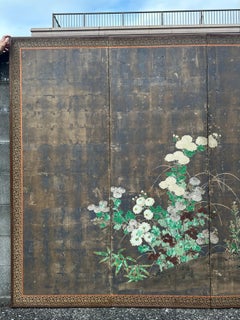
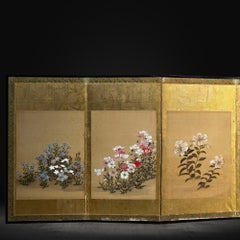
Edo Period Rimpa School Golden Screen - Summer Florals

Edo Period Rimpa School Golden Screen - Summer Florals

By Rimpa School

Located in Fukuoka, JP

Edo Period Golden Screen - Summer Florals Period: Edo Size: 285 x 92.5 cm (112.2 x 36.4 inches) SKU: PTA141 This Edo period screen is a golden-framed window into the summer gardens...

Category

18th Century Japanese Antique Edo Furniture

Materials

Gold Leaf

Japanese Edo Meiji Signed Antique Tsuba Sword Hand Guard with Oni Demon Design

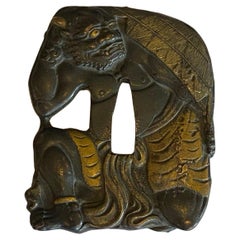
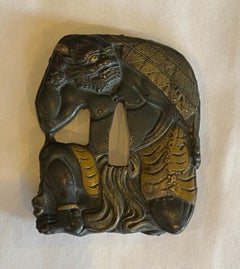
Japanese Edo Meiji Signed Antique Tsuba Sword Hand Guard with Oni Demon Design

Located in Studio City, CA

A quite wonderful and evocative signed antique Tsuba - Japanese sword hand guard often circular, sometimes square, which emerged as an essential part of Japanese sword craftsmanship during the Heian period (794–1185). Initially crafted from iron or bronze, over time they became more decorative in nature and more for show as the waring Samurai clans disbanded and became part of Japan's past. The particular Tsuba features a Oni Demon design. Oni are fearsome, ogre-like demons or trolls from Japanese folklore, known for their monstrous appearance, immense strength, and cruel nature but conversely and somewhat contradictorily they can also symbolize good fortune, representing the duality of evil and protection in Japanese culture and sometimes serve as guardians against evil. The piece is likely from the late Edo Period (1603-1868) or early Meiji Period (1868-1912). It is signed on the verso/backside. This Tsuba has a great feel and heft to it. Would be a great addition to any Tsuba or Japanese Asian sword...

Category

19th Century Japanese Antique Edo Furniture

Materials

Copper, Iron

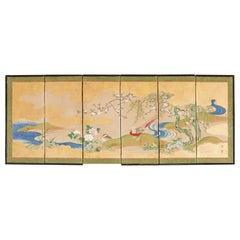
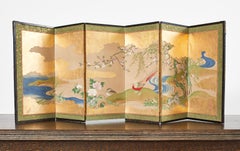
17th Century Japanese Folding Screen

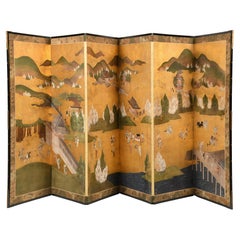
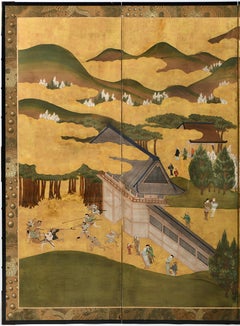
17th Century Japanese Folding Screen

Located in Camarate, PT

A six-panel folding screen with a narrative painting showing from a bird’s-eye view a spring landscape with cherry blossoms and cryptomeria trees by a river with a bridge. Groups of ...

Category

17th Century Japanese Antique Edo Furniture

Materials

Gold Leaf

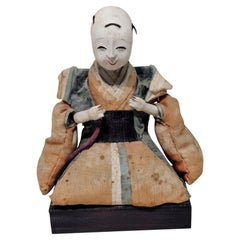
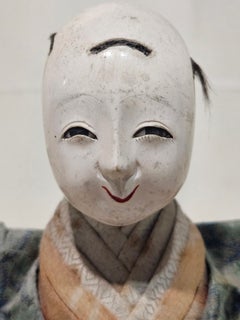
Japan Antique Hand-Crafted Edo Period Imperial Pair Dolls, 1840

Japan Antique Hand-Crafted Edo Period Imperial Pair Dolls, 1840

Located in South Burlington, VT

From our recent Japanese acquisitions A rare couple. These Japanese Tachibina dolls represent the simplest essential form of the imperial couple. Their beautiful faces were crafted from crushed shell called gofun coated over carved wood and their dress feature period Edo (1840) textile kimono dress. Used as the display for the Girl’s day celebration, more specifically they are constructed of kinran brocade fabric covered paper, the heads carved of wood and covered in gofun with painted features and inset hair, the male form with outstretched arms and conical legs, the female has a cylindrical form. They come in an original kiri wood storage box. Dimensions: Large doll 12 inches tall and 6 inches wide Small doll...

Category

Mid-19th Century Japanese Antique Edo Furniture

Materials

Shell, Wood

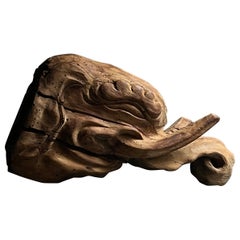
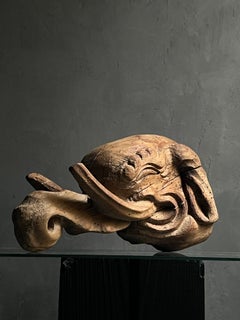
18th C. Mid Edo Carved Wood Architectural Elephant Kibana Temple Sculpture / Zen

18th C. Mid Edo Carved Wood Architectural Elephant Kibana Temple Sculpture / Zen

Located in 足利市, JP

A dramatically expressive 18th-century Mid Edo period hand-carved architectural timber sculpture, known in Japan as Elephant Kibana ("beam-end nose"). Originally positioned at the s...

Category

Mid-18th Century Japanese Antique Edo Furniture

Materials

Wood

Antique Desk Drawer, Japanese Ebonised Pine Desktop Folio, Victorian, Edo Period

Antique Desk Drawer, Japanese Ebonised Pine Desktop Folio, Victorian, Edo Period

Located in Hele, Devon, GB

This is an antique desk drawer. A Japanese, ebonised pine desktop folio, dating to the early Victorian period, circa 1850. Attractive desk tidy with appealing hand-finished charm Displays a desirable aged patina and in good order Ebonised pine frame presents dark tonality Accentuated to the top with a saffron yellow hatched border Hand-painted Japanese motif adds a flourish to the front and sides Useful drawer dressed with a small brass pull for ease of opening Light crimson interior with remnants of a decorative lining Later faux crocodile dressing to the top surface and base This is a charming antique desk...

Category

Mid-19th Century Japanese Antique Edo Furniture

Materials

Pine

A very rare 17C Edo period Kakiemon Dish Porcelain Fuku Mark Dish Blue and White

A very rare 17C Edo period Kakiemon Dish Porcelain Fuku Mark Dish Blue and White

Located in Amsterdam, Noord Holland

A great dish dating to most probably the second half of the 17th century, delicate painting and shape. Very interesting. With landscape scene with trees, birds, rocks and flowers. W...

Category

17th Century Antique Edo Furniture

Materials

Porcelain

Edo Period Ko-Arita/Ko-Imari Porcelain Plate Blue and White, 17th Century

Edo Period Ko-Arita/Ko-Imari Porcelain Plate Blue and White, 17th Century

Located in Amsterdam, Noord Holland

A great plate dating to most probably the second half of the 17th century, delicate painting and shape. Its a Japanese version of a well know Late ming dish (see pictures also). Very...

Category

17th Century Japanese Antique Edo Furniture

Materials

Porcelain

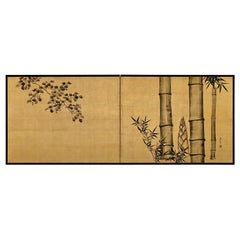
19th Century Japanese Screen for Tea-Ceremony, Ink Bamboo and Plum on Gold Leaf

19th Century Japanese Screen for Tea-Ceremony, Ink Bamboo and Plum on Gold Leaf

Located in Kyoto, JP

Three Friends of Winter Nakajima Raisho (1796-1871) Late Edo period, circa 1850 Ink and gold leaf on paper. This is a double-sided Japanese Furosaki or tea-ceremony screen from the mid 19th century; bamboo and plum on the front, young pines the back. It by Nakajima Raisho, a master painter of the Maruyama school in the late Edo and early Meiji periods. In this work Raisho combines exquisite ink brushwork with large open spaces of brilliant gold-leaf to inspire the viewers imagination. Rather than naturalism, he is searching for the phycological impression of the motifs, resulting in abstraction and stylization. His simplification of the motifs the result of looking to capture the inner nature of the objects. This art motif is known as Sho Chiku Bai, or the Three Friends of Winter. Evergreen pine connotes steadfastness, bamboo suggests both strength and flexibility, while plum blossoms unfurling on snow-laden branches imply hardiness. Combined, this trio is emblematic of Japanese new year. Chinese literati were the first to group the three plants together due to their noble characteristics. Like these resilient plants flowering so beautifully in winter, it was expected of the scholar-gentleman to cultivate a strong character with which he would be able to show the same degree of perseverance and steadfastness even during times of adverse conditions. The screen would have been placed near the hearth of a room used for the Japanese tea ceremony, shielding the fire from draughts and also forming a stimulating and decorative backdrop behind the tea utensils. It would have been used in the Hatsugama, or first tea-ceremony of the new year. Nakajima Raisho (1796-1871) originally studied under Watanabe Nangaku before entering the school of Maruyama Ozui. He was the highest ranking Maruyama school painter at the end of the Edo period and was known as one of the ‘Four Heian Families’ along with Kishi...

Category

Mid-19th Century Japanese Antique Edo Furniture

Materials

Gold Leaf

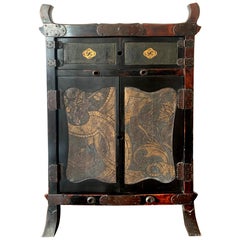
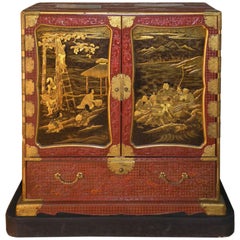
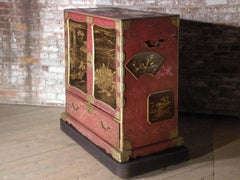
Japanese Lacquer and Cinnabar "Samurai" Cabinet, Inaba Family, Edo Period

Japanese Lacquer and Cinnabar "Samurai" Cabinet, Inaba Family, Edo Period

Located in Troy, NY

Exceptionally large and rare lacquer cabinet. According to the heraldry, visible on the headgear in one of the panels, it was made for the Inaba family, a high ranking Daimyo family,...

Category

Late 19th Century Japanese Antique Edo Furniture

Materials

Bronze

Japanese lacquer Suzuribako Writing Set.

Japanese lacquer Suzuribako Writing Set.

Located in SYDNEY, AU

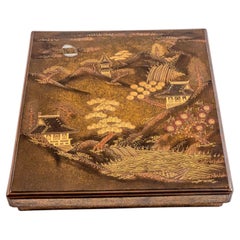
Japanese Lacquer suzuribako (writing set) in takamaki-e on a nashi-ji background. The box is elaborately lacquered with gold dots and tells the story of life in a Japanese village wi...

Category

18th Century Antique Edo Furniture

Materials

Lacquer

Japanese Gold Maki-e Lacquer Sageju Portable Dining Set, 19th Century

Japanese Gold Maki-e Lacquer Sageju Portable Dining Set, 19th Century

Located in Fukuoka, JP

An elaborate Japanese lacquered sageju (portable dining set), attributed to the late Edo period (19th century), distinguished by its refined maki-e decoration and carefully integrate...

Category

19th Century Japanese Antique Edo Furniture

Materials

Wood, Lacquer

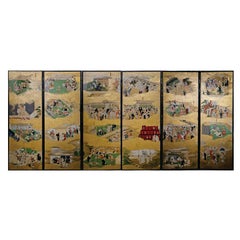
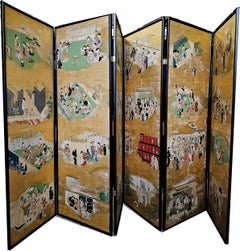
Japanese Screen Painting, Circa 1700 'Tales of Ise' by Tosa Mitsusuke

Japanese Screen Painting, Circa 1700 'Tales of Ise' by Tosa Mitsusuke

By Tosa Mitsusuke 1

Located in Kyoto, JP

A six-fold Japanese screen by Tosa Mitsusuke (1675-1710), Japan 17th-18th century, Edo period. The signature reads Shoroku-i ge Tosa sa Konoe Shogen Mit...

Category

Late 17th Century Japanese Antique Edo Furniture

Materials

Gold Leaf

Japanese Arita Blue and White Kraak Dish - Edo Period, late 17th

Japanese Arita Blue and White Kraak Dish - Edo Period, late 17th

By 1616 / Arita Japan

Located in DELFT, NL

A 17th Century Japanese Blue and White Porcelain Dish in the Kraak Style, Arita Kilns 1670 – 1700. The central design shows three pheasant, one perched on a rock amongst flowering p...

Category

Late 17th Century Japanese Antique Edo Furniture

Materials

Porcelain

1860s-80s Japanese antique wabi sabi Urushi mid Tansu chest of drawers

1860s-80s Japanese antique wabi sabi Urushi mid Tansu chest of drawers

Located in 常陸大宮市, JP

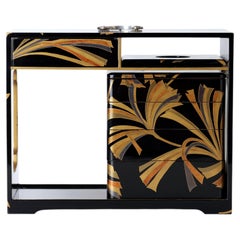
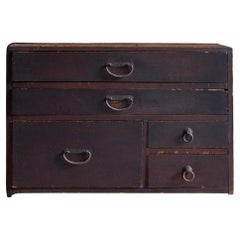
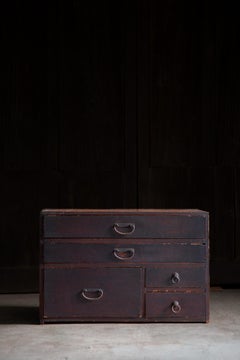
From Tohoku area, Japan. This mid-size, black Urushi lacquered Tansu chest of drawers is a product of late Edo to early Meiji era (circa 1860s-1880s) , estimate from the style & con...

Category

Late 19th Century Japanese Antique Edo Furniture

Materials

Wood

Japanese Kokeshi Wood Dolls, Signed, Pair

Japanese Kokeshi Wood Dolls, Signed, Pair

Located in New York, NY

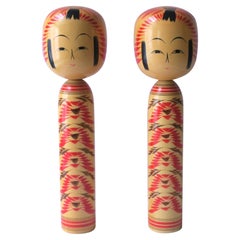
A pair of authentic signed Japanese Kokeshi wood dolls, circa mid-20th century, Japan. Dolls shapes and patterns are particular to a certain area and are classified under eleven type...

Category

Mid-20th Century Japanese Edo Furniture

Materials

Wood

Japanese Kuruma-dansu

Japanese Kuruma-dansu

Located in Point Richmond, CA

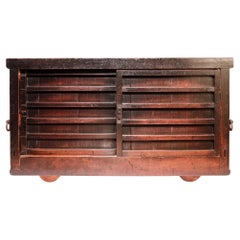
Japanese Kuruma-dansu, a wheeled storage chest traditionally kept in the Kura (storeroom) for the specific purpose of containing valuables, thus the wheeled carriage for a quick exit...

Category

Mid-19th Century Japanese Antique Edo Furniture

Materials

Wood

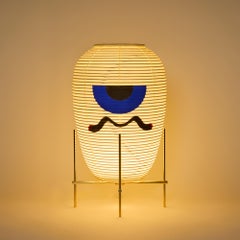
Contemporary Japanese Chochin Floor Lamp Limited Edition #2 Zen Washi

Contemporary Japanese Chochin Floor Lamp Limited Edition #2 Zen Washi

By Ryosuke Harashima

Located in Shibuya-ku, Tokyo

Name: OBAKE UN Contemporary style Japanese Washi Japanese traditional paper shade floor lamp. Washi shade is famous as Isamu Noguchi Akari lightings. Base is made of brass. Limited pattern painted model. Edition of 3+1AP E26,27 light bulb. Available to work with 100-250V. Artist statement In Japan, there is an animist belief that the soul dwells in old tools that have passed a long time and turns into spirits such as "Youkai" or "OBAKE." Its existence lurks in the darkness of everyday life, sometimes causing fear and sometimes entertaining. This lantern is not an old tool, but it is made by the historic "Kojima Shoten", where the 10th generation are craftsmen in Kyoto. It's rare nowadays, and it's a style in which lanterns are made from bamboo bones to assembling papers and painting in one workshop and go. So, I decided to transform the polite crafted Japanese lanterns, which have been run through a traditional history, into a modern and pop style. It's not just OBAKE lurking in the darkness, but an existence who snuggles up to us as a more sophisticated being. These one-eyed OBAKE have a meaningful look that originated in ancient Sanskrit culture. The red-eye "A [a]" is the facial expression that is the first pronunciation to make a sound in Sanskrit, which means "truth" and "spirit of inquiry" at the same time. The blue-eyed "UN [hu?]" expresses the pronunciation to close the sound, and at the same time means "wisdom" and "nirvana." There is also the idea that describing the beginning and end of the universe is represented by considering the "A" and "UN" as a pair. In Asia, it is a common sight to see a pair of guardian statues...

Category

2010s Japanese Edo Furniture

Materials

Brass

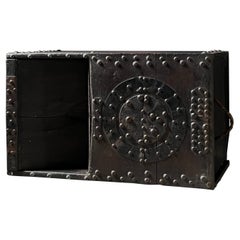
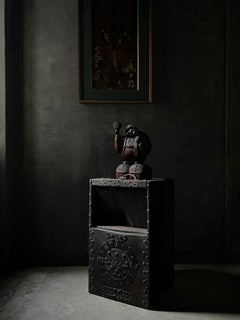
19th C. Edo Money Chest Iron-Riveted " Zenibako"/ Trunk Table Pedestals Wabisabi

19th C. Edo Money Chest Iron-Riveted " Zenibako"/ Trunk Table Pedestals Wabisabi

Located in 足利市, JP

A strikingly imposing 19th-century late Edo-period merchant’s security money chest (Zenibako), originating from the maritime merchant culture of the Niigata and Sado Island region a...

Category

Early 19th Century Japanese Antique Edo Furniture

Materials

Iron

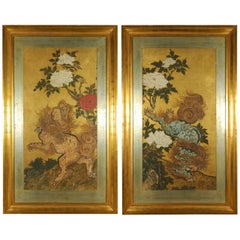
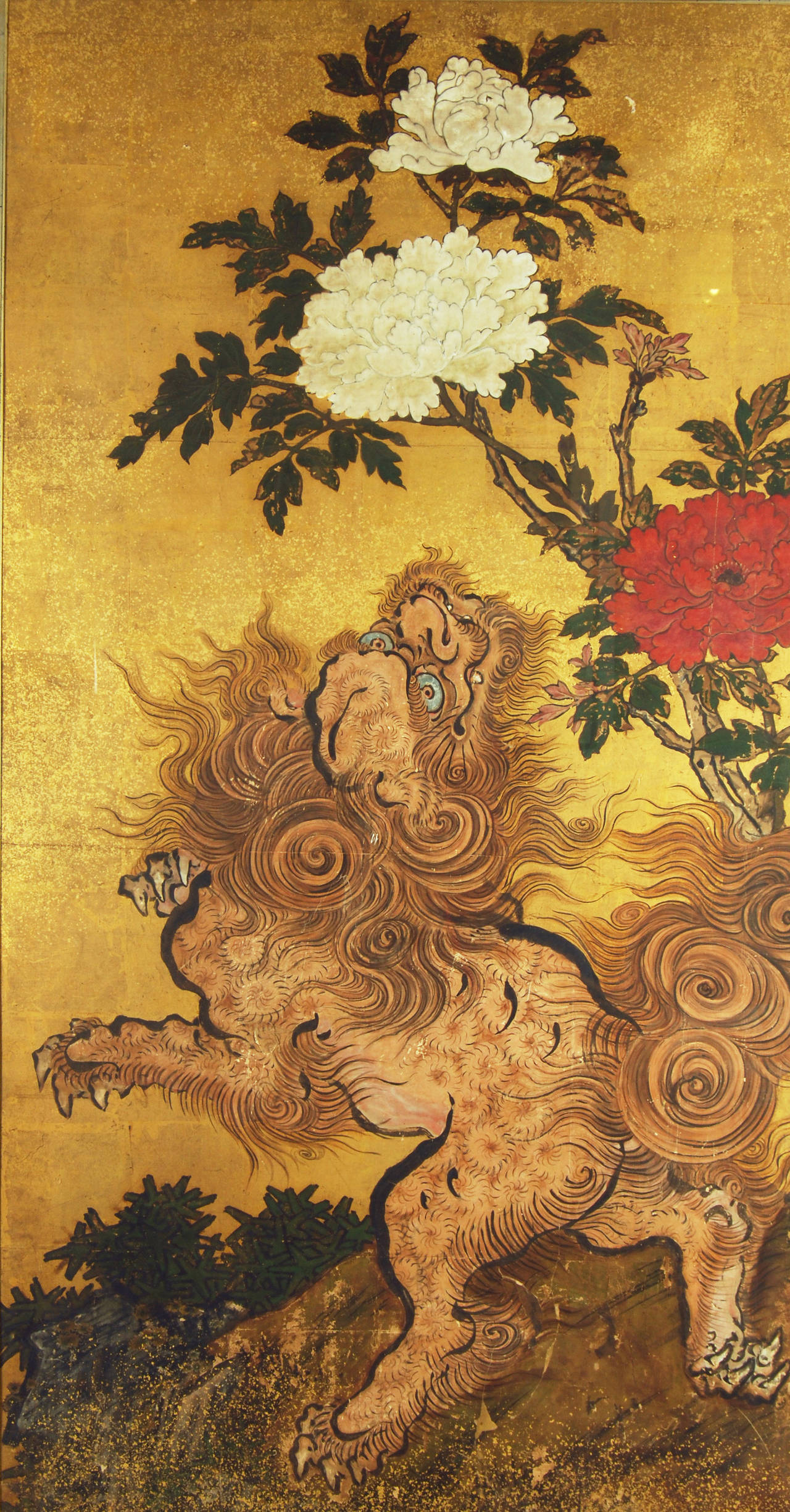
Pair of Antique Japanese Paintings of Karashishi, Edo Period, 18th Century

Pair of Antique Japanese Paintings of Karashishi, Edo Period, 18th Century

Located in Prahran, Victoria

A rare pair of antique Japanese Karashishi paintings in a landscape of rocks and peony flowers on gold leaf ground in fine handmade frames, Edo period, early 18th century. The Karash...

Category

Early 18th Century Japanese Antique Edo Furniture

Materials

Gold Leaf

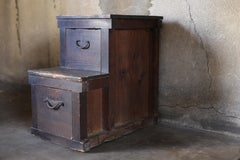
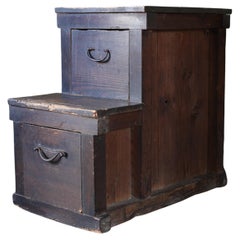
Japanese Antique "Staircase Chest" 'Late Edo Period-Meiji Period' /Cabinet

Japanese Antique "Staircase Chest" 'Late Edo Period-Meiji Period' /Cabinet

Located in Sammu-shi, Chiba

We have an aesthetic sense peculiar to Japanese people. And we introduce the unique items that only we can do, the route of purchasing in Japan, the experience value so far, and the way that no one can imitate. Japanese antique black chest "staircase chest...

Category

19th Century Japanese Antique Edo Furniture

Materials

Cedar

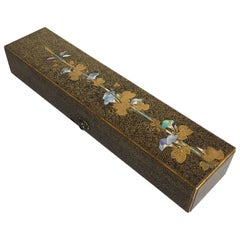
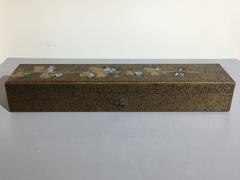
Japanese Edo Period Igarashi School Long Lacquer Box, Tanzaku-Bako

Japanese Edo Period Igarashi School Long Lacquer Box, Tanzaku-Bako

Located in Austin, TX

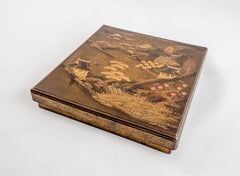
A stunning Japanese Edo period lacquer tanzakubako, box for poem cards, late 18th-early 19th century, Edo Period, Japan. Attributed to the Igarashi School, this box is masterfully ...

Category

Early 19th Century Japanese Antique Edo Furniture

Materials

Mother-of-Pearl, Lacquer

Antique Edo 18/19th C Japanese Jubako Ikegawa Ware Tea Ceremony Box Japan

Antique Edo 18/19th C Japanese Jubako Ikegawa Ware Tea Ceremony Box Japan

Located in Amsterdam, Noord Holland

Description A lovely piece Condition Lid with 2 chips to inside rim. Size: 25x13.5CM heightxdiameter Period 19th century Meiji Periode (1867-1912)

Category

19th Century Japanese Antique Edo Furniture

Materials

Porcelain

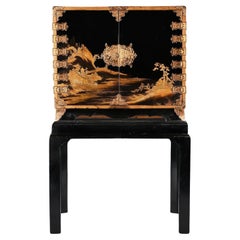
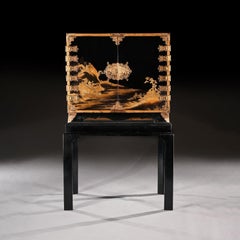
An Important Late 17th Century Japanese Lacquered Cabinet Edo Period on Stand

An Important Late 17th Century Japanese Lacquered Cabinet Edo Period on Stand

Located in Benington, Herts

An extremely fine, elegant and rare late 17th Century Japanese lacquer cabinet, from the Eco period, on later lacquered black stand. Japanese circa 1690 Provenance A private Scottish collection This outstanding cabinet is a fascinating fusion of east and west. The cabinet itself would have been made in Japan, c.1690, and is decorated to the outside with hiramaki-e lacquer. This technique involves the use of sprinkled gold powder which adheres to the lacquer surface. On the best pieces, as with this example, many layers are added in order to create areas of high relief and give depth to the surface decoration. The taste of the Japanese workshops in this period was often for quite restrained pieces with plenty of the black background visible, unlike some of the busier Chinese lacquer or European japanned examples produced around the same time. The Japanese makers seemed content to rely on the outstanding quality of the lacquer itself, regarded by most experts as the finest lacquer ever produced, and did not see the need to cover every surface believing that less was more in this respect. The lacquer here is used to produce a mountainous scene with buildings on the bank of a river, the other side of the river with more buildings and a contrasting flatter and forested landscape. The fine perspective achieved is the result of the clever use of raised and flatter areas in the lacquer itself in combination with the drawing of the design itself. Another remarkable aspect of this piece is the fine metalware throughout, but particularly the lockplate / hasp, hinges and foot mounts to the front. This is all beautifully cast and engraved contrasting against the black background. Interestingly another cabinet on stand with near identical metalwork was advertised in the Burlington Magazine, November 1913, with the dealer W. Williamson and Sons of Guildford. The lacquer on that piece is similarly refined and it seems likely that both pieces came from the same workshop. The European influence in our piece can be seen in both the later ebonised stand and in the japanned decoration which has been applied to the inside of the doors and is also very fine indeed. This consists of two panels with birds of prey perched on branches in colours set against a golden background. The cabinet has a recent Scottish provenance and so it is likely that the ebonised stand was made in Britain though such pieces were made throughout Europe as a way of quite literally elevating these imported pieces of eastern lacquer as in Japan these would have been used on the floor. Inside the cabinet there is a combination of more Japanese lacquer and lock plates and European drawer handles. Most of the lacquer drawer fronts incorporate mountainous scenes and birds in combination, with a few purely one or the other of the two subjects. Again the lacquer is in excellent condition and is of exceptional quality with multiple layers of relief used in one single scene in many cases. As mentioned above, Japanese lacquer is the most technically brilliant of the eastern lacquers and, as such, was highly prized by collectors and connoisseurs throughout Europe when this piece was made. The acquisition of such pieces would only have been possible for a small group of incredibly wealthy individuals, largely royal or high ranking courtiers or merchants connected with the East India trade...

Category

1690s Japanese Antique Edo Furniture

Materials

Lacquer

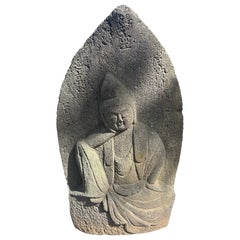
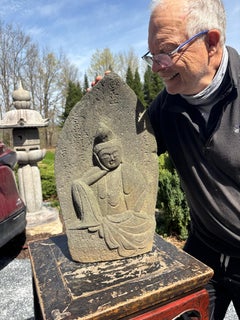
Japanese Rare Serene Stone Buddha Kanon Guan Yin, 19th century

Japanese Rare Serene Stone Buddha Kanon Guan Yin, 19th century

Located in South Burlington, VT

From our recent Japanese Acquisitions Imagine this wonderful antique stone sculpture in your garden- a warm and lovely example seated in a quiet, relaxing pose- she may be seen In ...

Category

19th Century Japanese Antique Edo Furniture

Materials

Stone

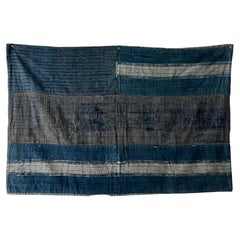
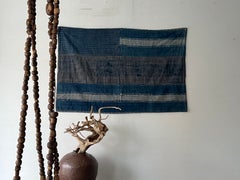
"BORO" Japanese Antique Indigo dyed ramie Patchwork 19`c/ Sashiko Rag Wabi-Sabi

"BORO" Japanese Antique Indigo dyed ramie Patchwork 19`c/ Sashiko Rag Wabi-Sabi

Located in 足利市, JP

This remarkable piece is a beautiful example of antique Japanese Boro (boro-boro) or Futonji (futon cover textile), heavily featuring traditional indigo-dyed stripe patterns (Shima-m...

Category

Mid-19th Century Japanese Antique Edo Furniture

Materials

Cotton, Hemp, Natural Fiber

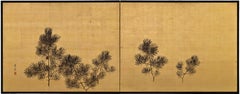
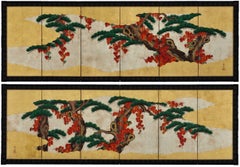
19th Century Japanese Screen Pair - Pines and Autumn Vines on Gold

19th Century Japanese Screen Pair - Pines and Autumn Vines on Gold

Located in Kyoto, JP

This pair of unusually small six-panel Japanese screens depicts the trunks and spreading branches of ancient pine trees, entwined with vines whose brilliant crimson and orange leaves...

Category

1850s Japanese Antique Edo Furniture

Materials

Paper

Japanese antique white-glazed sake bottle / [Satsuma ware] vase / 1700-1800s

Japanese antique white-glazed sake bottle / [Satsuma ware] vase / 1700-1800s

Located in Sammu-shi, Chiba

This registration is one of the pottery called Satsuma ware, which was made in Kagoshima Prefecture around the 18th to 19th centuries during the Edo period. (The area with a red circ...

Category

18th Century Japanese Antique Edo Furniture

Materials

Pottery

Japanese 18th Century Tsukinami-e 6 Panel Floor Screen, Edo Period

Japanese 18th Century Tsukinami-e 6 Panel Floor Screen, Edo Period

Located in Norton, MA

A Japanese 18th Century Tsukinami-e 6 Panel Floor Screen depicts the Activities of the Twelve Months of the Year, mineral pigments on gold leaf, mounted on wood panels with 6 frames...

Category

18th Century Japanese Antique Edo Furniture

Materials

Gold Leaf

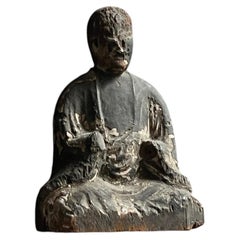
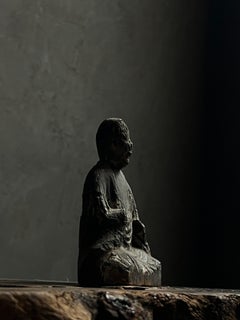
Japanese Wooden Sculpture"JIzo Buddha Statues" Early Edo period Wabisabi Mingei

Japanese Wooden Sculpture"JIzo Buddha Statues" Early Edo period Wabisabi Mingei

Located in 足利市, JP

This profoundly moving, hand-carved wooden sculpture of Jizzo Bosatsu (Ksitigarbha Bodhisattva) is an exceptional masterpiece dating from the late Muromachi to early Edo period (16th...

Category

17th Century Japanese Antique Edo Furniture

Materials

Cypress

Edo furniture for sale on 1stDibs.

Find a broad range of unique Edo furniture for sale on 1stDibs. Many of these items were first offered in the 21st Century and Contemporary, but contemporary artisans have continued to produce works inspired by this style. If you’re looking to add vintage furniture created in this style to your space, the works available on 1stDibs include asian art and furniture, wall decorations, decorative objects and other home furnishings, frequently crafted with wood, metal and other materials. If you’re shopping for used Edo furniture made in a specific country, there are Asia, East Asia, and Japan pieces for sale on 1stDibs. While there are many designers and brands associated with original furniture, popular names associated with this style include Utagawa Hiroshige (Ando Hiroshige), Arita, Ryosuke Harashima, and Kitagawa Utamaro. It’s true that these talented designers have at times inspired knockoffs, but our experienced specialists have partnered with only top vetted sellers to offer authentic pieces that come with a buyer protection guarantee. Prices for furniture differ depending upon multiple factors, including designer, materials, construction methods, condition and provenance. On 1stDibs, the price for these items starts at $55 and tops out at $1,386,932 while the average work can sell for $2,989.